Showing posts with label Morale. Show all posts

Saturday, October 5, 2013

Morale Plummets For Federal Workers Facing Unending Furlough


John Zangas, a furloughed federal worker, protests the government shutdown outside the U.S. Capitol on Wednesday.


Brendan Smialowski/AFP/Getty Images
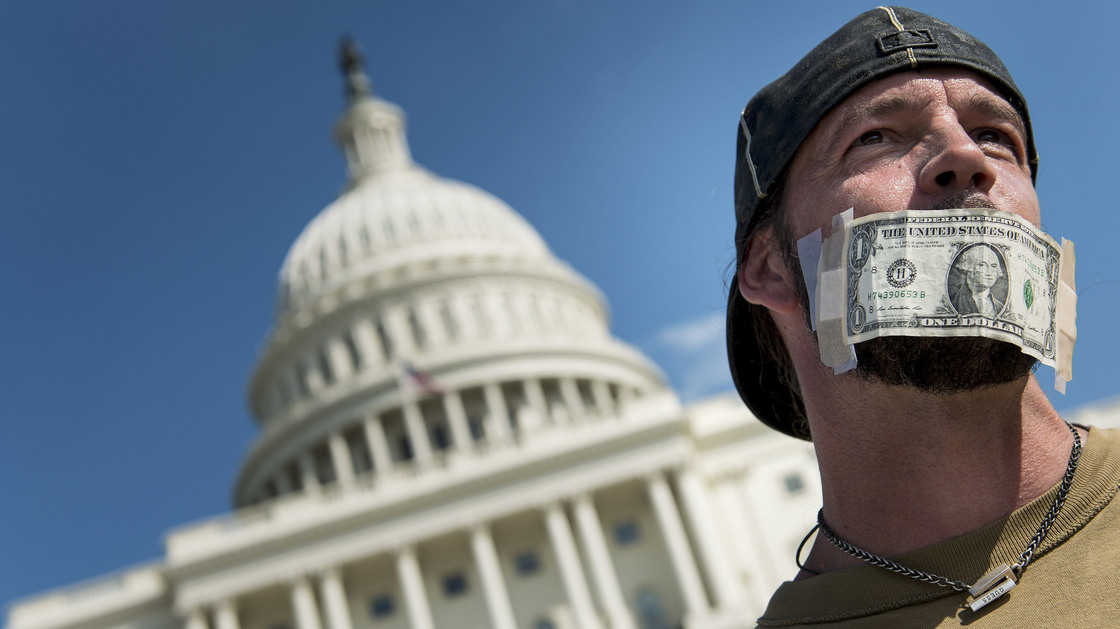
John Zangas, a furloughed federal worker, protests the government shutdown outside the U.S. Capitol on Wednesday.


John Zangas, a furloughed federal worker, protests the government shutdown outside the U.S. Capitol on Wednesday.


Brendan Smialowski/AFP/Getty Images


The work that Shaun O’Connell does is required by law, yet now he’s sidelined by the government shutdown.


O’Connell reviews disability claims for the Social Security Administration in New York, checking that no one’s gaming the system, while ensuring people with legitimate medical problems are compensated properly.


Billions of dollars are at stake with this kind of work, yet O’Connell is considered a nonessential employee for purposes of the partial government shutdown.


“If you stick with the semantics of essential and nonessential, you could easily be offended,” says O’Connell, who has worked for Social Security for 20 years.


There’s a difference between what’s urgent and what’s important. Like other federal employees, O’Connell understands that what he does isn’t necessarily crucial on a daily basis, like being a trauma surgeon with the Veterans Administration, for instance, or a member of the Capitol Hill police force.


But he believes what he does is necessary — and that there will be a big backlog of cases waiting for him when he is able to get back to work.


Whenever that may be.


“People aren’t having a heart attack and don’t need their wounds dressed, but it doesn’t change the fact that what we do over the long term makes an absolute difference to the quality of life in this country,” says Carolyn Federoff, an attorney with the Department of Housing and Urban Development in Boston. “I never doubt that.”


Who Is Essential?


Every agency has to determine which employees are essential and which ones must be furloughed.


Actually, the terms of art now describe federal workers as “exempt” or “not exempt” from furloughs. The use of “nonessential” to describe employees during the federal shutdowns of 1995 and 1996 was considered demeaning.


But “exempt” hasn’t exactly caught on. Conservative commentators have seized on the fact that the government is doing without 800,000 workers — including most of those at the Environmental Protection Agency — as proof of waste.


“According to the federal government, 94 percent of EPA employees are ‘non-essential,” tweeted Campaign for Liberty, a group founded by former Texas GOP Rep. Ron Paul. “Seems low.”


Furloughed from his job with the Agriculture Department, Tyrone Van Hoesen joins fellow members of the American Federation of Government Employees protesting at the Federal Center in St. Louis.


Furloughed from his job with the Agriculture Department, Tyrone Van Hoesen joins fellow members of the American Federation of Government Employees protesting at the Federal Center in St. Louis.


Alan Greenblatt/NPR


Needless to say, federal workers resent their careers being treated so cavalierly.


“We do feel dissed by the whole thing,” says Tyrone Van Hoesen, who works on rural bankruptcy issues for the Department of Agriculture in St. Louis.


Can’t Get No Respect


What bugs furloughed employees such as Van Hoesen is not so much being labeled as superfluous, but continuously being treated with disregard by politicians in Washington.


Government work has traditionally been about as steady as employment gets. But civil servants have gone without a raise for three years now and many didn’t need to wait for the shutdown to face furlough days, thanks to the spending cuts known as sequestration.


“Every time we have one of these budget showdowns, we look at each other and say, ‘What do we lose this time?’ ” Federoff says.


Many federal employees have held their jobs for decades and recognize that they still enjoy vastly greater job security than private sector peers. But this business of being out on furlough is already getting old. And there’s no end in sight.


As is the case for O’Connell, Cynthia McKnight’s job — ferreting out potential waste in public housing programs for HUD — is mandated by law. But like him, she’s been furloughed from her job in New York City.


“A lot of people are very angry because it’s not our fault,” she says. “We’re not responsible for this. We want to work, and we’re not able to.”


Work That Matters


O’Connell says he was working on disability claims up until the moment he was forced off the clock this past Tuesday. He found several mistakes other officials had made along the way, including an eligibility claim involving a person with kidney failure who is on renal dialysis.


That person should be getting a bigger check, but will have to wait until the shutdown is over to see it.


Processing such claims has been enough of a priority that Congress in 1996 authorized about $ 4 billion over seven years to clear up a backlog of 4.3 million cases.


But the backlog has since grown again. The shutdown won’t help matters.


Many federal workers perform such “back office” functions that are mostly invisible to the public — but without which Social Security claims aren’t processed, public housing units don’t get built and polluted sites don’t get cleaned up.


“The reality is, with the current funding environment, we’re certainly not going to be paid any more money to make up for lost time,” says Mike Weiss, a project manager with NASA in Greenbelt, Md. “It is enormously difficult to maintain the motivation of the workforce.”


News


Morale Plummets For Federal Workers Facing Unending Furlough

Friday, July 19, 2013

SEC staff morale low, atmosphere marked by distrust: study


The U.S. Securities and Exchange Commission logo adorns an office door at the SEC headquarters in Washington, June 24, 2011. REUTERS/Jonathan Ernst

The U.S. Securities and Exchange Commission logo adorns an office door at the SEC headquarters in Washington, June 24, 2011.


Credit: Reuters/Jonathan Ernst


Thu Jul 18, 2013 8:16pm EDT


(Reuters) – The Securities and Exchange Commission is not the best place to work among federal agencies in Washington, according to a new study by a government watchdog.


The SEC’s organizational structure “has not been conducive to motivating and encouraging a high level of performance,” concluded the Government Accountability Office in a report released on Thursday.


“Many staff indicated that morale is low and a significant percentage characterize the atmosphere of the agency as one of distrust,” the GAO said.


The GAO’s report was required by the 2010 Dodd-Frank Wall Street reform law, whose three-year anniversary is this month.


The study was mandated following several high-profile lapses at the SEC during the financial crisis, including its failure to detect Bernard Madoff’s massive Ponzi scheme.


An Office of Personnel Management survey of federal employees ranked the SEC 19th of 22 similarly sized agencies based on employee satisfaction.


The GAO laid out several areas in need of improvement, including workforce planning, performance management, communication and personnel management assessment.


While the SEC has taken some steps in most of these areas to improve, the GAO urged the agency to do more.


Some of the findings in the GAO’s report are consistent with complaints often lodged by the SEC’s Chapter of National Treasury Employees Union.


In addition, the GAO’s survey found that many employees still view the culture at the SEC as “siloed” – where one division does not talk to the other.


This was highlighted several years ago by the Madoff and Allen Stanford Ponzi scandals, where examiners and enforcement lawyers failed to properly communicate and may have missed opportunities to detect the schemes.


The GAO said the SEC is actively working to create a comprehensive workforce plan and is trying to close skill gaps to hire people with more financial industry expertise.


Still, the GAO said, the SEC lacks a transparent process for leadership succession and many interviewed did not see “much incentive” to be promoted into management positions.


In a letter responding to the GAO study, SEC Chair Mary Jo White said she recognizes there is still “work to do in these areas” and that she is “committed to ensuring that process continues.”


The SEC agreed with the report’s recommendations, she said. She added that the SEC is taking steps toward addressing workforce competency gaps and improving intra-agency communication.


She also said the SEC has successfully implemented pay-for-performance for non-bargaining unit employees, and is still in the process of assessing the impact of the new system.


An SEC spokeswoman declined to make any additional comment.


(Reporting by Sarah N. Lynch in Washington; Editing by Phil Berlowitz)


Reuters: Politics


SEC staff morale low, atmosphere marked by distrust: study

SEC staff morale low, atmosphere marked by distrust: study


The U.S. Securities and Exchange Commission logo adorns an office door at the SEC headquarters in Washington, June 24, 2011. REUTERS/Jonathan Ernst

The U.S. Securities and Exchange Commission logo adorns an office door at the SEC headquarters in Washington, June 24, 2011.


Credit: Reuters/Jonathan Ernst


Thu Jul 18, 2013 8:16pm EDT


(Reuters) – The Securities and Exchange Commission is not the best place to work among federal agencies in Washington, according to a new study by a government watchdog.


The SEC’s organizational structure “has not been conducive to motivating and encouraging a high level of performance,” concluded the Government Accountability Office in a report released on Thursday.


“Many staff indicated that morale is low and a significant percentage characterize the atmosphere of the agency as one of distrust,” the GAO said.


The GAO’s report was required by the 2010 Dodd-Frank Wall Street reform law, whose three-year anniversary is this month.


The study was mandated following several high-profile lapses at the SEC during the financial crisis, including its failure to detect Bernard Madoff’s massive Ponzi scheme.


An Office of Personnel Management survey of federal employees ranked the SEC 19th of 22 similarly sized agencies based on employee satisfaction.


The GAO laid out several areas in need of improvement, including workforce planning, performance management, communication and personnel management assessment.


While the SEC has taken some steps in most of these areas to improve, the GAO urged the agency to do more.


Some of the findings in the GAO’s report are consistent with complaints often lodged by the SEC’s Chapter of National Treasury Employees Union.


In addition, the GAO’s survey found that many employees still view the culture at the SEC as “siloed” – where one division does not talk to the other.


This was highlighted several years ago by the Madoff and Allen Stanford Ponzi scandals, where examiners and enforcement lawyers failed to properly communicate and may have missed opportunities to detect the schemes.


The GAO said the SEC is actively working to create a comprehensive workforce plan and is trying to close skill gaps to hire people with more financial industry expertise.


Still, the GAO said, the SEC lacks a transparent process for leadership succession and many interviewed did not see “much incentive” to be promoted into management positions.


In a letter responding to the GAO study, SEC Chair Mary Jo White said she recognizes there is still “work to do in these areas” and that she is “committed to ensuring that process continues.”


The SEC agreed with the report’s recommendations, she said. She added that the SEC is taking steps toward addressing workforce competency gaps and improving intra-agency communication.


She also said the SEC has successfully implemented pay-for-performance for non-bargaining unit employees, and is still in the process of assessing the impact of the new system.


An SEC spokeswoman declined to make any additional comment.


(Reporting by Sarah N. Lynch in Washington; Editing by Phil Berlowitz)


Reuters: Politics


SEC staff morale low, atmosphere marked by distrust: study