Showing posts with label Master. Show all posts

Thursday, February 20, 2014

Republican Party Needs to Master the Message


Senator Ted Cruz is a hero in some Republican circles — and the opposite among many of his Senate Republican colleagues.


At this crucial juncture in the history of America, internal battles within the only party that can turn things around are the last thing Americans need. Moreover, each side in this political civil war has all too many valid criticisms of the other.


The Republican establishment’s criticisms of Senator Cruz are criticisms of his rule-or-ruin strategy, which can destroy whatever chance Republicans have of taking back the Senate in 2014 and taking back the White House in 2016. And, without political power, there is no real hope of changing things in Washington.


Senator Cruz’s filibuster last year got the Republicans blamed for shutting down the government — and his threatened filibuster this year forced several Republican Senators to jeopardize their own reelection prospects by voting to impose cloture, to prevent Cruz from repeating his self-serving grandstand play of last year. The Republicans need every vote they can get in the Senate — plus additional votes by defeating some Democrats who are running for the Senate this fall. It can be a very close call. Jeopardizing the reelection of current Republican Senators is an act of utter irresponsibility, a high risk with zero benefits to anyone except Ted Cruz — and the Democrats.


However unjustified Senator Cruz’s actions, the very fact that a freshman Senator can so quickly gain so many supporters, with so much enthusiasm, ought to be a loud warning to the Republican establishment that they have long been a huge disappointment to a wide range of Republican voters and supporters.


One of their most maddening qualities has for decades been their can’t-be-bothered attitude when it comes to explaining their positions to the American people in language people can understand. A classic example was Speaker of the House John Boehner’s performance when he emerged from a meeting at the White House a while back. There, with masses of television news cameras pointed at him, and a bank of microphones crowded together, he simply expressed his disgust at the Obama administration, turned and walked on away.


Here was a golden opportunity to cut through the Obama administration rhetoric and set the record straight on the issues at hand. But apparently Speaker Boehner couldn’t be bothered to have a prepared, and previously thought out, statement to present, conveying something more than his disgust.


Unfortunately, Speaker Boehner is just the latest in a long line of Republican “leaders” with the same disregard of the need to explain their position in plain English.


That takes work. But it is work that any number of conservative commentators on radio and television do every day of the week. And they are very successful in getting across arguments that Republican politicians do not bother to try to get across.


Democrats are constantly articulating their talking points. Less than 24 hours elapsed after the Congressional Budget Office reported that ObamaCare was likely to cause many workers to have their hours cut back, before Democrats were all talking about the “freedom” this would give workers to pursue other interests, rather than being “locked-in” to long hours on a full-time job.


It was a slick and dishonest argument, but the point here is that Democrats immediately saw the need for articulation — and for all of them to use the same words and phrases, so as to establish their argument by sheer repetition.


Nor was this the first time that Democrats coordinated their words and phrases. A few years ago, Senator Chuck Schumer was secretly recorded giving fellow Democrats the word to use whenever describing Republicans — namely, “extreme.”


When George W. Bush first ran for president in 2000, the word among Democrats was that he lacked “gravitas.” People who had never used that word in years were suddenly saying “gravitas” 24/7.


The Republican establishment has more than a tactical deficiency, however. They seem to have no principle that they offer or follow with any consistency. Their lack of articulation may be just a reflection of that lack of principle. It is hard to get to the point when you have no point to get to.


Ted Cruz filled a void. But the Republican establishment created the void. 


RealClearPolitics – Articles


Republican Party Needs to Master the Message

Wednesday, January 22, 2014

NEW! bo2 Master prestige Glitch + diamond guns xbox + ps3)

At Hey WTF? News, the privacy of our visitors is of extreme importance to us (See this article to learn more about Privacy Policies.). This privacy policy document outlines the types of personal information is received and collected by Hey WTF? News and how it is used.

Log Files

Like many other Web sites, Hey WTF? News makes use of log files. The information inside the log files includes internet protocol (IP) addresses, type of browser, Internet Service Provider (ISP), date/time stamp, referring/exit pages, and number of clicks to analyze trends, administer the site, track user"s movement around the site, and gather demographic information. IP addresses, and other such information are not linked to any information that is personally identifiable.

Cookies and Web Beacons

Hey WTF? News does use cookies to store information about visitors preferences, record user-specific information on which pages the user access or visit, customize Web page content based on visitors browser type or other information that the visitor sends via their browser.

DoubleClick DART Cookie

  • Google, as a third party vendor, uses cookies to serve ads on Hey WTF? News.
  • Google"s use of the DART cookie enables it to serve ads to users based on their visit to Hey WTF? News and other sites on the Internet.
  • Users may opt out of the use of the DART cookie by visiting the Google ad and content network privacy policy at the following URL - http://www.google.com/privacy_ads.html.

These third-party ad servers or ad networks use technology to the advertisements and links that appear on Hey WTF? News send directly to your browsers. They automatically receive your IP address when this occurs. Other technologies ( such as cookies, JavaScript, or Web Beacons ) may also be used by the third-party ad networks to measure the effectiveness of their advertisements and / or to personalize the advertising content that you see.

Hey WTF? News has no access to or control over these cookies that are used by third-party advertisers.

You should consult the respective privacy policies of these third-party ad servers for more detailed information on their practices as well as for instructions about how to opt-out of certain practices. Hey WTF? News"s privacy policy does not apply to, and we cannot control the activities of, such other advertisers or web sites.

If you wish to disable cookies, you may do so through your individual browser options. More detailed information about cookie management with specific web browsers can be found at the browser"s respective websites.


NEW! bo2 Master prestige Glitch + diamond guns xbox + ps3)

Sunday, December 22, 2013

Pokemon Emerald LP Part 51: Wallace the Master of Water!

Pokemon Emerald LP Part 51: Wallace the Master of Water!
http://i.ytimg.com/vi/nxuPzrE8tDw/mqdefault.jpg


Pokemon Emerald LP Part 51: Wallace the Master of Water!

What’s up YouTube and welcome to more Pokemon Emerald LP! In the last episode we got done taking out the Dragon Type Master Drake of the Elite 4. Now in toda…


Read more about Pokemon Emerald LP Part 51: Wallace the Master of Water! and other interesting subjects concerning Economy at TheDailyNewsReport.com

Sunday, October 6, 2013

An Interview With Occult Author and NLP Master, Philip H. Farber


Phil-FarberA couple of years ago, I realized that thanks to social media, I could start hunting down authors I was interested in like dogs, hounding them with questions I’d never been able to ask before.


One of these poor schmucks was Philip H. Farber, occult author of FutureRitual, Meta Magick: The Book of Atem, and Brain Magick: Exercises in Meta-Magick and Invocation.  He has also written a novel, The Great Purple Hoo-Ha.


Philip is a hypnotist, Neuro-linguistic programming (NLP) practitioner, and magician.  Beside his books, he also teaches courses and seminars dealing with ritual magic and NLP.  DVDs of some of these can be found at Hawkridge Productions.


Friending Phil on Facebook was one of my smartest moves.  Not only was he willing to answer all of my questions at length, he was also quick to give me excellent reading recommendations.  And all for free.  What a sucker.


In preparing for this interview, I reread some of his books, re-watched some DVDs, and reviewed some of our old correspondences.  And there, staring coolly at me from behind computer screens and printed word, was the ugly beast of accusation.


This interview is an act of apology to Phil.  If anyone out there has ever gotten me drunk enough to talk about my actual views on magic, you should now realize that all of those brilliant and thought-provoking ideas spewing out of my mouth were most likely lifted from this guy.


Sorry, Phil.


Isla:  Can you explain NLP in terms a dummy like myself can understand?


Farber:  Heh.  I’ve struggled with simple explanations for the things I do for many years.  But I’ll give it a whack.  NLP is neuro-linguistic programming, from “neuro,” referring to our nervous system, “linguistic”, our ability to communicate, and “programming” the art of using language and neurology to create change.  One way to look at it is that NLP provides a terminology that allows us to discuss and use language and behavior in ways that were not previously possible.  The field originated from the keen observations of Richard Bandler and John Grinder, a mathematician and a linguist, influenced by Chomsky’s transformational grammar model, General Semantics, Ericksonian hypnosis, gestalt therapy, and cybernetics, among much else.


There are a ton of misconceptions about NLP, ranging from accusations of cult status to scary warnings about government and corporate mind control, most of which are easily dispelled by actually picking up a good NLP book or attending a seminar.  In its most basic form, “the study of the structure of subjective experience,” NLP can generate a nice box of tools that most people can benefit from.  It allows for intense states of rapport and empathy, quick healing of psychic trauma, healthy belief change, habit change and much more.  It’s popular among all kinds of healing modalities, including bodyworkers, therapists, and hypnotists.


Meta MagickWhat parallels have you found between NLP techniques and magical practices?


They are certainly related fields.  If we take magick in the Crowleyan sense of “causing change in conformity with Will,” then NLP becomes another subset of magick.  As with any other kind of human behavior, we can use NLP to model the processes that go into magick and tweak various aspects for better results.  NLP techniques can be used to better access altered states in a ritual or magical context, to develop achievable outcomes for ritual efforts, to improve language used in ritual, to create new symbol sets, and a whole lot more.


Similarly, there are quite a few aspects of magick that can easily be adapted to NLP processes, including the idea of a ritual frame, various ways to work with thought forms and entities, and ways to apply metaphor and symbolism.


What is your model of interactions with nonphysical entities (i.e. gods and spirits)?  Do you think they have an existence outside of our subjective experiences of them?


Can we prove the existence of anything outside our subjective experience?  I’m not entirely sure.  If you look at someone across the room, you aren’t really seeing him or her, you are perceiving an interpretation that your brain has constructed.  In terms of physics, that person isn’t even really a solid thing, but clouds of probability and a lot of empty space.  Our neurology has learned to interpret these experiences in various ways that allow us to navigate our subjective world.


We have big parts of our brains devoted to perceiving entities and making both motor and social predictions about others.  Those same areas are likely active when we think about gods, goddesses, demons, angels, imaginary friends, etc.  The internal models we make of other humans can be very detailed and complex – think about the last time you dreamed or daydreamed about a friend.  The non-human entities that run on the same brain hardware can be just as detailed and complex – and some of them also have the ability to transfer from mind to mind.  That’s not so mysterious – it is memetics.


We share entities when we tell stories, create art, build temples, and so on.  Is Jehovah inside us or outside?  The answer is both (whether you are a follower of that entity or not) – inside as our own concept of Jehovah and outside as memetics in the minds of others.  Jehovah, like him or not, has influenced vast swaths of history, has caused the rise and decline of entire civilizations, has inspired war, peace, architecture and commerce, among much else.  At what level do we decide that such an entity is “real” or “outside us”?  I’m not sure it matters.  I think that even if we continue to consider Jehovah as entirely imaginary, the old dude still influences a lot of people and causes change in the world, for good or ill.


The other fun thing to consider is that our individuality, our self-perception as “I” or “me” may be a trick of our brains.  An area in the right frontoparietal lobe seems to provide this illusion for us and, when suppressed, subjects experience an inability to identify themselves in mirrors and a sense of cosmic unity with everything around them.  Our own status as entities may be a neurological construct similar to that of Jehovah, a self-myth created in our brains.  I like to think that “consciousness is a continuum and entities are its way of perceiving itself.”


Describe Atem.


Atem is an entity who is conducting an experiment in entity creation.  When I wanted to write a book on evocation a few years ago, I wanted the book itself to be a demonstration of the principles that it described.  So I evoked an entity named Atem, who is specifically concerned with teaching the art of evocation.  Atem gave me a lot of feedback and helped to bring himself into the world, in the form of a book: Meta-Magick: The Book of Atem.  In describing Atem at length, the book offers instruction in using NLP and memetics to perform evocation and to work with entities of various kinds.  Atem invites readers to participate in the experiment of bringing him into the world, which provides some interesting magical benefits for the participants.


Atem also appears in a funnier, fictionalized form in my novel, The Great Purple Hoo-Ha.


brain magickCan you briefly discuss the nature of language and the role it plays in magic?


I take a broad definition of language and include all the different ways that we are able to represent human experience.  So I’m not limiting it to the wordy kind of language and I’m including any kind of visual, auditory, kinesthetic, olfactory or gustatory way of recording or transmitting information.


The processes of language are important in the human brain.  We are constantly creating narrative, our personal stories, the mythology of own lives, and our ability to manipulate language helps to guide the narrative.  Ultimately that personal narrative gives our life meaning and structure.  We are able to relate it to the stories that we find around us, the mythology that helps us to make sense of our world, which further guides the process of self-definition and reality creation.


Both magick and NLP are ways of tapping into and altering that linguistic flow.  Magick applies ritual, symbol, evocation and invocation to influence the direction and quality of the personal narrative.  NLP uses shifts in perception and conscious use of language to similarly alter our narrative and self-concept.  By changing the stories that we tell ourselves about our world, in effect we change the world.


What do mirror neurons have to do with magic?


In short, we all have motor neurons, brain cells that are activated when we move muscles in our bodies.  In most of us, about 20% of all motor neurons are also mirror neurons.  That is, they are also activated when we watch (listen to, feel, read about or imagine) someone else performing a behavior.  Everyone has experienced the contagious nature of yawns – when you experience someone else yawning, your mirror neurons respond and you want to yawn, too.  Or when you hear a fantastic guitar solo and have the urge to play air guitar – that’s certainly mirror neuron activity.  More usefully, mirror neurons are how we share feelings with each other, how we empathize, develop rapport, and communicate on a nonverbal level.  When you feel emotion from looking at a painting or listening to a song, those are your mirror neurons at work.  When you feel exhilaration watching a winning athlete, or watching the hero of a movie prevail, those are mirror neuron responses.


Mirror neurons make predictions about behavior.  For instance, when you shake hands, you likely do a pretty good job of getting your hand in just the right place to receive your friend’s hand.  More subtle intuitions are also possible via the mirror neuron system.  We often feel excited in the presence of exciting people, sad in the presence of sad people.  When a sadsack comes into the room, it takes the energy of everyone there down a few notches via the mirror neurons.  When a charismatic person enters, we feel the energy of the people around us rise.


Now, to activate mirror neurons, the brain has to make a decision.  It has to decide if something is worth mirroring.  Behaviors worth mirroring generally come from what we perceive to be a sentient being similar to ourselves.  So the brain and mirror neurons have to distinguish “entity” from “brick”.  They can be fooled.  We often find ourselves responding with mirror neurons to drawings of humans (ever laugh at a cartoon?), to computer-generated music (which can still make you tap your toes), and to our imaginings of people (ever have your body respond to a fantasy of a favorite sex partner?).


Great Puprple Hoo HaSo mirror neurons come into play when we are working with entities of any kind.  They let us know that something is an entity or can be worked with as such.  They help us to bring qualities into us during invocation.  When you see an icon of a god or goddess and feel something of their power, that experience is mediated by the mirror neurons.  On a more collective level, mirror neurons are important in sharing ritual experience and synchronizing states, behaviors and activity.


Mirror neurons are also a triggering mechanism in additional brain systems that help us to make more complex social predictions, to develop rapport and create our mythic self concept.


Readers who are interested in the union of neuroscience and magick may enjoy my most recent non-fiction book, Brain Magick, which explores these ideas in depth.


I read in an interview that you had some interesting ideas for the application of magic in Second Life.  What do you think of the renewed interest in virtual reality technology like the Oculus Rift, and how will this affect the future of magic?


I was fascinated with VR back when it was a brand new idea in the ’80s and ’90s and I got to play around with some of the early devices, back then.  I’ve dabbled a bit with Second Life, but have never tried Oculus Rift.  A couple years back, I was invited to give a little magick workshop in SL by an NLP trainer, Gina Pickersgill.  Gina set up a ritual environment in SL that tested out some of the neuroscience ideas I was talking about.  I found it surprisingly powerful to watch my avatar perform ritual actions.  It turned out to be a neat way to activate mirror neurons and suggested some fun and exciting methods that might be explored.  Some of that might still be on YouTube.


Personally, my tendency in magick is to use less props and tools and more body and imagination.  However, I do think that VR can offer some very powerful experiences that might be a great way to help someone learn some of the basics of magick and how to direct active imagination.  If you can develop locations and avatars in SL, you can learn to imagine ritual space, symbols and entities in your own mind.


What projects are you currently working on?


The main project right now is a book on the uses of cannabis in magick, both historically and in modern ritual.  I’m also preparing for a series of seminars in the spring of 2014, including NLP Practitioner Training and a Meta-Magick weekend seminar.  I’ll soon be posting more info about these at meta-magick.com.


Brain Magick, FutureMagick, Great Purple Hoo-Ha, hypnosis, interview, Magick, Meta-Magick, Neuro Linguistic Programming, NLP, Occult, Philip Farber


disinformation


An Interview With Occult Author and NLP Master, Philip H. Farber

Wednesday, October 2, 2013

Tom Clancy, Master Of Military Techno-Thrillers, Dies


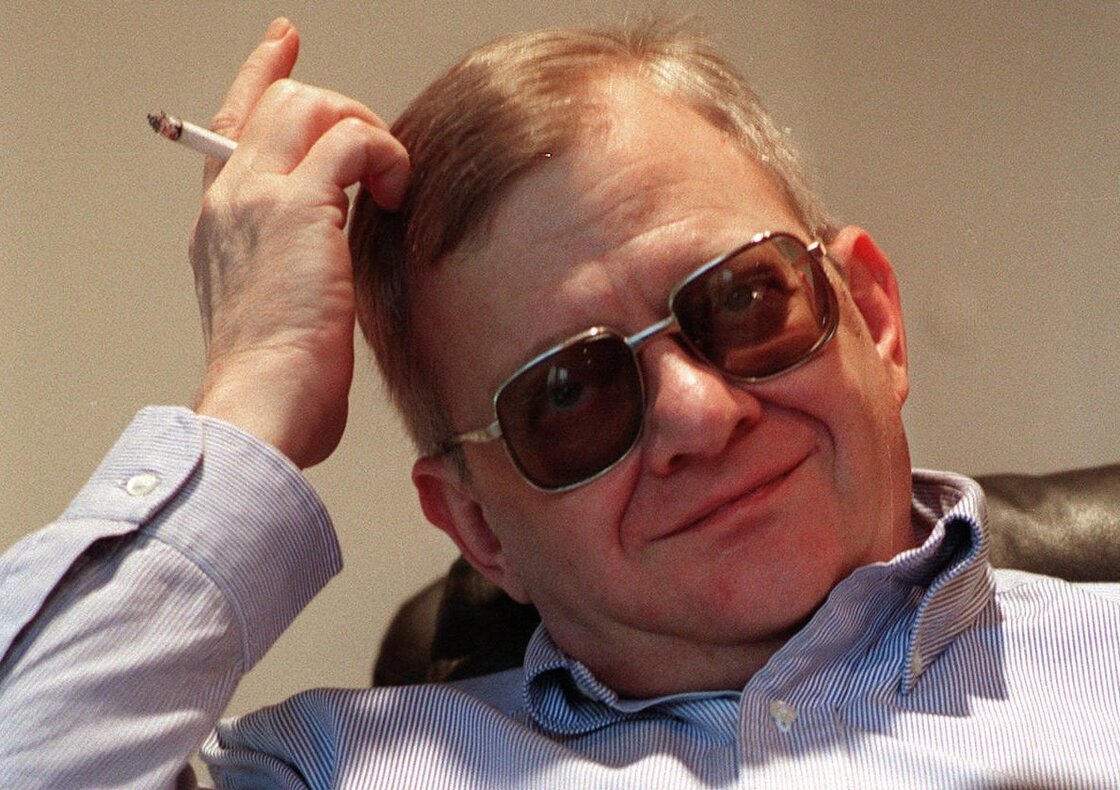
Writer Tom Clancy in 1998.


Vince Lupo/AP

Writer Tom Clancy in 1998.


Writer Tom Clancy in 1998.


Vince Lupo/AP


Tom Clancy, the best-selling writer of such “techno-thrillers” as The Hunt for Red October, Red Storm Rising and Patriot Games, has died.


He was 66.


The news of his death was first reported in tweets from Publishers Weekly and New York Times books reporter Julie Bosman. It was confirmed to NPR Wednesday morning in a statement from his publisher, G.P. Putnam’s Sons.


Clancy lived in Maryland. According to the Baltimore Sun, he “died Tuesday after a brief illness at the Johns Hopkins Hospital.”


Bosman of the Times writes that Ivan Held, president of Putnam publishers, says Clancy “was a thrill to work with.”


As the Times wrote in 1988, Clancy was an “insurance agent turned supernovelist” who made the U.S. military “the real hero of his fast-paced, carefully researched techno-thrillers.”


Putnam’s says “Clancy’s blockbuster debut novel, The Hunt for Red October, was published in 1984. Command Authority, Clancy’s 17th novel, is due out from G.P. Putnam’s Sons in December 2013.”


In 2002, Clancy sat down with C-SPAN to talk about books and take calls from viewers.


Watch for more on him from our friends on NPR’s books beat.


News


Tom Clancy, Master Of Military Techno-Thrillers, Dies

Saturday, September 7, 2013

Prime Minister Abbott: the master of opposition gets his chance | Shaun Carney


Vindication is his, but there is still the small matter of actually doing the job now that he has secured it


Not so long ago, Tony Abbott looked washed up. In 2007, while other ministers wanted to replace John Howard as the captain of the Coalition’s sinking ship, Abbott stood resolutely by his political hero all the way to a humiliating election defeat.


Abbott had been in a funk as the Liberals’ fortunes soured. He publicly questioned the ethics of a dying man, Bernie Banton, and during the election campaign he turned up embarrassingly late to a televised debate.


In the days after that defeat, Abbott sought to succeed Howard as Liberal leader, citing what he called his people skills as one of his strengths. This ended badly too: when he realised his party room numbers were derisory, he withdrew his candidacy and went off to write a book as a way of salving his political pain.


The political caravan, it seemed, had taken off without Abbott. But no: now he is our prime minister.


The man to whom the ironic appellation “people skills” was attached during those lean times joins Sir Robert Menzies, Malcolm Fraser and Howard as the only Liberal leaders to have vanquished a Labor government.


Vindication is his, but there is still the small matter of actually doing the job now that he has secured it. Abbott as an opposition leader was frenzied, intense, relentless, functionally incapable of pulling back and changing either his tone or his rhetoric.


From the first moment Abbott took on the leadership in December 2009, he sought power through aggression and the creation of an ever-heightening sense of crisis in the polity and the economy. His twin objectives were to instigate the overthrow, either through parliamentary or electoral means, of a Labor government that he had from the start viewed as illegitimate, the product of nothing more than a reflexive “It’s Time” sentiment among voters in 2007 that the Howard government had had long enough.


“Campaign in poetry and govern in prose” the saying goes. Abbott all the way through campaigned in spray can graffiti.


But it worked. Abbott, a journalist early in his adult life, made an astute judgement about the changing nature of the Australian electorate. He understood, and continues to understand, that increasing numbers of voters feel no fidelity to any party, do not care about politics, do not pay attention to the news and that their only interest in policy is how it might affect them. The key word in that last element is “might”.


Having lived without the economic hardships that come from a recession for more than 20 years, the metrics by which Australians judge that they are, as the political cliché has it, “doing it tough” – that is, feeling cost of living pressures – have shifted dramatically. Ever-greater swathes of the electorate are convinced that they are economically deprived, even though inflation is under control, the economy continues to grow and unemployment is close to modern historical norms.


Many contemporary voters, untethered from any political convictions of their own, are highly suggestible and Abbott’s campaigns on Labor’s carbon pricing and economic management exploited this to the hilt.


Now that they are in charge, Abbott and his likely treasurer Joe Hockey will have to transform their political approach instantaneously. The hysterics of the past few years will no longer be of use to them.


In the final week of the campaign, they worked assiduously to recast their economic program. Having spent their time in opposition asserting that the nation’s finances were in a critical state and that there was a budget emergency, they finished up subscribing pretty much to the budget settings of Labor’s outgoing treasurer Chris Bowen.


Depending on one’s point of view, this demonstrates either a breathtaking capacity for cynicism or a masterful deployment of political agility.


In any event, it points to a pragmatism that has regularly been at the heart of Abbott’s political modus operandi and which is likely to drive him as prime minister. Abbott is a conservative in the conventional sense. That is, he opposes change with a genuine conviction – until change becomes irresistible. And then he embraces that new order.


Tony Abbott maintains close links with the last Liberal to hold the prime ministership, John Howard. AAP/Alan Porritt
As Howard’s health minister, he sought to fashion the Coalition as “the best friend Medicare has ever had“, conveniently ignoring the fact that the Whitlam and Hawke governments had to shed much political blood to implement the policy after years of political opposition from the Liberals. Even so, when he saw how it worked, Abbott embraced it.


A related process has been at play under his leadership, as he has adopted some of Labor’s best policy ideas, with adjustments. His government will see through four of the six years of the Gonski school funding. It will implement a National Broadband Network, but a weaker, cheaper version. It will continue on with the National Disability Insurance Scheme, but wants to drop Labor’s name for it, DisabilityCare.


A key policy on which the Abbott government will not yield is a market pricing mechanism for carbon emissions. The reason for this is mostly to do with the internal politics of the broader Liberal movement and only a little to do with ideology.


Abbott himself is ambivalent on the theory of man-made climate change. He came to the leadership in late 2009 on a pledge of killing an emissions trading scheme because he judged that the climate change question was splitting both the Liberal Party and its supporter base.


Hence he will oversee Direct Action, an inefficient, costly policy that aspires to cut emissions and placates his backers who believe climate change is real. And at the same time, by killing the carbon tax he will appease the large proportion of Liberals who think climate change is hokum. It could be said to be a classical Liberal political solution.


Will there be any great policy initiatives under prime minister Abbott? Workplace relations is the standout issue. Abbott argued unsuccessfully against WorkChoices inside the Howard cabinet and he has done what he can to stave off the powerful forces inside his party and the business community to revive the key elements of that policy regime – at least until he took office.


But the pressures are immense to once and for all crush Australia’s already weakened union movement, a vital political resource for the ALP. In this term, there will be plenty of softening up of the electorate: inquiries into union corruption and productivity bottlenecks. Expect to hear a lot about how much unions are holding back the Australian economy in the next three years and how much has to be done to put them back in their box.


With the demise of the Rudd government, the historical comparisons with the Whitlam era become stronger: only two terms of office, plenty of political dysfunction, some powerful policies but also a degree of chaos. It is up to Abbott to ensure that the second act of the Whitlam drama is not repeated.


With Labor harassed into destruction, the Coalition government that replaces it is unclear on what exactly it wants to do in power beyond keeping its hand on the tiller, having returned the nation to its rightful place – the conservative bosom.


theguardian.com © 2013 Guardian News and Media Limited or its affiliated companies. All rights reserved. | Use of this content is subject to our Terms & Conditions | More Feeds


Comment is free | theguardian.com

Prime Minister Abbott: the master of opposition gets his chance | Shaun Carney

Thursday, August 15, 2013

VIDEO: 2014 Dodge Ram Pro Master Commercial Van


Running footage of the 2014 Ram Pro Master Commercial Van.


Thanks for checking us out. Please take a look at the rest of our videos and articles.


To stay in the loop, bookmark our homepage.


VIDEO: 2014 Dodge Ram Pro Master Commercial Van

Sunday, May 19, 2013

Regina Weinreich: Mel Brooks: Make a Noise: American Master at the 92 Street Y


If this were Dutch Masters instead of American Masters, I’d have a box of cigars, gripes Mel Brooks about the enterprise of including a documentary about him in the prestigious PBS series. On Wednesday night, an audience at the 92 Street Y got a sneak preview of the show, Mel Brooks: Make a Noise, that will air Monday night. The evening also included a conversation with director Robert Trachtenberg, The View co-host and comedian Joy Behar, and director Susan Stroman. The image of Mel Brooks hovered above them, a huge presence on Skype, echoing a moment in the film when Gene Wilder is asked whether it registered as important when he met Mel Brooks: Does Moses think it’s important when God speaks to him?


Weighing in on working with Brooks are Sid Caesar, Barry Levinson, Tracey Ullman, Joan Rivers, Carl Reiner, Rob Reiner, Marty Feldman, Richard Lewis, Cloris Leachman, Bill Pullman, Buck Henry, Neil Simon, Richard Benjamin, Matthew Broderick and Nathan Lane, to name a few. Clips from famous films and plays -among them The Producers, Blazing Saddles, Young Frankenstein, The History of the World I –feature Peter Boyle, Madeline Kahn, Bea Arthur, a show business who’s who–and something of an in memoriam. You see Mel Brooks’ self-effacing humor, irreverence on Jewish subjects, fart jokes, as well as his genius.
Yes, Mel Brooks waxes on about how much he loves himself, how much he writes to please himself and the audience merely joins in, but he mists over talking about the great Anne Bancroft, his wife of 40 years, who died in 2005. They’d been together since Brooks came to see her at the Perry Como Show, and boldly turned up wherever she was going. As she says in one interview clip, thank God.


A version of this post also appears on Gossip Central.


Entertainment on HuffingtonPost.com


Regina Weinreich: Mel Brooks: Make a Noise: American Master at the 92 Street Y