Showing posts with label UltraOrthodox. Show all posts

Sunday, September 8, 2013

Israel Must Bring Ultra-Orthodox Into the Fold


TEL AVIV — Israelis enjoyed a fairly quiet summer. This was true even as Secretary of State John Kerry pursued another round of Washington-driven negotiations with the Palestinians, and as their part of the world was convulsing with violence — from the Egyptian military’s forcible removal of President Mohamed Morsi to Syria’s civil war, which has not only claimed 100,000 lives but also produced a destabilizing flow of nearly 2 million refugees into Lebanon, Jordan, Turkey, and Iraq.


Despite the steady hum of people going about their business and getting away to the beaches, Israelis remained keenly aware that day-to-day routines in Haifa, Tel Aviv, Ashkelon, Jerusalem, and throughout the country could be interrupted at any given moment by regional tumult spilling over their borders.


The summer’s relative calm also coexisted with long-simmering domestic issues. Among the most poorly understood and fateful is what is to be done about the Haredim (Hebrew for “the ones who tremble”) — the ultra-Orthodox Jews.


“Secular Israelis,” an Israeli friend told me over lunch in the breathtaking Judean Mountains southwest of Jerusalem, “love to hate the Haredim.” Hatred is an understandable reaction, she hastened to add, among those who rely solely on Israeli media for information about the ultra-Orthodox.


Not that the steady stream of grim reports reverberating far beyond Israel about the ultra-Orthodox world – sky-high birth rates, confinement of women to the backs of buses, stoning of vehicles on the Sabbath, wide-spread poverty — are untrue. But there is more to the story.


As it turns out, rigorous observance of traditional Jewish law and a determination to keep popular culture and contemporary moral sensibilities at bay needn’t negate citizenship in a modern nation-state. Indeed, beneath the radar screens of the majority of Israelis, encouraging trends can be discerned. They bespeak a small, but noteworthy, Israelization of the ultra-Orthodox.


If you had strolled, say, 25 years ago through the Jerusalem neighborhood of Mea Shearim, home to some of the most extreme ultra-Orthodox sects, you would have been likely to hear nothing spoken but Yiddish — the everyday tongue of Eastern European Jews before the Holocaust. Today, you will also hear Hebrew, particularly among those under the age of 35.


On Israeli Independence Day in 1988, the only residents of Mea Shearim you would have seen taking notice would have been those denouncing the presumptuous creation of a Jewish state before the Messiah’s return. On Independence Day 2013, you would have observed, here and there, affirmations of pride.


In 1988, you would have seldom seen an Israel Defense Forces uniform hanging out to dry in an ultra-Orthodox neighborhood. Today such sightings are not uncommon. Twenty-five years ago, it was rare for an ultra-Orthodox Jew to attend college. Today, private organizations cooperate with colleges to meet the increasing demand among the ultra-Orthodox for higher education.


Moreover, a significant majority of ultra-Orthodox citizens identify with the state. Teenage yeshiva students pray for the nation’s security and admire Israeli soldiers. They enthusiastically follow Maccabi Tel Aviv, Israel’s top basketball team.


Welcome as these markers of Israelization are, the ultra-Orthodox remain, and seek to remain, a community apart. They dress differently — the men in various versions of the familiar austere black hats, black suits and white shirts; the women in modest long sleeves and loose-fitting dresses. And they generally live in separate neighborhoods — not only in Jerusalem but also in the Tel Aviv suburbs, along the Green Line (which separates Israel from the West Bank, which it seized in 1967 in the Six Day War), in the Judean Mountains, and elsewhere.


Last year the Israeli Supreme Court struck down the Tal Law, which exempted the ultra-Orthodox from military service, but the government has not yet enacted a new conscription law. The ultra-Orthodox maintain their own schools, which place boys and girls in separate classrooms, concentrate on religious subjects, and for the most part ignore the state-mandated core curriculum taught in public schools. And a majority of men do not work, instead devoting themselves to religious study throughout their adult lives.


While the ultra-Orthodox vote and have their own political parties, their priorities are narrow: safeguarding the flow of state money to support their religious schools; maintaining their right not to teach their children English, science, or math; and preserving as wide an exemption as possible from the draft, which they justify on the grounds that they pursue the higher task of fulfilling the religious command of studying Torah.


This status quo is not sustainable. Currently, the ultra-Orthodox number about 700,000 out of Israel’s population of 8 million (almost 21 percent of Israeli citizens are Arab). If current trends continue, by 2020 50 percent of Jewish first-graders in Israel will be ultra-Orthodox. The state cannot allow so large a segment of its citizenry to avoid responsibility for the nation’s defense and opt out of economic life.


To remain a free, democratic and Jewish state, Israel is obliged to hasten the process of Israelization. Yet it must do so, in accordance with the state’s promise of religious freedom to all citizens, in a manner that does not infringe on the right of the ultra-Orthodox to preserve their distinctive religious life.


Because of Israel’s parliamentary system of government, multiple parties, and frequently fragile coalitions, the politics are complicated, but the public policies are straightforward. Military service or some form of national service must be enacted. The top priority, though, should be reforming the education delivered by ultra-Orthodox schools so that it also equips students to take part in the common life of the country and crafting incentives to increase ultra-Orthodox participation in the workforce.


The government must encourage ultra-Orthodox schools, on pain of losing their generous state subsidies, to teach mathematics, science, literature, history, and the liberal, democratic, and Jewish principles on which the state is founded. The government should provide generous subsidies for college and vocational education to impel more ultra-Orthodox men to acquire knowledge and skills valued in the market place.


Israelization of the ultra-Orthodox redounds to Israel’s benefit. It enables the ultra-Orthodox to understand, enjoy, and defend the blessings of freedom in the Jewish state. And it has indirect benefits as well. Not least, greater participation of the ultra-Orthodox in the economic life and defense of the country can contribute to the emancipation of enlightened Israelis from their reflexive contempt for a community whose passionate religious observance provides a counterweight to those dangerous tendencies — aimless drift, restless materialism, and indiscriminate leveling — to which free and democratic societies are prone. 


RealClearPolitics – Articles


Israel Must Bring Ultra-Orthodox Into the Fold

Israel Must Bring Ultra-Orthodox Into the Fold


TEL AVIV — Israelis enjoyed a fairly quiet summer. This was true even as Secretary of State John Kerry pursued another round of Washington-driven negotiations with the Palestinians, and as their part of the world was convulsing with violence — from the Egyptian military’s forcible removal of President Mohamed Morsi to Syria’s civil war, which has not only claimed 100,000 lives but also produced a destabilizing flow of nearly 2 million refugees into Lebanon, Jordan, Turkey, and Iraq.


Despite the steady hum of people going about their business and getting away to the beaches, Israelis remained keenly aware that day-to-day routines in Haifa, Tel Aviv, Ashkelon, Jerusalem, and throughout the country could be interrupted at any given moment by regional tumult spilling over their borders.


The summer’s relative calm also coexisted with long-simmering domestic issues. Among the most poorly understood and fateful is what is to be done about the Haredim (Hebrew for “the ones who tremble”) — the ultra-Orthodox Jews.


“Secular Israelis,” an Israeli friend told me over lunch in the breathtaking Judean Mountains southwest of Jerusalem, “love to hate the Haredim.” Hatred is an understandable reaction, she hastened to add, among those who rely solely on Israeli media for information about the ultra-Orthodox.


Not that the steady stream of grim reports reverberating far beyond Israel about the ultra-Orthodox world – sky-high birth rates, confinement of women to the backs of buses, stoning of vehicles on the Sabbath, wide-spread poverty — are untrue. But there is more to the story.


As it turns out, rigorous observance of traditional Jewish law and a determination to keep popular culture and contemporary moral sensibilities at bay needn’t negate citizenship in a modern nation-state. Indeed, beneath the radar screens of the majority of Israelis, encouraging trends can be discerned. They bespeak a small, but noteworthy, Israelization of the ultra-Orthodox.


If you had strolled, say, 25 years ago through the Jerusalem neighborhood of Mea Shearim, home to some of the most extreme ultra-Orthodox sects, you would have been likely to hear nothing spoken but Yiddish — the everyday tongue of Eastern European Jews before the Holocaust. Today, you will also hear Hebrew, particularly among those under the age of 35.


On Israeli Independence Day in 1988, the only residents of Mea Shearim you would have seen taking notice would have been those denouncing the presumptuous creation of a Jewish state before the Messiah’s return. On Independence Day 2013, you would have observed, here and there, affirmations of pride.


In 1988, you would have seldom seen an Israel Defense Forces uniform hanging out to dry in an ultra-Orthodox neighborhood. Today such sightings are not uncommon. Twenty-five years ago, it was rare for an ultra-Orthodox Jew to attend college. Today, private organizations cooperate with colleges to meet the increasing demand among the ultra-Orthodox for higher education.


Moreover, a significant majority of ultra-Orthodox citizens identify with the state. Teenage yeshiva students pray for the nation’s security and admire Israeli soldiers. They enthusiastically follow Maccabi Tel Aviv, Israel’s top basketball team.


Welcome as these markers of Israelization are, the ultra-Orthodox remain, and seek to remain, a community apart. They dress differently — the men in various versions of the familiar austere black hats, black suits and white shirts; the women in modest long sleeves and loose-fitting dresses. And they generally live in separate neighborhoods — not only in Jerusalem but also in the Tel Aviv suburbs, along the Green Line (which separates Israel from the West Bank, which it seized in 1967 in the Six Day War), in the Judean Mountains, and elsewhere.


Last year the Israeli Supreme Court struck down the Tal Law, which exempted the ultra-Orthodox from military service, but the government has not yet enacted a new conscription law. The ultra-Orthodox maintain their own schools, which place boys and girls in separate classrooms, concentrate on religious subjects, and for the most part ignore the state-mandated core curriculum taught in public schools. And a majority of men do not work, instead devoting themselves to religious study throughout their adult lives.


While the ultra-Orthodox vote and have their own political parties, their priorities are narrow: safeguarding the flow of state money to support their religious schools; maintaining their right not to teach their children English, science, or math; and preserving as wide an exemption as possible from the draft, which they justify on the grounds that they pursue the higher task of fulfilling the religious command of studying Torah.


This status quo is not sustainable. Currently, the ultra-Orthodox number about 700,000 out of Israel’s population of 8 million (almost 21 percent of Israeli citizens are Arab). If current trends continue, by 2020 50 percent of Jewish first-graders in Israel will be ultra-Orthodox. The state cannot allow so large a segment of its citizenry to avoid responsibility for the nation’s defense and opt out of economic life.


To remain a free, democratic and Jewish state, Israel is obliged to hasten the process of Israelization. Yet it must do so, in accordance with the state’s promise of religious freedom to all citizens, in a manner that does not infringe on the right of the ultra-Orthodox to preserve their distinctive religious life.


Because of Israel’s parliamentary system of government, multiple parties, and frequently fragile coalitions, the politics are complicated, but the public policies are straightforward. Military service or some form of national service must be enacted. The top priority, though, should be reforming the education delivered by ultra-Orthodox schools so that it also equips students to take part in the common life of the country and crafting incentives to increase ultra-Orthodox participation in the workforce.


The government must encourage ultra-Orthodox schools, on pain of losing their generous state subsidies, to teach mathematics, science, literature, history, and the liberal, democratic, and Jewish principles on which the state is founded. The government should provide generous subsidies for college and vocational education to impel more ultra-Orthodox men to acquire knowledge and skills valued in the market place.


Israelization of the ultra-Orthodox redounds to Israel’s benefit. It enables the ultra-Orthodox to understand, enjoy, and defend the blessings of freedom in the Jewish state. And it has indirect benefits as well. Not least, greater participation of the ultra-Orthodox in the economic life and defense of the country can contribute to the emancipation of enlightened Israelis from their reflexive contempt for a community whose passionate religious observance provides a counterweight to those dangerous tendencies — aimless drift, restless materialism, and indiscriminate leveling — to which free and democratic societies are prone. 


RealClearPolitics – Articles


Israel Must Bring Ultra-Orthodox Into the Fold

Friday, July 12, 2013

Israel"s Internal Battle Over Ultra-Orthodox Soldiers


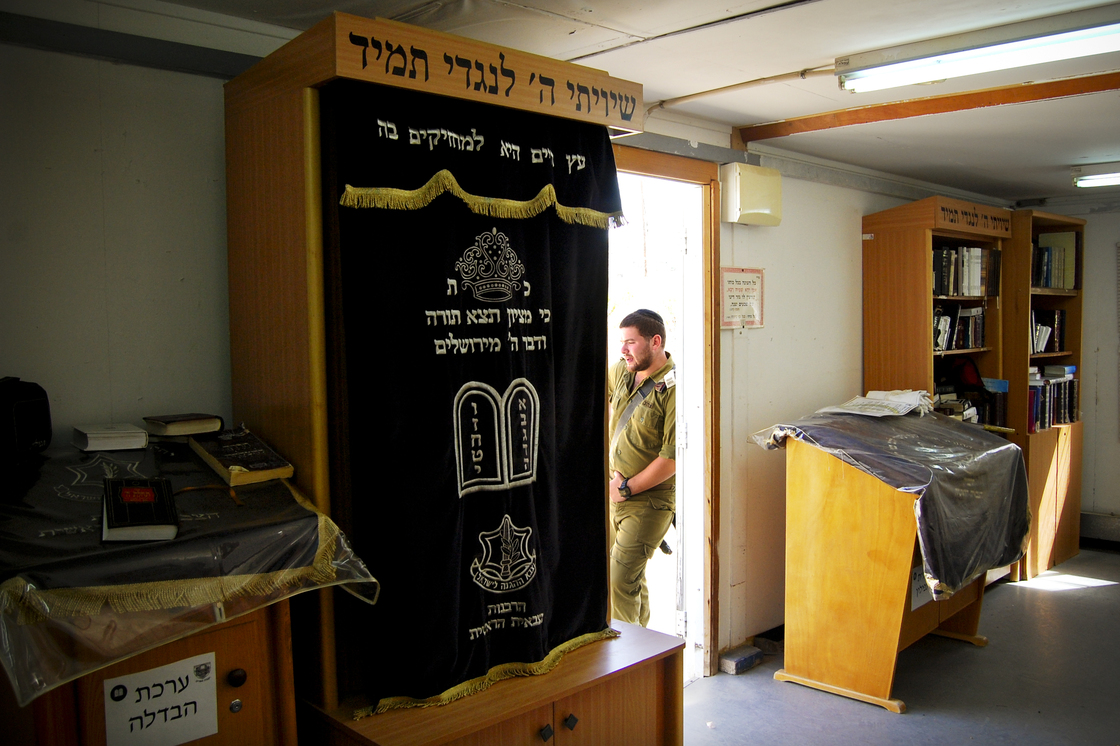
An Israeli soldier in a platoon reserved for the ultra-Orthodox leans on the doorway of the unit’s makeshift synagogue. The military accommodates the religious needs of ultra-Orthodox soldiers by allowing time for Torah study and prayers three times daily.


Emily Harris/NPR


An Israeli soldier in a platoon reserved for the ultra-Orthodox leans on the doorway of the unit’s makeshift synagogue. The military accommodates the religious needs of ultra-Orthodox soldiers by allowing time for Torah study and prayers three times daily.


Emily Harris/NPR


Moshe Haim always wanted to be a soldier. The 20-year-old is now a sergeant, more than halfway through three years of service in the Israeli military.


But when he goes home on leave, he doesn’t talk about his military experiences to any of his eight siblings, especially his brothers.


“I know that for my parents and my brothers the first, best choice is to be in the yeshiva and study there,” he says at a small West Bank outpost where he’s stationed. “It wasn’t good for me, but my brothers are still pure.”


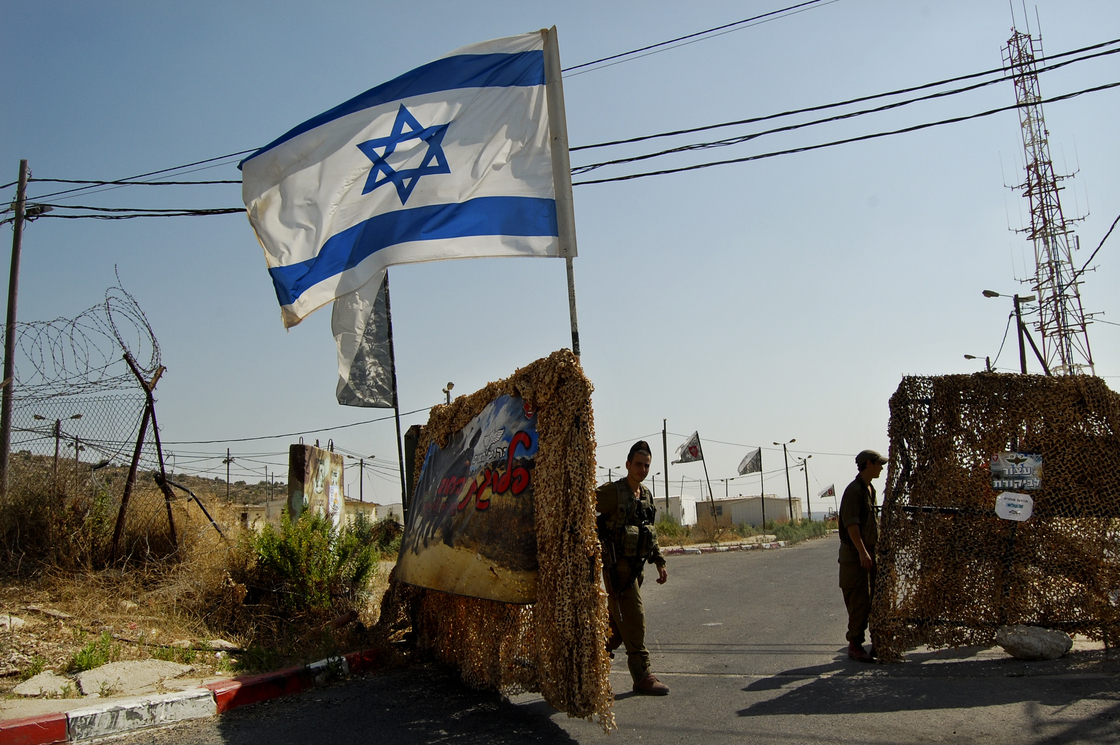
Soldiers close the gate to the tiny West Bank outpost, right next door to a Jewish settlement, where the HaHod platoon of the ultra-Orthodox Netzah Yahuda battalion is stationed.


Emily Harris/NPR

Soldiers close the gate to the tiny West Bank outpost, right next door to a Jewish settlement, where the HaHod platoon of the ultra-Orthodox Netzah Yahuda battalion is stationed.


Soldiers close the gate to the tiny West Bank outpost, right next door to a Jewish settlement, where the HaHod platoon of the ultra-Orthodox Netzah Yahuda battalion is stationed.


Emily Harris/NPR


Haim grew up in an ultra-Orthodox Jewish family in Israel. Tradition and deeply held values in that community dictate that boys study the Torah and other religious texts at school and into adulthood.


If they do, they are excused from military service in Israel. This exemption to the otherwise universal draft for Israeli Jews has been in existence for as long as Israel has been a country — part of an early bargain struck between religious and Zionist leaders.


Haim thought it would be impossible to serve in the military and remain part of his community. But in his teens, he learned of a special battalion that is entirely made up of ultra-Orthodox men.


“I heard about it from people in my neighborhood who went and remained religious,” Haim, now a sergeant, says. “It was a good solution for me because it combines Torah with fighting.”


Like Haim, Lt. Yoel Bagad left yeshiva for the military.


“It was too hard for me to study from seven in the morning to eleven at night,” he says.


The number of ultra-Orthodox men leaving full-time religious study and serving in the Israeli military has grown significantly in the past five years. In 2007, slightly fewer than 300 ultra-Orthodox served. Last year, 1,500 did.


Now the Israeli government is moving to end the exemption for religious scholars. This week, the Cabinet approved a draft law that, if it passes parliament, would phase in mandatory ultra-Orthodox service over four years. About 1,800 Torah students would still be excused, compared to about 8,000 a year now.


A Matter Of Israel’s Future


This would be an enormous change in Israel, and it has fanned the flames of an already highly charged debate about the role of conservative religious communities in the country. Tens of thousands of ultra-Orthodox have protested the military proposals — demonstrating in Europe and New York as well as in Israel. Some ultra-Orthodox soldiers have been attacked when they return to their neighborhoods.


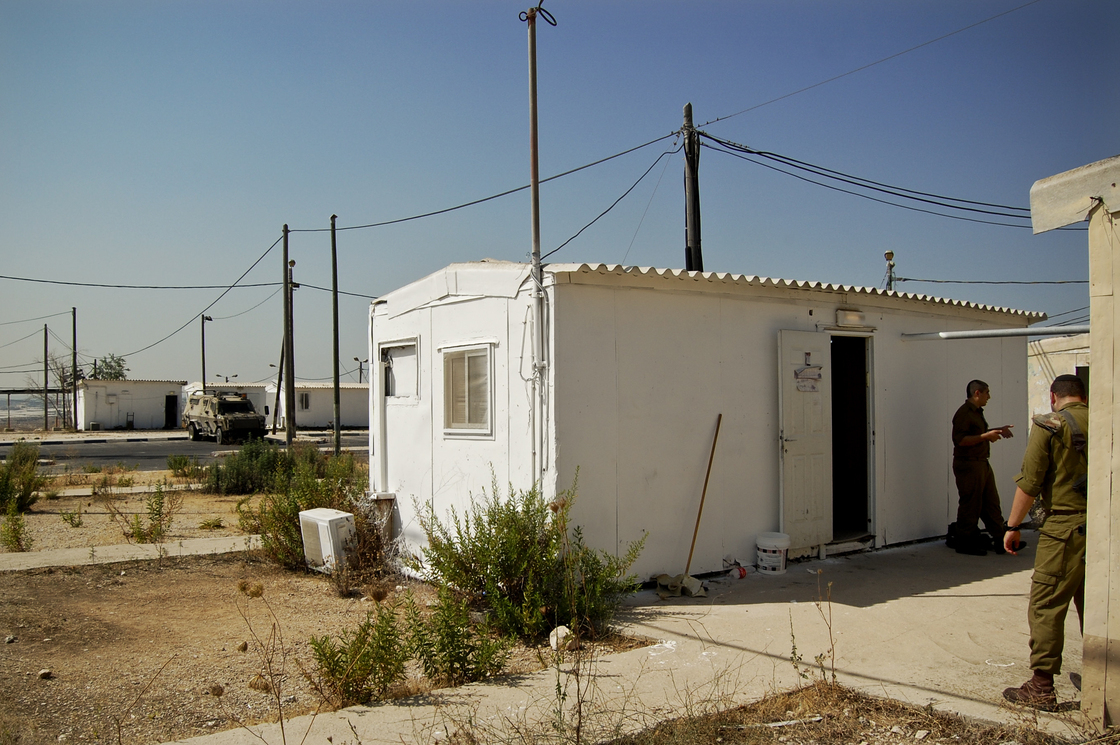
A white metal trailer serves as the makeshift synagogue at the West Bank outpost of an all-ultra-Orthodox Israeli military platoon.


Emily Harris/NPR

A white metal trailer serves as the makeshift synagogue at the West Bank outpost of an all-ultra-Orthodox Israeli military platoon.


A white metal trailer serves as the makeshift synagogue at the West Bank outpost of an all-ultra-Orthodox Israeli military platoon.


Emily Harris/NPR


Yitzak Pindrus, an ultra-Orthodox Jew and a deputy mayor of Jerusalem, says this is a political debate much bigger than the military draft. He says it’s about the future of Israel.


“We believe deeply that the future of the Jewish nation depends on the people that study the Torah,” he says. “[Supporters of this law] are trying to make our community not legitimate. They are frightened of the growth of the ultra-Orthodox community.”


That growth rate is significant — nearly twice as high as the general population. At the same time, employment levels among ultra-Orthodox men are significantly lower. This means lower tax receipts and higher social support costs for the government.


The military sees service as a way to get more ultra-Orthodox men into the workforce.


“When they are in the Israeli Defense Forces we give them training and education which helps them find jobs,” says Lt. Col. Amir Badmani in the planning department of the Israeli military. “About 90 percent of the ultra-Orthodox who serve in the IDF join the workforce afterward.”


Other Minorities’ Experiences


The IDF is laying the groundwork to incorporate thousands of new draftees. A new pre-military academy for ultra-Orthodox is due to open in a few months. The military is also drawing on its experience with other Israeli minorities, like the Druze, an Arabic-speaking religious group who also have their own military units. The special units are not obligatory, but one Druze commander, Lt Col. Sha’adi Abu Faris, says it’s a good option for many draftees.


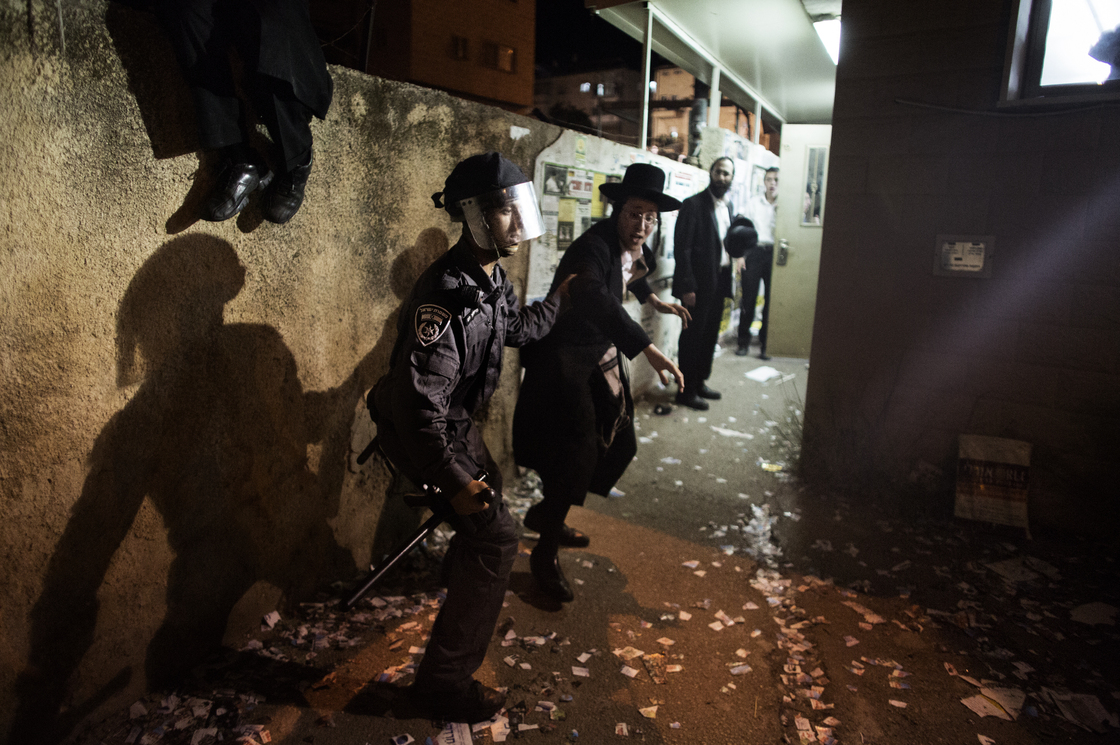
An Israeli police officer arrests an Ultra-Orthodox Jew during a protest against the draft law in Jerusalem on May 16.


Marco Longari/AFP/Getty Images

An Israeli police officer arrests an Ultra-Orthodox Jew during a protest against the draft law in Jerusalem on May 16.


An Israeli police officer arrests an Ultra-Orthodox Jew during a protest against the draft law in Jerusalem on May 16.


Marco Longari/AFP/Getty Images


“When the commanders themselves are Druze, they understand the soldiers’ faith. They are able to be much more accommodating,” Faris says. “Also, there is a major effort to help soldiers with whatever they need, for example, improving Hebrew, even at the expense of training time.”


Ending the draft exemption for yeshiva scholars was a promise of Yesh Atid, the new political party that rose to prominence in January elections. Supporters, including Prime Minister Benjamin Netanyahu, call this a way to equalize the “burden” of contributing to society.


“Our objective is two-fold,” he said before the Cabinet vote approving mandatory military service. “Integrating young ultra-Orthodox into IDF and national service and, no less important, integrating them into the labor force.”


But Haim Zicherman, who grew up in an ultra-Orthodox family but no longer practices Judaism in that tradition, says integration is coming naturally, as the number of “modern” members of the community grows.


He says there are many legal problems with the draft law, including inequity — most ultra-Orthodox women will still be excused from military service — and potential corruption in whatever system is finally set up to choose the 1,800 young men who will still be allowed to study religious texts full time.


But Zicherman’s biggest fear is that attempts to enforce the law will lead to more divisions and confrontations among Israelis.


“What are you going to do if at the end of the process the yeshiva students say, ‘I don’t want to go to the army,’” he asks. “Are you going to come with tanks and take everybody to jail?”


News


Israel"s Internal Battle Over Ultra-Orthodox Soldiers