Showing posts with label Clinic. Show all posts

Friday, February 14, 2014

Judge allows clinic to evade consequences of dangerous health violations

CHICAGO, Feb. 11, 2014 /Christian Newswire/ – Today, Thomas More Society attorneys along with Illinois Right to Life issued a women’s public health memorandum demanding the Illinois Attorney General’s office appeal Judge Alexander White’s decision to permit a $ 77 payment to satisfy the Illinois Department of Public Health’s $ 36,000 fine against Women’s Aid Clinic.


According to the women’s public health memo, the Illinois Department of Public Health (IDPH) conducted its first health inspection in 15 years of Women’s Aid Clinic on September 9, 2011. Following the inspection, the IDPH shut down the women’s clinic on an emergency basis, assessing countless sanitary violations. Some of these violations included storing frozen tv dinners in the same biohazard refrigerator as eight containers of fetal tissue. All five recovery rooms contained rust and nearly twenty medication cups with Motrin and Tylenol also had crumbs in them. A technician was observed by inspectors as “retrieving a paper towel from a garbage receptacle and using the same paper towel to cover a tray that would serve food items to patients.” The IDPH inspection report also cited the women’s clinic for failing to perform CPR on a girl who died following an abortion.


“The women of Illinois deserve well-kept and sanitary health centers, not substandard ones,” said Emily Zender, executive director of Illinois Right to Life. “We demand the Illinois Attorney General’s office treat women better by holding this women’s health center fully accountable for abusing their female patients. Failure to appeal the ruling effectively creates get-out-of-jail-free cards that allow health centers to skirt fines by playing Chicago-style politics with women’s health.”


According to the memo, after the IDPH inspection and assessment of fines, Women’s Aid Clinic owner Larisa Rozansky informed the IDPH that “…Women’s Aid Clinic, IDPH LIC. NO. 7001647 will be closing as of November 10, 2011.” However, the memo details evidence that Rozansky closed Women’s Aid Clinic only to promptly open Women’s Aid Center in its place — at the same address, with the same phone number, and using the same website.


“Compelling evidence makes it clear that Women’s Aid Clinic is attempting to duck responsibility for their flagrant disregard for women’s safety simply by making a minor, technical change to their name,” said Jocelyn Floyd, an attorney for the Thomas More Society. “How can the women of this state trust the Illinois Department of Public Health to protect female patients if the consequences for not meeting Illinois’ medical standards are just brushed aside?”


According to the public health memorandum, strongly persuasive evidence was produced to Judge Alexander White that Women’s Aid Clinic changed its name and filed a new business registration to avoid paying the sanitary violation fines. However, the women’s health center’s attempt to skirt the law was ignored and its fine was reduced to $ 77, which was the amount claimed to be remaining in the bank account on the entity.


The Illinois Attorney General has until February 13, 2014, to appeal Judge Alexander’s January 14 ruling that allows a $ 77 payment to suffice for $ 36,000 worth of violations.


Post to Twitter Post to Facebook Post to Reddit Post to Technorati


Conservative Daily News


Judge allows clinic to evade consequences of dangerous health violations

Wednesday, January 15, 2014

US supreme court justices appear skeptical of abortion clinic buffer zones


Dan Roberts
theguardian.com
January 15, 2014


US supreme court justices appear sceptical of abortion clinic buffer zones


Court’s conservatives may be ready to strike down Massachusetts abortion clinic buffer zone law on free speech grounds


The battle lines of America’s culture wars threatened to draw closer on Wednesday, as the supreme court questioned the constitutionality of buffer zones designed to keep pro-life activists away from abortion clinics.


Though a final decision will not be reached for several months, a narrow majority of justices on the court, which is dominated by a conservative bloc, appeared sympathetic to free speech arguments against at least parts of the Massachusetts law.


“The government doesn’t get to decide what is said on the public pavement,” said Mark Rienzi, the lawyer representing the pro-life activists who brought the case.


Read more


This article was posted: Wednesday, January 15, 2014 at 2:51 pm


Infowars


US supreme court justices appear skeptical of abortion clinic buffer zones

TYT Network Reports - Anti-Abortion Judge: Drive Faster If The Clinic Is Far Away

At Not Just The News, the privacy of our visitors is of extreme importance to us (See this article to learn more about Privacy Policies.). This privacy policy document outlines the types of personal information is received and collected by Not Just The News and how it is used.


Log Files


Like many other Web sites, Not Just The News makes use of log files. The information inside the log files includes internet protocol (IP) addresses, type of browser, Internet Service Provider (ISP), date/time stamp, referring/exit pages, and number of clicks to analyze trends, administer the site, track user"s movement around the site, and gather demographic information. IP addresses, and other such information are not linked to any information that is personally identifiable.


Cookies and Web Beacons


Not Just The News does use cookies to store information about visitors preferences, record user-specific information on which pages the user access or visit, customize Web page content based on visitors browser type or other information that the visitor sends via their browser.


DoubleClick DART Cookie


  • Google, as a third party vendor, uses cookies to serve ads on Not Just The News.

  • Google"s use of the DART cookie enables it to serve ads to users based on their visit to Not Just The News and other sites on the Internet.

  • Users may opt out of the use of the DART cookie by visiting the Google ad and content network privacy policy at the following URL - http://www.google.com/privacy_ads.html.

These third-party ad servers or ad networks use technology to the advertisements and links that appear on Not Just The News send directly to your browsers. They automatically receive your IP address when this occurs. Other technologies ( such as cookies, JavaScript, or Web Beacons ) may also be used by the third-party ad networks to measure the effectiveness of their advertisements and / or to personalize the advertising content that you see.


Not Just The News has no access to or control over these cookies that are used by third-party advertisers.


You should consult the respective privacy policies of these third-party ad servers for more detailed information on their practices as well as for instructions about how to opt-out of certain practices. Not Just The News"s privacy policy does not apply to, and we cannot control the activities of, such other advertisers or web sites.


If you wish to disable cookies, you may do so through your individual browser options. More detailed information about cookie management with specific web browsers can be found at the browser"s respective websites.


TYT Network Reports - Anti-Abortion Judge: Drive Faster If The Clinic Is Far Away

Friday, January 10, 2014

Fertility Clinic Worker May Have Secretly Fathered Kids

Fertility Clinic Worker May Have Secretly Fathered Kids
http://pixel.quantserve.com/pixel/p-89EKCgBk8MZdE.gif


(Newser) – An exceedingly creepy story out of Utah suggests that a male receptionist at a fertility clinic secretly swapped in his own sperm during treatments, fathering at least one child and probably more, reports LiveScience. Oh, and this receptionist just happened to be a convicted kidnapper who once held a woman captive and used electroshock therapy on her in a failed attempt to get her to fall for him, reports KUTV. He died in 1999, but all of this has now resulted in a website reaching out to other possible victims called Was Your Child Fathered by Thomas Lippert?


The crazy story, first reported at a genealogist’s blog, began unwinding when a couple and their 21-year-old daughter had their DNA tested as a lark via 23andMe. To their shock, they discovered that daughter and father weren’t related. That made no sense because, while the couple had used the now-shuttered Reproductive Medical Technologies Inc. for help conceiving, the husband had given his own sperm to be used in the process. Further testing then revealed that the daughter’s real biological father was Lippert, who had worked at the clinic in the late 1980s and into the 1990s. The wife recalls him having photos of babies at his desk, and she fears they were all fathered by him. The clinic was affiliated with the University of Utah, which has been conducting its own investigation, notes the Salt Lake Tribune.


Health from Newser


Read more about Fertility Clinic Worker May Have Secretly Fathered Kids and other interesting subjects concerning Health and Lifestyle at TheDailyNewsReport.com

Tuesday, July 30, 2013

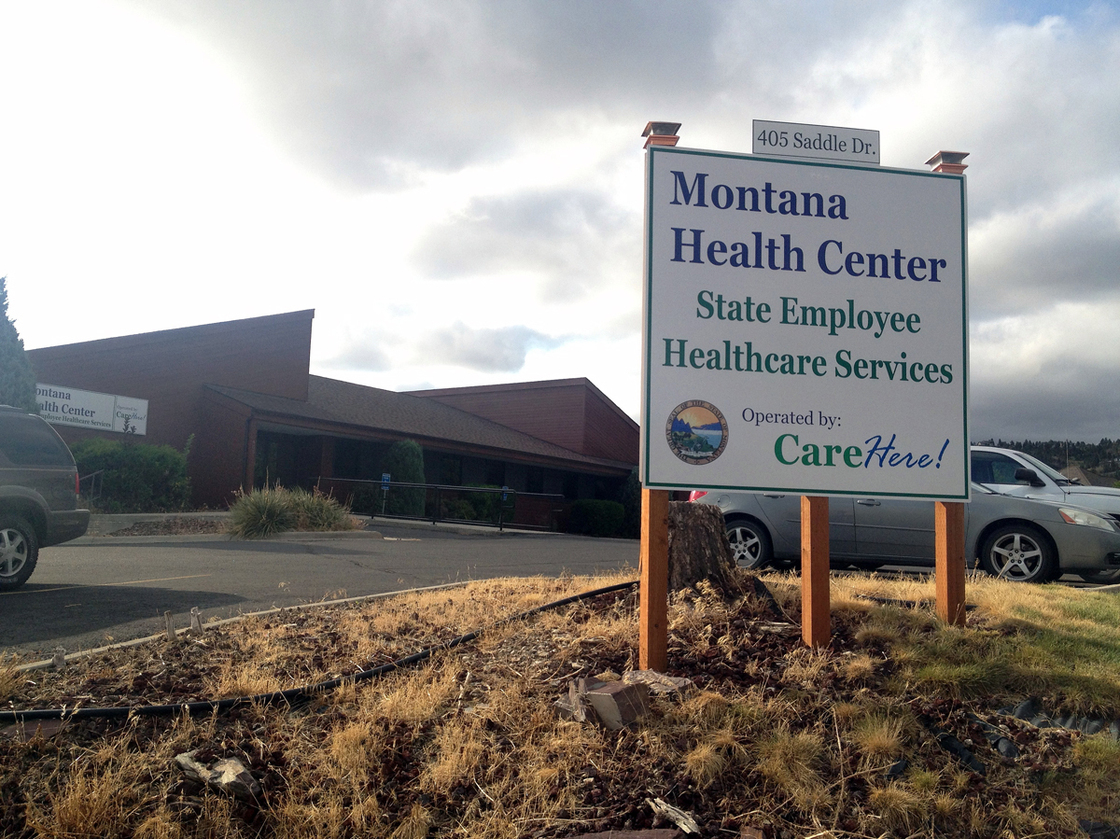
Montana"s State-Run Free Clinic Sees Early Success


Montana opened the first government-run medical clinic for state employees last fall. A year later, the state says the clinic is already saving money.


Dan Boyce for NPR

Montana opened the first government-run medical clinic for state employees last fall. A year later, the state says the clinic is already saving money.


Montana opened the first government-run medical clinic for state employees last fall. A year later, the state says the clinic is already saving money.


Dan Boyce for NPR


A year ago, Montana opened the nation’s first clinic for free primary healthcare services to its state government employees. The Helena, Mont., clinic was pitched as a way to improve overall employee health, but the idea has faced its fair share of political opposition.


A year later, the state says the clinic is already saving money.


Pamela Weitz, a 61-year-old state library technician, was skeptical about the place at first.


“I thought it was just the goofiest idea, but you know, it’s really good,” she says. In the last year, she’s been there for checkups, blood tests and flu shots. She doesn’t have to go; she still has her normal health insurance provided by the state. But at the clinic, she has no co-pays, no deductibles. It’s free.


That’s the case for the Helena area’s 11,000 state workers and their dependents. With an appointment, patients wait just a couple minutes to see a doctor. Visitation is more than 75 percent higher than initial estimates.


“For goodness sakes, of course the employees and the retirees like it, it’s free,” says Republican State Sen. Dave Lewis.


He wonders what that free price tag is actually costing the state government as well as the wider Helena community.


“If they’re taking money out of the hospital’s pocket, the hospital’s raising the price on other things to offset that,” Lewis says.


He and others faulted then-Gov. Brian Schweitzer for moving ahead with the clinic last year without approval of the state legislature, although it was not needed.


Now, Lewis is a retired state employee himself. He says, personally, he does like going there, too.


“They’re wonderful people, they do a great job, but as a legislator, I wonder how in the heck we can pay for it very long,” Lewis says.


Lower Costs For Employees And Montana


The state contracts with a private company to run the facility and pays for everything — wages of the staff, total costs of all the visits. Those are all new expenses, and they all come from the budget for state employee healthcare.


Even so, division manager Russ Hill says it’s actually costing the state $ 1,500,000 less for healthcare than before the clinic opened.


“Because there’s no markup, our cost per visit is lower than in a private fee-for-service environment,” Hill says.


Physicians are paid by the hour, not by the number of procedures they prescribe like many in the private sector. The state is able to buy supplies at lower prices.


Because there’s no markup, our cost per visit is lower than in a private fee-for-service environment.


Bottom line: a patient’s visit to the employee health clinic costs the state about half what it would cost if that patient went to a private doctor. And because it’s free to patients, hundreds of people have come in who had not seen a doctor for at least two years.


Hill says the facility is catching a lot, including 600 people who have diabetes, 1,300 people with high cholesterol, 1,600 people with high blood pressure and 2,600 patients diagnosed as obese. Treating these conditions early could avoid heart attacks, amputations, or other expensive hospital visits down the line, saving the state more money.


Clinic operations director and physician’s assistant Jimmie Barnwell says this model feels more rewarding to him.


“Having those barriers of time and money taken out of the way are a big part [of what gets] people to come into the clinic. But then, when they come into the clinic, they get a lot of face time with the nurses and the doctors,” Barnwell says.


That personal attention has proved valuable for library technician Pamela Weitz. A mammogram late last year found a lump.


“That doctor called me like three or four times, and I had like three letters from the clinic reminding me, ‘You can’t let this go, you’ve got to follow up on it,’ ” she says.


Two more mammograms and an ultrasound later, doctors think it’s just a calcium deposit, but they want her to keep watching it and come in for another mammogram in October.


Weitz says they’ve had that same persistence with her other health issues like her high blood pressure. She feels the clinic really cares about her.


“Yeah, they’ve been very good, very good,” she says.


Montana recently opened a second state employee health clinic in Billings, the state’s largest city. Others are in the works.


News


Montana"s State-Run Free Clinic Sees Early Success

Sunday, June 2, 2013

Four Years After Murder of Dr. George Tiller, His Wichita Abortion Clinic Reopens Despite Threats


Transcript


This is a rush transcript. Copy may not be in its final form.


JUAN GONZÁLEZ: Four years ago today, Dr. George Tiller was murdered. The 67-year-old abortion provider was shot point-blank in the forehead as he attended services in his Wichita, Kansas, church. Dr. Tiller’s clinic was one of a handful in the nation that performed abortions after the 24th week of pregnancy. He faced constant threats and incidents of violence and vandalism in the decades leading up to his death. His clinic was bombed in 1985. In 1993, he survived an assassination attempt with gunshot wounds to both arms.


This is a clip from a 2001 interview with Dr. Tiller. It’s an outtake from a film made by Physicians for Reproductive Health called Voices of Choice. Here, Tiller talks about how he took over his father’s family medical practice and discovered that his father had provided abortions for women in the years before it became legal.


DR. GEORGE TILLER: A young woman, for whom Dad had already delivered two babies, came to him pregnant again right away. And she said something to the effect that “I can’t take it. Can you help me?” And those are the two common denominators. That is apparently the way you ask for an abortion from your regular doctor before abortion was legal. At least that’s my impression. You know, the common denominator: “I can’t take it. Can you help me?” Dad said, “No.” Big families were in vogue. “By the time the baby gets here, everything will be all right.” She went out, had a non-healthcare-provider abortion, and came back 10 days to two weeks later and died.


Now, I have had the unique experience of delivering two and three babies for Tiller Kansas—for Tiller family practice patients, second- and third-generation babies. I know what that neat relationship is between a physician and the woman for whom he delivers two or three babies. I’ve had a relationship. It’s a neat relationship. Having had that relationship, I can understand how upset my father was. I do not know whether he did a hundred abortions or 200 abortions or 300 abortions. I think it may have been something like 200 over a period of about 20 years. But I don’t know for sure.


I am a woman-educated physician. I don’t know who many abortions he did, but the women in my father’s practice for whom he did abortions educated me and taught me that abortion is not about babies, it’s not about families; abortion is about women’s hopes and dreams, potential, the rest of their lives. Abortion is a matter of survival for women.


AMY GOODMAN: That was Dr. George Tiller speaking in 2001. He was murdered four years ago today. The man who assassinated him, eight years after he spoke in that clip, anti-choice extremist Scott Roeder, is serving a life sentence. The four years since Tiller was murdered have seen a wave of new abortion restrictions. Eight states now ban abortion after 20 weeks of pregnancy. Arizona Congressmember Trent Franks recently announced his intention to seek such a ban nationwide. Meanwhile, clinics across the country have been threatened by laws aimed at shutting them down.


For more, we go now to Julie Burkhart, director and founder of the Trust Women Foundation. She worked for eight years with Dr. Tiller before he was assassinated. Last month she reopened Tiller’s clinic, which had been closed for the four years since his death. She’s joining us from the newly opened South Wind Women’s Center in Wichita.


Welcome back to Democracy Now!, Dr. Burkhart. Can you talk about the opening of your clinic and what this means to you, Julie Burkhart, four years after he was murdered?


JULIE BURKHART: Well, thank you, Amy. And it’s wonderful to be with you today.


We are just delighted. And I think we’re still in a bit of awe that we have been able to finally reopen the clinic here in Wichita for women in this community and beyond. We have had approximately 200 patient visits in just the two short months that we’ve been open. And we are just so happy to be back in this community.


JUAN GONZÁLEZ: Julie Burkhart, I want ask you about some of the threats that have been made against you. David Leach from the extremist anti-choice group Army of God recently posted audio from a jailhouse conversation with Dr. Tiller’s murderer, Scott Roeder, where Roeder referred to you as “Julie Darkheart” and says you are, quote, “kind of painting a target on [yourself]” by reopening Dr. Tiller’s clinic. This is Scott Roeder.


SCOTT ROEDER: To walk in there and reopen a clinic, a murder mill, where—where a man was stopped, you know, it’s almost like putting a target on your back saying, “Well, let’s see if you can shoot me.” You know? But, you know, I have to go back to what Mike—Pastor Mike Bray said: you know, if 100 abortionists were shot, they’d probably go out of business. So, I think eight have been shot, so we’ve got 92 to go. And maybe she’ll be—maybe she’ll be number nine.


JUAN GONZÁLEZ: That was Scott Roeder, who murdered Dr. Tiller four years ago today. Your response? And what has been the problems that you’ve been confronting in attempts to prevent your clinic from reopening?


JULIE BURKHART: Well, and, yes, these—this rhetoric is definitely to be taken seriously, as it incites people to violence, as we’ve seen across this country. We have had anti-choice groups here in the community who have tried to rezone our property. They’ve tried to slow us—well, they tried to slow us down during renovations by complaining that we didn’t have proper permits when we were doing renovations. You know, then, of course, they’re trying at the state level to pass legislation to shut us down, as well. But these threats are definitely to be taken seriously, and they are chilling. However, women still need abortion care. And there have to be, you know, people in this country who are willing to provide that to women.


AMY GOODMAN: Very quickly, Julie Burkhart, the Kansas Department of Corrections has filed an administrative charge against Roeder under a prison regulation banning threats and intimidation because of his comments about you. People have stood outside your house with signs that say, “Where is your church?” Of course, Dr. Tiller was murdered in church. What gives you the courage to continue?


JULIE BURKHART: Well, I don’t think that the rights of women in this part of the country should be curtailed just because we have more—well, we have extremists here in this part of the country, as well as other parts of the country, but it’s more of a hotbed here. And we have a more conservative mindset here. But that does not mean that women should be denied their constitutional rights. And so, that, you know—and I am from this part of the country, so that that’s what gives me the courage and determination.


AMY GOODMAN: Julie Burkhart, I want to thank you for being with us. She’s the director of the clinic that George Tiller ran until his murder four years ago today.


Powered By WizardRSS.com | RFID Wallet Blocking Cards

Democracy Now!

Four Years After Murder of Dr. George Tiller, His Wichita Abortion Clinic Reopens Despite Threats

Saturday, June 1, 2013

Four Years After Murder of Dr. George Tiller, His Wichita Abortion Clinic Reopens Despite Threats


Transcript


This is a rush transcript. Copy may not be in its final form.


JUAN GONZÁLEZ: Four years ago today, Dr. George Tiller was murdered. The 67-year-old abortion provider was shot point-blank in the forehead as he attended services in his Wichita, Kansas, church. Dr. Tiller’s clinic was one of a handful in the nation that performed abortions after the 24th week of pregnancy. He faced constant threats and incidents of violence and vandalism in the decades leading up to his death. His clinic was bombed in 1985. In 1993, he survived an assassination attempt with gunshot wounds to both arms.


This is a clip from a 2001 interview with Dr. Tiller. It’s an outtake from a film made by Physicians for Reproductive Health called Voices of Choice. Here, Tiller talks about how he took over his father’s family medical practice and discovered that his father had provided abortions for women in the years before it became legal.


DR. GEORGE TILLER: A young woman, for whom Dad had already delivered two babies, came to him pregnant again right away. And she said something to the effect that “I can’t take it. Can you help me?” And those are the two common denominators. That is apparently the way you ask for an abortion from your regular doctor before abortion was legal. At least that’s my impression. You know, the common denominator: “I can’t take it. Can you help me?” Dad said, “No.” Big families were in vogue. “By the time the baby gets here, everything will be all right.” She went out, had a non-healthcare-provider abortion, and came back 10 days to two weeks later and died.


Now, I have had the unique experience of delivering two and three babies for Tiller Kansas—for Tiller family practice patients, second- and third-generation babies. I know what that neat relationship is between a physician and the woman for whom he delivers two or three babies. I’ve had a relationship. It’s a neat relationship. Having had that relationship, I can understand how upset my father was. I do not know whether he did a hundred abortions or 200 abortions or 300 abortions. I think it may have been something like 200 over a period of about 20 years. But I don’t know for sure.


I am a woman-educated physician. I don’t know who many abortions he did, but the women in my father’s practice for whom he did abortions educated me and taught me that abortion is not about babies, it’s not about families; abortion is about women’s hopes and dreams, potential, the rest of their lives. Abortion is a matter of survival for women.


AMY GOODMAN: That was Dr. George Tiller speaking in 2001. He was murdered four years ago today. The man who assassinated him, eight years after he spoke in that clip, anti-choice extremist Scott Roeder, is serving a life sentence. The four years since Tiller was murdered have seen a wave of new abortion restrictions. Eight states now ban abortion after 20 weeks of pregnancy. Arizona Congressmember Trent Franks recently announced his intention to seek such a ban nationwide. Meanwhile, clinics across the country have been threatened by laws aimed at shutting them down.


For more, we go now to Julie Burkhart, director and founder of the Trust Women Foundation. She worked for eight years with Dr. Tiller before he was assassinated. Last month she reopened Tiller’s clinic, which had been closed for the four years since his death. She’s joining us from the newly opened South Wind Women’s Center in Wichita.


Welcome back to Democracy Now!, Dr. Burkhart. Can you talk about the opening of your clinic and what this means to you, Julie Burkhart, four years after he was murdered?


JULIE BURKHART: Well, thank you, Amy. And it’s wonderful to be with you today.


We are just delighted. And I think we’re still in a bit of awe that we have been able to finally reopen the clinic here in Wichita for women in this community and beyond. We have had approximately 200 patient visits in just the two short months that we’ve been open. And we are just so happy to be back in this community.


JUAN GONZÁLEZ: Julie Burkhart, I want ask you about some of the threats that have been made against you. David Leach from the extremist anti-choice group Army of God recently posted audio from a jailhouse conversation with Dr. Tiller’s murderer, Scott Roeder, where Roeder referred to you as “Julie Darkheart” and says you are, quote, “kind of painting a target on [yourself]” by reopening Dr. Tiller’s clinic. This is Scott Roeder.


SCOTT ROEDER: To walk in there and reopen a clinic, a murder mill, where—where a man was stopped, you know, it’s almost like putting a target on your back saying, “Well, let’s see if you can shoot me.” You know? But, you know, I have to go back to what Mike—Pastor Mike Bray said: you know, if 100 abortionists were shot, they’d probably go out of business. So, I think eight have been shot, so we’ve got 92 to go. And maybe she’ll be—maybe she’ll be number nine.


JUAN GONZÁLEZ: That was Scott Roeder, who murdered Dr. Tiller four years ago today. Your response? And what has been the problems that you’ve been confronting in attempts to prevent your clinic from reopening?


JULIE BURKHART: Well, and, yes, these—this rhetoric is definitely to be taken seriously, as it incites people to violence, as we’ve seen across this country. We have had anti-choice groups here in the community who have tried to rezone our property. They’ve tried to slow us—well, they tried to slow us down during renovations by complaining that we didn’t have proper permits when we were doing renovations. You know, then, of course, they’re trying at the state level to pass legislation to shut us down, as well. But these threats are definitely to be taken seriously, and they are chilling. However, women still need abortion care. And there have to be, you know, people in this country who are willing to provide that to women.


AMY GOODMAN: Very quickly, Julie Burkhart, the Kansas Department of Corrections has filed an administrative charge against Roeder under a prison regulation banning threats and intimidation because of his comments about you. People have stood outside your house with signs that say, “Where is your church?” Of course, Dr. Tiller was murdered in church. What gives you the courage to continue?


JULIE BURKHART: Well, I don’t think that the rights of women in this part of the country should be curtailed just because we have more—well, we have extremists here in this part of the country, as well as other parts of the country, but it’s more of a hotbed here. And we have a more conservative mindset here. But that does not mean that women should be denied their constitutional rights. And so, that, you know—and I am from this part of the country, so that that’s what gives me the courage and determination.


AMY GOODMAN: Julie Burkhart, I want to thank you for being with us. She’s the director of the clinic that George Tiller ran until his murder four years ago today.


Powered By WizardRSS.com | RFID Wallet Blocking Cards

Democracy Now!

Four Years After Murder of Dr. George Tiller, His Wichita Abortion Clinic Reopens Despite Threats

Friday, May 31, 2013

Four Years After Murder of Dr. George Tiller, His Wichita Abortion Clinic Reopens Despite Threats


Today marks the fourth anniversary of the murder of Dr. George Tiller, a 67-year-old abortion provider who was shot point blank in the forehead as he attended church services in Wichita, Kansas. Tiller’s clinic was one of a handful in the nation that performed abortions after the 24th week of pregnancy. He faced constant threats and incidents of violence and vandalism in the decades leading up to his death. The man who assassinated him, anti-choice extremist Scott Roeder, is serving a life sentence and was recently reprimanded in prison for making intimidating remarks against other abortion providers. The four years since Tiller was murdered have seen a wave of new abortion restrictions. Eight states now ban abortion after 20 weeks of pregnancy. Meanwhile, clinics across the country have been threatened by laws aimed at shutting them down. After working with Tiller for eight years, our guest Julie Burkhart joins us from South Wind Women’s Center, the newly reopened abortion clinic where Tiller worked. She is director and founder of the Trust Women Foundation. “We have had approximately 200 patient visits in just the two short months that we’ve been open. We are just so happy to be back in this community,” Burkhart says. On threats made against the clinic and her life she says, “These threats are definitely to be taken seriously and they are chilling. However, women still need abortion care. … I don’t think that the rights of women in this part of the country should be curtailed just because we have extremists.”


Powered By WizardRSS.com | RFID Wallet Blocking Cards

Democracy Now!

Four Years After Murder of Dr. George Tiller, His Wichita Abortion Clinic Reopens Despite Threats