Showing posts with label Silk. Show all posts

Saturday, October 5, 2013

Tor Can"t Always Keep You Safe; Just Ask Silk Road

via Wikipedia

It was the end of an era yesterday when the Internet’s largest (and highly profitable) black market website Silk Road was finally taken down by the feds. Its proprietor Ross William Ulbricht (aka Dread Pirate Roberts) was taken into custody and now we’re learning a lot about the site that offered everything from drugs to assassins. We’re also learning about the limits of online anonymity.


Silk Road
Named for the ancient cross-desert trade route, Silk Road was a marketplace designed to let users sell their wares—particularly, illegal goods and services. According to documents filed in conjunction with the investigation, the service saw billions of dollars pass through it in the form of untraceable Bitcoins.


To protect the site’s users, Silk Road took advantage of the Tor (The Onion Router) anonymity network which bounces your request around to make it harder to track. When you connect to Silk Road, and other websites secured by Tor, your request is bounced through a series of volunteer servers. The request uses encrypted layers, like an onion, so that each relay server can only see where the request has immediately arrived from and where it will go next.


For instance, if you’re on computer A trying to connect to website E, your request is bounced through Tor servers B, C, and D. Server B can see where you are because it’s the first hop in the chain, but it doesn’t know that you’re trying to reach website E. Server D does know what website your request is headed to, but it doesn’t know where you are. Server C doesn’t know much of anything.


It’s a clever system that has protected journalists and human rights activists, in addition to providing a modicum of security to less reputable operations. But like all security technology, it can be beaten.


Breaking Tor
Back when we looked at the Pirate Bay Browser, we highlighted a few of the problems with Tor. The big one, and the one that Tor has always admitted to, is that with careful traffic monitoring and a little math you can figure out who connects to what on Tor.


“The way we generally explain it is that Tor tries to protect against traffic analysis, where an attacker tries to learn whom to investigate,” reads a 2009 blogpost from Tor. “But Tor can’t protect against traffic confirmation (also known as end-to-end correlation), where an attacker tries to confirm a hypothesis by monitoring the right locations in the network and then doing the math.”


Basically, if you think that person A is connecting to website E, you can sit at the entry to the Tor network and at an exit point, you can eventually infer the path of travel. But you have to know who to watch before you start your investigation.


Alternatively, you can be infected with malware while on a Tor site and have your computer’s identifying information sent off to an observer. This is how the FBI was reportedly able to crack a notorious child pornography ring and bring charges against its operator, Eric Eoin Marques.


In that investigation, it appears that the FBI took control of Freedom Hosting—which hosted Marques’s site—and used them to display an error message. Within the error message was an iFrame which in turn injected code onto the computer of anyone who visited a Freedom Hosting site. Wired writes that this code captured the infected computer’s MAC address and Windows host name. This information was then packaged up and sent back to an unidentified server somewhere in Northern Virginia.


Plain Ol’ Detective Work
In the case of Silk Road, the investigation appears to have relied on more traditional policework than breaking Tor. Wired reports that the feds simply looked around for the earliest mention of Silk Road on the Internet. That led to a posting on a magic mushroom forum, which in turn led to Ulbricht’s Gmail account.


That’s not the whole story, and in fact there are a lot of gaps in the chain of events. Police somehow got a hold of several fake IDs with Ulbricht’s face on them during a border check, and somehow were able to trace Silk Road’s servers. But the initial connection to Ulbricht appears to have required no special hacking, just some persistent Googling and subpoenas.


The lesson here is that behind all the encryption and obfuscation is a person. A person who makes mistakes, a person who leaves clues, and a person who is now facing serious charges. As long as people are still people, they’ll always be vulnerable.


Image via Wikipedia


Security Watch


Tor Can"t Always Keep You Safe; Just Ask Silk Road

Thursday, October 3, 2013

Silk Road could have led the way to safer drug use | Oscar Rickett


The drug-selling website could have offered a real alternative to violent cartels – but for the FBI it was an easier target


In the end, it was relatively old-fashioned police work that brought down Ross William Ulbricht, a 29-year-old San Francisco resident who looks a bit like Emile Hirsch in Into the Wild and is thought to be the owner and operator of online drugs marketplace, Silk Road. It was partly through mundane, archaic websites such as LinkedIn and WordPress, as well as a Gmail account, that Ulbricht came to the authorities’ attention.


Like an upwardly mobile Apprentice candidate keen to impress Lord Sugar, Ulbricht just couldn’t quite stop himself from boasting of a new position on LinkedIn. Operating on the deep web, using Tor software, Silk Road was the next-generation, post-WikiLeaks way to buy drugs. The shutting down of the site feels a bit like a motorboat full of old-school toughs boarding a 21st-century pirate ship run by mild-mannered nerds. It also, despite allegations that Ulbricht paid a hitman to have a Silk Road user who was threatening him killed, feels like a shame. If the allegations are true, there is absolutely no defence for that, but they are inconclusive, and in stark contrast to descriptions of Ulbricht as an idealist, a young man who wanted to make the buying and selling of drugs a cleaner, safer affair.


The end of Silk Road feels like a shame because its closure – and the arrest of Ulbricht – simply tells us that the American government has found yet another way to waste time and money on the policing of drugs. The internet, particularly the deep web, has opened up a new front in the war on drugs. You can almost imagine drug authorities getting a perverse thrill from the prospect of a new type of adversary, a new breed of law-breaker to add colour to a picture that is mostly taken up by ultra-violent cartels. In steaming into this new world the drug authorities were, yet again, doing the wrong thing expensively.


Silk Road could have ended up providing a real alternative to the cartels. It could have taken money out of their pockets and put it into the pockets of people whose only crime was to sell drugs – as opposed to people whose many crimes include mass-murder and kidnapping. When I interviewed the former drug smuggler Brian O’Dea, he told me that it was the drug authorities’ decision to go after peaceful guys like him (“low hanging fruit”) that led to the drug-trafficking business being dominated by violent gangs. For O’Dea in the 1980s, read Ulbricht today.


Silk Road also provided a model for how the legalised selling of drugs might work. Reports suggest that the drugs were less contaminated and that the experience of buying them was less fraught. On the one hand, that just means less awkward sitting around in cars with guys you don’t really want to talk to – on the other hand, it means not being put in physical danger because you’d rather get high than get drunk.


We have to get out of the mindset of thinking that things are wrong because they are illegal. People make laws and people can change those laws. The war on drugs is hugely expensive. The criminalisation of drugs forces people to take risks they wouldn’t normally take and leads to overdoses and the contamination of substances that would not otherwise cause such extreme harm. It creates addicts and it creates dealers. Silk Road showed us a way – a hugely imperfect way, it should be noted – that these things could be overcome but our lawmakers, with their focus on punishment and their refusal to accept defeat, could not see the benefit in this. Prohibition never works but it’s still the order of the day.


theguardian.com © 2013 Guardian News and Media Limited or its affiliated companies. All rights reserved. | Use of this content is subject to our Terms & Conditions | More Feeds


Comment is free | theguardian.com

Silk Road could have led the way to safer drug use | Oscar Rickett

Saturday, July 20, 2013

From Ramen To Rotini: Following The Noodles Of The Silk Road


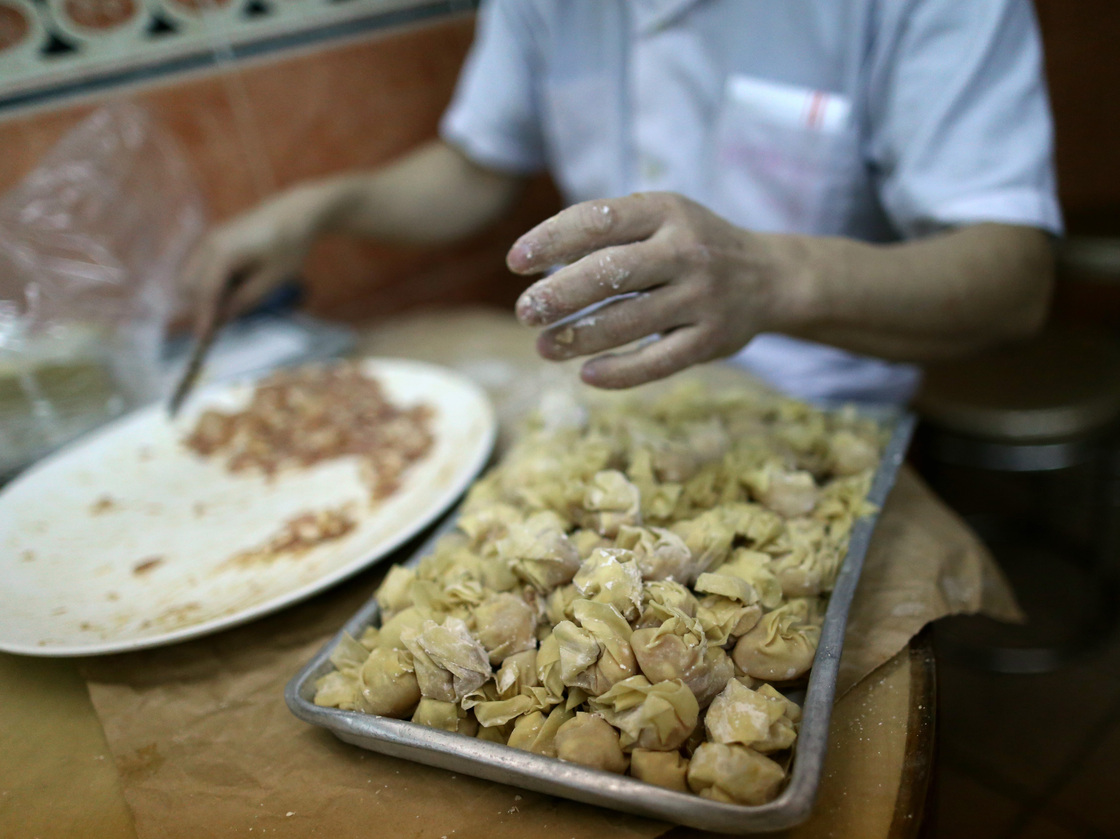
A member of the staff at the one-Michelin-starred restaurant Ho Hung Kee prepares wontons in Hong Kong.


AFP/AFP/Getty Images

A member of the staff at the one-Michelin-starred restaurant Ho Hung Kee prepares wontons in Hong Kong.


A member of the staff at the one-Michelin-starred restaurant Ho Hung Kee prepares wontons in Hong Kong.


AFP/AFP/Getty Images


Popular lore has it that the Italian merchant Marco Polo was responsible for introducing the noodle to China. This legend appeals to Italians, but if you ask the Chinese, they may beg to differ.


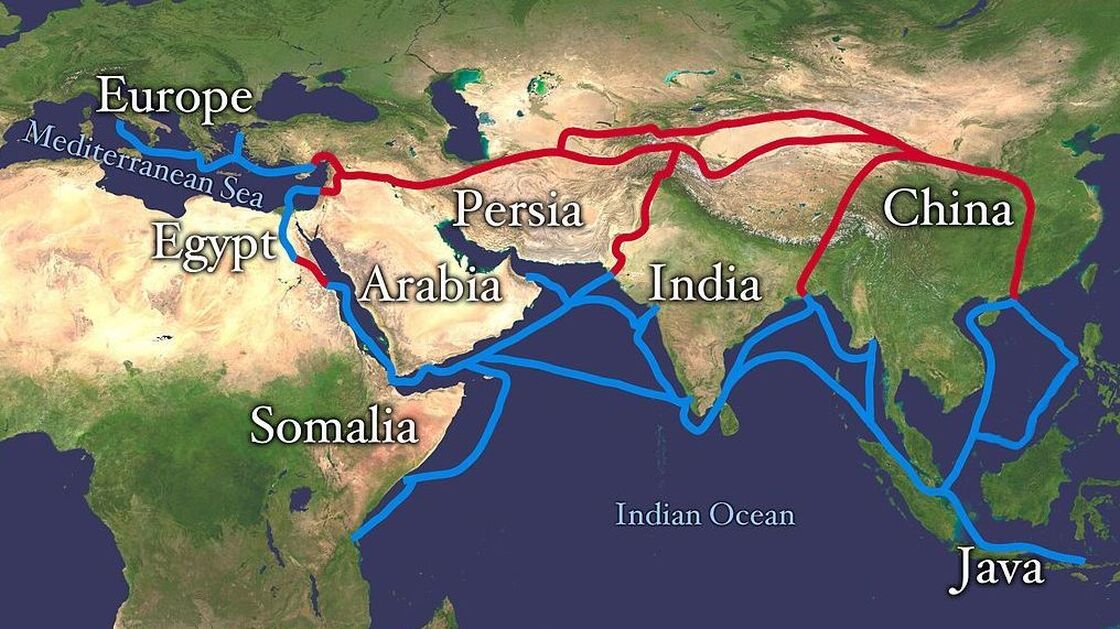
The Silk Road stretched from Eastern China to Europe and was the primary route for merchants in the ancient Chinese silk trade.


Wikimedia Commons

The Silk Road stretched from Eastern China to Europe and was the primary route for merchants in the ancient Chinese silk trade.


The Silk Road stretched from Eastern China to Europe and was the primary route for merchants in the ancient Chinese silk trade.


Wikimedia Commons


In her latest book, On the Noodle Road, author Jen Lin-Liu chronicles a six-month journey along the historic Silk Road from eastern China, through central Asia, Turkey, Iran and eventually arriving in Italy in search of the true origin of the noodle.


As Lin-Liu tells NPR’s Linda Wertheimer, the myth of pasta traveling from west to east was first popularized by Macaroni Journal, the official trade journal of the pasta manufacturers of the U.S. In 1929, the journal had a story “about how Marco Polo arrived at a destination that seemed more South Pacific than Chinese and came across natives drying strands of dough.”


But this couldn’t possibly be correct. “As it turns out, the Chinese don’t dry their pasta the way that Italians do,” she says.


So what are the historical origins of noodles in China?


“China has had a longer tradition of bread than noodles and the ripping of dough, either boiled or cooked, into a wok of boiling water was how noodles first originated in China,” says Lin-Liu.


In the Tibetan province of Qinghai, Lin-Liu finds women in a restaurant kitchen ripping long flat strands of noodles by hand to make the square shaped noodles that are typical to the region. Boiled in water, they are served up in a light mutton broth.


“They’re the right texture, chewy, just the right size, like a large postage stamp, and they’re stir-fried in a spicy broth with bits of green peppers and onions and either lamb or beef, and they’re delicious,” Lin-Liu says.


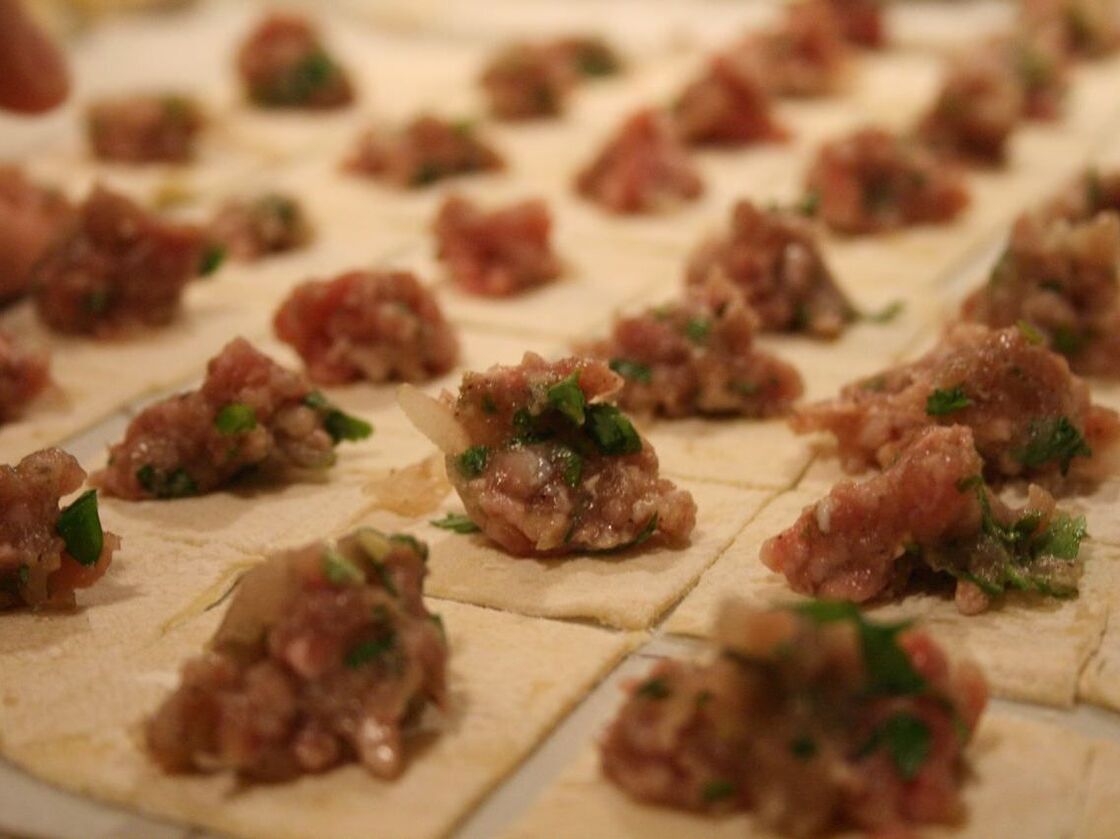
In Turkey, bits of meat are wrapped in squares of pasta to make manti.


thebittenworld/Flickr

In Turkey, bits of meat are wrapped in squares of pasta to make manti.


In Turkey, bits of meat are wrapped in squares of pasta to make manti.


thebittenworld/Flickr


Heading further west, she comes across all manner of small dough parcels containing spiced meats, vegetables and cheeses. The wontons and dumplings of China give way to the manta of Central Asia, the similarly-named manti of Turkey and finally the tortellini of Italy.


“Some people theorized that Ghengis Khan was responsible for carrying these filled pasta dishes all the way from China through Eastern Europe, where of course you have pierogies and other similar dishes,” says Lin-Liu.


But who does pasta best?


“I think that there’s a real toss-up between Italy and China,” Lin-Liu says. “At both ends of the Silk Road you really get a refinement of pasta and noodles that you don’t really see in the central part of the route.”


But this diversity along the way is what Lin-Liu believes make noodles so pleasurable. Not only can they be prepared in such different ways, but they can be topped with almost anything.


News


From Ramen To Rotini: Following The Noodles Of The Silk Road

Tuesday, July 16, 2013

World Chef: Silk Road travels inspire LA"s Hinoki & the Bird


Chef and owner of the restaurant Hinoki & the Bird David Myers (R) poses with chef Kuniko Yagi in the restaurant with one of their signature dishes, hinoki scented black cod, sweet potatoes and pistachios in Los Angeles April 19, 2013. REUTERS/Fred Prouser


1 of 2. Chef and owner of the restaurant Hinoki & the Bird David Myers (R) poses with chef Kuniko Yagi in the restaurant with one of their signature dishes, hinoki scented black cod, sweet potatoes and pistachios in Los Angeles April 19, 2013.


Credit: Reuters/Fred Prouser


LOS ANGELES | Tue Jul 16, 2013 4:18am EDT


LOS ANGELES (Reuters) – The exotic, earthy aroma from smoking sheets of smoldering hinoki wood hovering over exquisite black cod is the first hint that diners at celebrated chef David Myers’ newest restaurant are in for a culinary adventure.


Hinoki & the Bird, the Japanophile chef’s Silk Road-inspired restaurant, borrows heavily from the travels of Myers and Executive Chef Kuniko Yagi, who left banking a decade ago and worked her way up from the kitchen’s lowest rungs to her current, globe-trotting career.


The sleekly casual eatery, located near some of Los Angeles’ top talent agencies, is a departure from Sona, Myers’ elegant, Michelin one-star restaurant that opened in 2002 – a year before Food & Wine magazine bestowed on him a prestigious “Best New Chef” award.


After Sona closed in 2010, Myers and his executive chef hit the road – eating, tweeting and picking up inspiration throughout Asia.


Their journeys inform dishes such as spicy sambal skate wing, drunken duck breast and hinoki-scented black cod, the head-turning dish referenced earlier.


The telegenic duo, who are familiar to fans of foodie shows such as “Top Chef” and “Iron Chef America,” spoke with Reuters about how travel informed their careers and their latest project.


Q: David, what was the inspiration for Hinoki & the Bird’s name?


A: Hinoki is an incredible cypress tree in Japan that has the most wonderful aroma. The bird component was to capture the essence of travel and how important travel is to the creative process. It’s about the connection from California to Japan. We chronicle the bird’s travel and bring it into the menu.


Q: David, what is your vision for Hinoki & the Bird?


A: I think California is the gateway to Asia. The idea is to showcase the California bounty and the scent of the Silk Road. The flavors are light, vibrant and healthy. You can come in and eat several different things and you’re not feeling heavy. You’re feeling sharp and you’re ready to go the next day. I’ve only felt that in Asia – where you can eat a lot and drink a lot and feel great. The food of Southeast Asia is nothing but drinking food – it’s about going around having beers and going to the next place.


Q: David, which dish on Hinoki & the Bird’s menu best illustrates how your travels through Southeast Asia have influenced your food?


A: The sambal skate wing. That’s our version of a barbecue skate wing from a hawker’s stand in Singapore. That’s the classic hawker stand dish.


Q: Kuniko, what inspired you to leave banking and become a chef?


A: I wanted to make sure I could have a job anywhere in the world. I thought, maybe if I can cook really well I can go anywhere in the world and be able to have a job. (In the beginning) I wasn’t able to speak English much – but I thought I could mimic what people in the kitchen do.


Q: Kuniko, what advice would you give someone who makes a similar career leap?


A: Be humble about who you want to be. Nothing good happens in a year. I’ve been doing this for 10 years already. I started late. I was patient, and I had a couple of times where I wondered if I made the right choice.


Drunken Duck Breast


1/2 cup sake kasu (sake lees, a yeast by-product of sake making)


1 cup warm water


2 duck breasts


Salt & black pepper to taste


Pre-heat oven to 400 degrees.


In a small pot, place sake kasu and warm water and whisk over low heat until broken down to a loose texture. Remove from heat and let cool.


Score duck skin in a cross-hatch pattern and season with salt and pepper on both sides.


Cover the breasts with the sake kasu and cover with plastic wrap. Let it rest in the refrigerator for one hour.


Wash sake kasu off from duck breast and place the duck skin side down in a sauté pan over low heat, being careful not to burn. Render the skin from the breast, discarding the fat as you go.


When the skin has a golden brown color, place the breast in the oven for 7 minutes, skin side up, for medium rare.


(Reporting by Lisa Baertlein; Editing by Steve Orlofsky)


Reuters: Lifestyle


World Chef: Silk Road travels inspire LA"s Hinoki & the Bird