Showing posts with label Decades. Show all posts

Saturday, February 15, 2014

Released After Decades of Incarceration, Elders of Color Have No Safety Net


There"s something wrong with society when in some ways staying in prison is better than getting out.


This article originally appeared at New America Media, and is reprinted here with their permission.


After devoting over 20 years as a prison social worker, Fordham University researcher Tina Maschi, PhD, declared, “There’s something wrong with society when in some ways staying in prison is better than getting out. The people who are older have a much greater struggle, because they have special needs that a younger population doesn’t.”


Current efforts to release prisoners from the nation’s overcrowded and increasingly costly prisons, such as U.S. Attorney General Eric Holder’s new initiative to let out more nonviolent federal inmates, barely touching on the needs of older inmates, which Maschi and other researchers say will be more likely to be paroled because of their high health care costs and low recidivism rates.


Yet, even the 15 states that developed early-release programs for senior prisoners, according to a 2010 report by the Vera Institute of Justice, need to “implement effective reentry programs and supervision plans for elderly people.”


America’s escalation of harsh sentencing and probation policies since the 1970s, such as three-strikes convictions and mandatory sentencing laws, swelled the United States prison population to 2.4 million, the highest incarceration level in the world.


Some End Up Homeless


One result of long-sentencing policies, said Maschi, co-author of the forthcoming book chapter, “The Crisis of Aging People in Prison (Oxford University Press),” is that one-in-six state and federal inmates is 50 or older — a level that will increase to one in five by 2030. Nationally, a disproportionate 45 percent of 50-plus prisoners are African American.


Advocates like Jamie Fellner of Human Rights Watch say medical treatment of elderly prisoners costs from three to nine times higher than for inmates under 65 and can turn prisons into “nursing homes without bars.”


When they are set free, older offenders “can be dropped off on a corner somewhere,” Maschi said in an interview. She explained, “People are getting out, and if they’re eligible for Social Security, Medicaid or Medicare, they don’t have that put in place before they are released.”


Maschi stressed, “Many people end up homeless, and if they end up in shelters, they are at risk of being robbed or [becoming a target] of violence, which is shocking. They say they’d rather go back to prison, because at least you’re getting regular meals and a secure place to sleep — ‘the three hots and a cot.’” Violent as prisons can be, she added, unlike shelters they have officers on hand to keep the worst abuses in check.


She recalled one man she met in her research: “Even though he had a job, he was still homeless two years after being out of prison. He just wasn’t being paid enough, and he didn’t have a major diagnosis that could get him support — substance abuse, mental health or HIV. So he was in this catch-all category, where he couldn’t get services.”


Major obstacles to reentering community life, Maschi said, are housing, employment and health care. She cites a 2010 Pew Charitable Trusts study showing that released prisoners typically earn no more than half of what they made before incarceration.


She continues, “If you get out, you’ve barely earned any Social Security, and you have to start from scratch. Some of the reentry organizations will simply say, ‘Go apply for something,’ so they don’t necessarily provide assistance.”


Barriers to Successful Reentry


Beyond practical help, Maschi said both service professionals and aging former prisoners in her research say they need emotional support: “They need a network. That seems key. And family, if they have family.”


“The biggest hurdle that a person faces when he comes home from prison,” said Lawrence O. ‘Larry’ White — “is what they call collateral consequences” — especially psychological stress and community bias against former felons.


White, 79, faced the struggle of reentry after serving a 32-year sentence for robbery in New York State prisons. He explained that released inmates are told they are rehabilitated and need only to improve themselves to start over.


He should know. White has devoted over two decades both in and outside of prisons developing workshops and support groups for prisoners — working through organizations such as the Fortune Societyprisoner-support organization and Fordham University’s Be the Evidence Project.


For instance, his “Sentence Planning” courses have helped prisoners refocus their attitudes and energies on serving the shortest sentence possible and preparing to rejoin their communities.


But communities also need to change, he said. Once on the outside prisoners initially believe, “I’ll get a skill or training, I’ll get me a job, get my home in the country, have a dog named Spot, and I’ll move up to the American dream.” They soon learn, though, that a felony conviction frequently locks them in a box — such as the box on applications asking, “Have you ever been convicted of a felony?”


White stated, “Once you check that box, you’re dead — your ability to improve your quality of life by getting a job, new place to stay, even going to college is out the window.”


Eliminating those boxes, as Target stores did in November on its job applications is only one of the crucial reforms experts recommend to remove employment hurdles for former prisoners. (To date 10 states and over 50 cites — most recently San Francisco — have passed laws to “ban the box” on job and housing applications. Employers can consider applicants’ criminal justice records only after deciding to offer them a position.)


Bridges to Community


White, paroled in 2007, considers himself fortunate to have his basic needs covered. Like most long-term inmates, he earned too little while incarcerated to contribute to Social Security. But he qualified for $ 800 per month from the program in survivor’s benefits due to his late wife’s work history, plus $ 160 in food stamps.


He lives in a low-income subsidized studio apartment at a fairly new building in Manhattan developed by Fortune Society.


Although he has found regular wages hard to come by — “Nobody wanted to hire me because of my age” — White has been able to supplement his income now and then through fees from leading courses for nonprofits when they can receive grants to work with the prison population.


Medicare and Medicaid cover him, including surgery for cancer that doctors told him was not caught early enough in prison, and recent fainting spells linked to an irregular heartbeat.


Starting this year, about 9 million low-income former inmates are eligible for Medicaid coverage under the Affordable Care Act, but only in the 26 states and district of Columbia that agreed to expand the health care program.


Overall, Maschi stressed, that when it comes to post-release, “Even if you’re fairly well functioning, there’s nothing for you if you’re older.”


She and colleagues have cited model reintegration efforts, such as the Senior Ex-Offender Program based in a San Francisco Senior Center and England’s Restore 50+ support network. But these are few and far between.


In her book chapter, Maschi and her co-author note, “Providing a seamless bridge between prison and community is not only a key component of providing individual, family and community cohesion, it may also reduce the $ 60 billion in reentry costs that will increase as more prisoners age with complex health and social care needs.”


Related Stories


AlterNet.org Main RSS Feed


Released After Decades of Incarceration, Elders of Color Have No Safety Net

Friday, November 15, 2013

WRAPUP 2-China unveils boldest reforms in decades, shows Xi in command

WRAPUP 2-China unveils boldest reforms in decades, shows Xi in command
http://currenteconomictrendsandnews.com/wp-content/uploads/2013/11/0d7e6__p-89EKCgBk8MZdE.gif


Fri Nov 15, 2013 9:11am EST


* China’s unveils boldest reform plan in decades


* Document provides detail missing from initial outline


* Scope of proposed changes show Xi’s firm grip on power


* Much stress on social reforms alongside economic overhaul


By Kevin Yao and Ben Blanchard


BEIJING, Nov 15 (Reuters) – China unwrapped its boldest set of economic and social reforms in nearly three decades on Friday, relaxing its one-child policy and further freeing up markets in order to put the world’s second-largest economy on a more stable footing.


The sweeping changes helped dispel doubts about the leadership’s zest for the reforms needed to give the economy fresh momentum as three decades of breakneck expansion shows signs of faltering.


A reform document released by the Communist Party following a four-day conclave of its top brass promised land and residence registration reforms needed to boost China’s urban population and allow its transition to a western-style service and consumption-driven economy.


Pricing of fuels, electricity and other key resources – now a source of major distortions – would be mainly decided by markets, while Beijing also pledged to speed up the opening up of its capital account and further financial liberalisation.


“The reforms are unprecedented,” said Xu Hongcai, senior economist at the China Centre for International Economic Exchanges, a well-connected Beijing think tank. “Reforms in 1990s were limited to some areas, now reforms are all-round.”


President Xi Jinping and Premier Li Keqiang, appointed in March, announced several breakthroughs in social policy, pledging to unify rural and urban social security systems and to abolish controversial labour camps, the official Xinhua news agency reported, citing the document.


The plans, more comprehensive and specific than initially thought, also dispelled concerns that Xi would need more time to take full charge of China’s vast party and government bureaucracy.


China-watchers took the establishment of a working group to lead economic reform and a new State Security Council as further signs of how effectively Xi managed to consolidate power just eight months after he officially took over.


“This is almost an unprecedented move toward unlimited power,” said Zhang Lifan, a Beijing-based historian and political commentator.


The initial brief reform outline published on Tuesday triggered a stock market sell-off, with investors taking its scant details as a sign of a lack of commitment on Xi’s part or his inability to convert vested interests, such as powerful state-owned companies.


But a raft of specific policy plans ranging from interest rate and currency regime liberalisation to residence registration and land reforms and the opening up of some of the protected sectors to private and foreign firms seemed to put such concerns to rest.


The commitment to abolish labour camps was also remarkable, given that several political sources had told Reuters this was an area where Xi was facing much resistance.


Few commentators had also expected any significant attempts to reform powerful state monopolies, even though many economists argue that other reforms will have only limited success if the big state-owned firms’ stranglehold on key markets is not tackled.


The initial outline of the plans on Tuesday had affirmed those firms’ strategic role in the economy. But the longer report on Friday raised state firm dividend payments, allowed private firms to enter some of the protected sectors and encouraged them to take part in reforming the state-owned firms.


What appeared to be an early leak of the document on Chinese social media set off a rally in Chinese stock markets hours before its official release, with investors cheering its relatively detailed language on reforms.


Still, economists said that having a good plan was only part of the success and making the ambitious agenda a reality would be the new leaders’ true challenge.


“Based on the headlines … they are moving in a positive direction,” said Jan von Gerich, fixed income chief analyst with Nordea Bank in Helsinki. “But one should not get too carried away as this will be a long process.”


Reuters: Financial Services and Real Estate


Read more about WRAPUP 2-China unveils boldest reforms in decades, shows Xi in command and other interesting subjects concerning Real Estate at TheDailyNewsReport.com

Wednesday, August 28, 2013

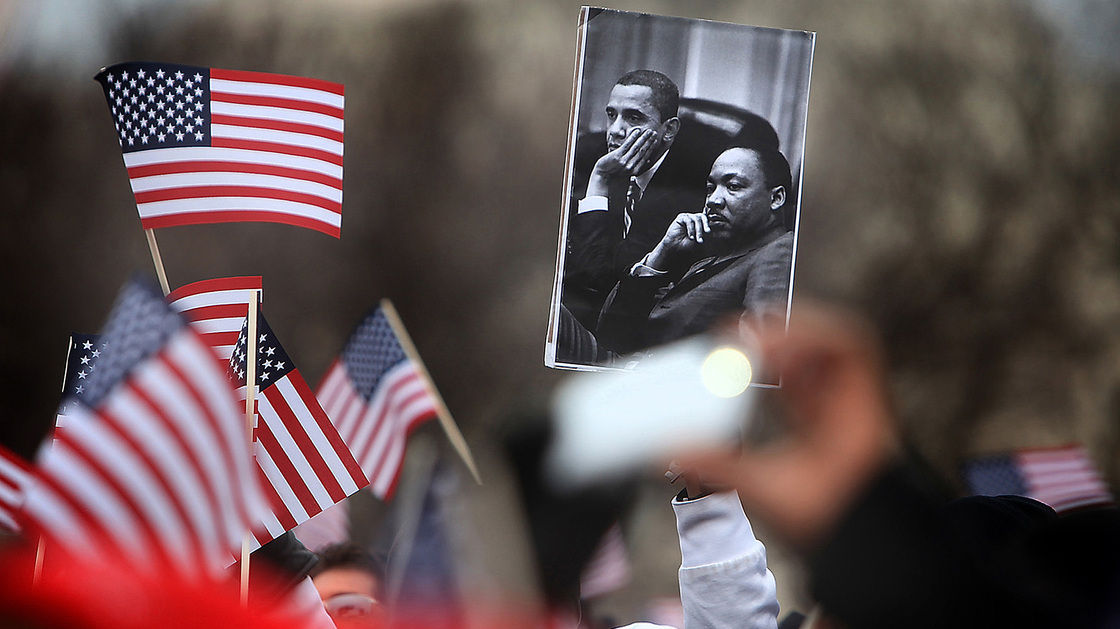
Obama To Outline Unfinished Work, Decades After King"s Dream


A spectator on the National Mall holds an image of President Obama and Martin Luther King during the 2013 presidential inauguration in January.


Gabriel B. Tait/MCT/Landov

A spectator on the National Mall holds an image of President Obama and Martin Luther King during the 2013 presidential inauguration in January.


A spectator on the National Mall holds an image of President Obama and Martin Luther King during the 2013 presidential inauguration in January.


Gabriel B. Tait/MCT/Landov


President Obama will stand in the symbolic shadows of Martin Luther King and Abraham Lincoln Wednesday, as he marks the 50th anniversary of the March on Washington.


Aides say Obama will use the opportunity to celebrate the progress that’s been made, thanks to the civil rights movement. He’ll also discuss the work that he says still has to be done to realize King’s dream of racial justice in America.


That includes fighting to protect voting rights and building what the president calls “ladders of opportunity” for poor people of all races.


Obama doesn’t often talk publicly about race. But it’s clearly a subject he’s thought and written a lot about. So when an African-American professor asked the president last week during a college visit in New York, where does he think the country is in terms of civil rights, Obama’s answer was complicated.


“Obviously, we’ve made enormous strides,” said Obama. “I’m a testament to it. You’re a testament to it.”


At the same time, Obama said, discrimination has not disappeared. And while it’s nothing like it was 50 years ago, the legacy of Jim Crow has left lasting barriers to success.


“There are a lot of folks who are poor and whose families have become dysfunctional because of a long legacy of poverty, and live in neighborhoods that are run down and schools that are underfunded,” he said.


After the Trayvon Martin verdict last month, Obama spoke in personal terms about the experience of being profiled as a black man in America. His remarks were praised in some quarters, but criticized in others.


“I don’t think that the racial climate in this country is helped when the president wades in to what are always turbulent racial waters and stirs things up, which is what he did,” says Abigail Thernstrom, a member of the U.S. Commission on Civil Rights, who was appointed by President George W. Bush.


Democratic pollster Cornell Belcher disagrees, saying resistance to frank talk about race is one reason the country hasn’t made more progress.


“It’s a conversation that makes a lot of white America uncomfortable and they would rather not have,” says Belcher. “And understand, they have not had to have the conversation.”


Obama has also not shied away from tough conversations about problems within the African-American community, where he says too many young men continue to make bad choices. He told graduates of Morehouse College in May there’s no longer any room for excuses: “Nobody cares how tough your upbringing was. Nobody cares if you suffered some discrimination. And moreover, you have to remember that whatever you’ve gone through, it pales in comparison to the hardships previous generations endured. And they overcame them. And if they overcame them, you can overcome them, too.”


On Wednesday, Obama is likely to talk about civil rights in broader terms, encompassing not just blacks and whites but Latinos, women and gays, much as he did in his second inaugural, when he spoke in one breath of Selma, Stonewall, and Seneca Falls — the touchstone battlegrounds for all these civil rights movements.


Obama likes to quote King’s comment that all of us are “tied in a single garment of destiny.” But he’s also warned in recent weeks that because of persistent economic anxiety, that unifying fabric is in danger of unraveling.


“Because times have been tough, because wages and incomes for everybody have not been going up, everybody is pretty anxious about what’s happening in their lives and what might happen for their kids, and so they get worried that, well, if we’re helping people in poverty, that must be hurting me somehow. It’s taking something away from me.”


Obama told that college professor in New York last week “it’s in all of our interests” to lift up poor communities and help young people succeed — delivering on that promissory note that King talked about 50 years ago.


On Wednesday, the president is expected to leave his audience with the challenge of renewing that promise.


News


Obama To Outline Unfinished Work, Decades After King"s Dream

Thursday, August 1, 2013

Religious order files reveal decades of LA abuse


(AP) — In therapy sessions, the priest confessed the shocking details he’d kept hidden for years: He had molested more than 100 boys, including his 5-year-old brother. He had sex with male prostitutes, and frequented gay strip clubs.


The admissions of the Rev. Ruben Martinez are included among nearly 2,000 pages of secret files unsealed Wednesday that were kept on priests, brothers and nuns who belonged to religious orders but were accused of child molestation while working within the Los Angeles archdiocese.


The papers, which were released under the terms of a $ 660 million settlement agreement reached in 2007, are the first glimpse at what religious orders knew about the men and women they posted in Roman Catholic schools and parishes in the Los Angeles area. The archdiocese itself released thousands of pages under court order this year for its own priests who were accused of sexual abuse, but the full picture of the problem remained elusive without the orders’ records. Several dozen more files are expected to be released by the fall.


The documents cover five different religious orders that employed 10 priests or religious brothers and two nuns who were all accused in civil lawsuits of molesting children. Among them, the accused had 21 alleged victims between the 1950s and the 1980s.


Some of the files released Wednesday, including those of the nuns, don’t mention sexual abuse at all, and others appear to have large gaps in time and missing documents. The release included documents from the Oblates, the Marianists, the Benedictines and two orders for religious sisters.


That the files don’t reflect some of the alleged abuse doesn’t mean it didn’t happen, said Ray Boucher, lead attorney for some abuse victims. “Much of this went unreported. You’re talking about kids that were terrorized and frightened in so many different ways, with no place and no one to turn to.”


At more than 500 pages, Martinez’s file is among the most complete, and it paints a devastating picture of a troubled and repressed child who later joined the priesthood to satisfy a domineering and devout father.


The Los Angeles archdiocese settled eight lawsuits over Martinez’s actions in 2007, but had little documentation on him in its own files even though the priest worked in its parishes for years in the 1970s and 1980s.


However, his order file includes graphic details described in therapy notes and psychiatric evaluations. It also reveals the years of effort — and tens of thousands of dollars — the Oblates spent trying to cure him of his self-admitted pedophilia as it shuttled him between programs, including inpatient treatment.


In 1965, Martinez took his final vows for a religious order called the U.S. Province of the Missionary Oblates of Mary Immaculate, a nearly 200-year-old Catholic organization with roots in France. In 1969, he was ordained as a priest and assigned by his order to a small parish in Brawley, Calif.


In a 1993 psychiatric report — one of several such evaluations done between 1991 and 2005 by various treatment programs — the priest admitted to molesting children beginning in 1970, when he began playing “giddy up” games with young boys on his lap. In the documents, Martinez says he stopped “direct sexual contact” with boys after a mother complained to a pastor in 1982 and that he stopped touching boys altogether after another complaint in 1986.


It’s unclear whether his religious order or the archdiocese was aware of those complaints, but around the same time as the first complaint, Martinez began weekly therapy sessions. He entered a counseling program for people with sexual compulsions after the second complaint in 1986.


In 1991, he received five months of inpatient psychological treatment from a center in Jemez Springs, New Mexico that specialized in treating troubled priests.


Upon his release, Martinez was assigned to a tiny parish in the remote town of Westmorland, Calif., in the far southeastern corner of the state. While there, he would drive miles to San Diego to pick up male prostitutes, according to his file.


He was removed from parish ministry in 1993, enrolled in a sex offender program and sent to live and work at the order’s California headquarters in Oakland after another complaint surfaced from his past. For the rest of his career, he filled administrative roles.


Calls to the U.S. Province of the Oblates and emails to two attorneys representing Martinez and the three other Oblate priests whose files were released were not returned. Attorneys for the Benedictines and Marianists and a representative from the Missionary Sisters of the Sacred Heart of Jesus also did not return calls.


Carolina Guevara, a spokeswoman for the Los Angeles archdiocese, did not address the current file release specifically but said religious orders are expected to make sure the priests they present for ministry in the archdiocese don’t have any history of sex abuse.


One man who sued over Martinez’s abuse told The Associated Press that the priest molested children after he was assigned to his hometown parish in Wilmington, a working-class city south of Los Angeles, in 1972. The man, now 50, requested anonymity because he is well-known in his professional life and has not spoken publicly about his case before. The AP does not publish the names of victims of sexual abuse without their consent.


“He would have us wrestle each other and then wrestle with him, which means we’d get down into our skivvies and he’d take pictures of us. He was always taking pictures,” the man said. “I just remember the smell of the old Polaroid flash cubes. He would go through them like crazy.”


The man received a settlement in 2007 from the archdiocese. Martinez was never charged criminally; most of his alleged abuses weren’t reported until years later.


The man said Martinez always had a group of young boys around him and would take them to see R-rated movies and on group trips. One summer day, he recalled, the priest took six boys to a local amusement park, but stopped on the way at an apartment where another man lived. Martinez and the man went inside with one of the boys and left the other five in the car for several hours. When the trio came back, the boy was sobbing and didn’t stop for hours.


Martinez, now 72, has a most recent address at the Oblate Mission House in Oakland, Calif. No one answered the door there and a call was not returned on Wednesday. A receptionist at a Missouri retreat home for troubled priests — another possible place where Martinez could be living — would not say if he was there.


In 2003, after a decade in at the order’s California headquarters, Martinez was moved to the Oblates’ offices in Washington, D.C., where he worked answering phones and in the archives. There, his files show, he was reprimanded for making off-color, sexual jokes that offended several women and, later, for looking at sexually suggestive pictures of young boys on the Internet and downloading a floppy disk filled with “references to topics dealing with the gay lifestyle.” He also marched in a gay pride parade.


“I don’t know who else has time to monitor him, or to what ‘safe’ place we could assign him,” the Rev. Charles Banks, the vicar provincial and director of personnel for the Oblates wrote in an exasperated memo in 2003.


The file shows that Martinez was sent to the Missouri retreat home for troubled priests in 2005. In a psychiatric assessment dated that same year, Martinez said he hadn’t had sexual contact with a child in 23 years and had learned to control his impulses. The same report notes that at age 13, Martinez sexually molested his little brother and went on to molest “about 100 male minors” — a detail also included in several others therapy evaluations in the file.


“It has not been easy to face what I did, to admit it and to talk about it with others,” Martinez wrote to the order’s provincial in 2006. “I have had to deal with depression, self-hatred, the inability and unwillingness to forgive myself, and the desire and tendency to isolate.”


_____


Associated Press Writers Sarah Parvini and Lisa Leff in Oakland contributed to this report.


_____


On the web:


http://www.lorpb.com/Orders-Released-Files.aspx


http://www.kbla.com/Religious_Orders_Released_Files.asp


Associated Press


U.S. Headlines


Religious order files reveal decades of LA abuse

Religious order files reveal decades of LA abuse


(AP) — In therapy sessions, the priest confessed the shocking details he’d kept hidden for years: He had molested more than 100 boys, including his 5-year-old brother. He had sex with male prostitutes, and frequented gay strip clubs.


The admissions of the Rev. Ruben Martinez are included among nearly 2,000 pages of secret files unsealed Wednesday that were kept on priests, brothers and nuns who belonged to religious orders but were accused of child molestation while working within the Los Angeles archdiocese.


The papers, which were released under the terms of a $ 660 million settlement agreement reached in 2007, are the first glimpse at what religious orders knew about the men and women they posted in Roman Catholic schools and parishes in the Los Angeles area. The archdiocese itself released thousands of pages under court order this year for its own priests who were accused of sexual abuse, but the full picture of the problem remained elusive without the orders’ records. Several dozen more files are expected to be released by the fall.


The documents cover five different religious orders that employed 10 priests or religious brothers and two nuns who were all accused in civil lawsuits of molesting children. Among them, the accused had 21 alleged victims between the 1950s and the 1980s.


Some of the files released Wednesday, including those of the nuns, don’t mention sexual abuse at all, and others appear to have large gaps in time and missing documents. The release included documents from the Oblates, the Marianists, the Benedictines and two orders for religious sisters.


That the files don’t reflect some of the alleged abuse doesn’t mean it didn’t happen, said Ray Boucher, lead attorney for some abuse victims. “Much of this went unreported. You’re talking about kids that were terrorized and frightened in so many different ways, with no place and no one to turn to.”


At more than 500 pages, Martinez’s file is among the most complete, and it paints a devastating picture of a troubled and repressed child who later joined the priesthood to satisfy a domineering and devout father.


The Los Angeles archdiocese settled eight lawsuits over Martinez’s actions in 2007, but had little documentation on him in its own files even though the priest worked in its parishes for years in the 1970s and 1980s.


However, his order file includes graphic details described in therapy notes and psychiatric evaluations. It also reveals the years of effort — and tens of thousands of dollars — the Oblates spent trying to cure him of his self-admitted pedophilia as it shuttled him between programs, including inpatient treatment.


In 1965, Martinez took his final vows for a religious order called the U.S. Province of the Missionary Oblates of Mary Immaculate, a nearly 200-year-old Catholic organization with roots in France. In 1969, he was ordained as a priest and assigned by his order to a small parish in Brawley, Calif.


In a 1993 psychiatric report — one of several such evaluations done between 1991 and 2005 by various treatment programs — the priest admitted to molesting children beginning in 1970, when he began playing “giddy up” games with young boys on his lap. In the documents, Martinez says he stopped “direct sexual contact” with boys after a mother complained to a pastor in 1982 and that he stopped touching boys altogether after another complaint in 1986.


It’s unclear whether his religious order or the archdiocese was aware of those complaints, but around the same time as the first complaint, Martinez began weekly therapy sessions. He entered a counseling program for people with sexual compulsions after the second complaint in 1986.


In 1991, he received five months of inpatient psychological treatment from a center in Jemez Springs, New Mexico that specialized in treating troubled priests.


Upon his release, Martinez was assigned to a tiny parish in the remote town of Westmorland, Calif., in the far southeastern corner of the state. While there, he would drive miles to San Diego to pick up male prostitutes, according to his file.


He was removed from parish ministry in 1993, enrolled in a sex offender program and sent to live and work at the order’s California headquarters in Oakland after another complaint surfaced from his past. For the rest of his career, he filled administrative roles.


Calls to the U.S. Province of the Oblates and emails to two attorneys representing Martinez and the three other Oblate priests whose files were released were not returned. Attorneys for the Benedictines and Marianists and a representative from the Missionary Sisters of the Sacred Heart of Jesus also did not return calls.


Carolina Guevara, a spokeswoman for the Los Angeles archdiocese, did not address the current file release specifically but said religious orders are expected to make sure the priests they present for ministry in the archdiocese don’t have any history of sex abuse.


One man who sued over Martinez’s abuse told The Associated Press that the priest molested children after he was assigned to his hometown parish in Wilmington, a working-class city south of Los Angeles, in 1972. The man, now 50, requested anonymity because he is well-known in his professional life and has not spoken publicly about his case before. The AP does not publish the names of victims of sexual abuse without their consent.


“He would have us wrestle each other and then wrestle with him, which means we’d get down into our skivvies and he’d take pictures of us. He was always taking pictures,” the man said. “I just remember the smell of the old Polaroid flash cubes. He would go through them like crazy.”


The man received a settlement in 2007 from the archdiocese. Martinez was never charged criminally; most of his alleged abuses weren’t reported until years later.


The man said Martinez always had a group of young boys around him and would take them to see R-rated movies and on group trips. One summer day, he recalled, the priest took six boys to a local amusement park, but stopped on the way at an apartment where another man lived. Martinez and the man went inside with one of the boys and left the other five in the car for several hours. When the trio came back, the boy was sobbing and didn’t stop for hours.


Martinez, now 72, has a most recent address at the Oblate Mission House in Oakland, Calif. No one answered the door there and a call was not returned on Wednesday. A receptionist at a Missouri retreat home for troubled priests — another possible place where Martinez could be living — would not say if he was there.


In 2003, after a decade in at the order’s California headquarters, Martinez was moved to the Oblates’ offices in Washington, D.C., where he worked answering phones and in the archives. There, his files show, he was reprimanded for making off-color, sexual jokes that offended several women and, later, for looking at sexually suggestive pictures of young boys on the Internet and downloading a floppy disk filled with “references to topics dealing with the gay lifestyle.” He also marched in a gay pride parade.


“I don’t know who else has time to monitor him, or to what ‘safe’ place we could assign him,” the Rev. Charles Banks, the vicar provincial and director of personnel for the Oblates wrote in an exasperated memo in 2003.


The file shows that Martinez was sent to the Missouri retreat home for troubled priests in 2005. In a psychiatric assessment dated that same year, Martinez said he hadn’t had sexual contact with a child in 23 years and had learned to control his impulses. The same report notes that at age 13, Martinez sexually molested his little brother and went on to molest “about 100 male minors” — a detail also included in several others therapy evaluations in the file.


“It has not been easy to face what I did, to admit it and to talk about it with others,” Martinez wrote to the order’s provincial in 2006. “I have had to deal with depression, self-hatred, the inability and unwillingness to forgive myself, and the desire and tendency to isolate.”


_____


Associated Press Writers Sarah Parvini and Lisa Leff in Oakland contributed to this report.


_____


On the web:


http://www.lorpb.com/Orders-Released-Files.aspx


http://www.kbla.com/Religious_Orders_Released_Files.asp


Associated Press


U.S. Headlines


Religious order files reveal decades of LA abuse

Wednesday, June 19, 2013

Reid: Immigration Reform Will Reduce The Deficit By $1 Trillion Over Two Decades


REID: Regardless of how they got here or why they lack the proper documents, these 11 million people play a crucial role in our economy and a vital role in our communities. Mr. President, that was proven last night at 5:00 when the Congressional Budget Office –this non-partisan arm that we look to for what things cost and don’t cost here on Capitol Hill with our legislation – they issued a statement yesterday that this bill certainly, it’s on the floor today, is good for the economy, as I will say a couple of times during my brief remarks here. Its going, over the next two decades, what’s left in this one and the next one, reduce the deficit in America by almost a trillion dollars.


RealClearPolitics Video Log


Reid: Immigration Reform Will Reduce The Deficit By $1 Trillion Over Two Decades