Showing posts with label Outline. Show all posts

Wednesday, August 28, 2013

Obama To Outline Unfinished Work, Decades After King"s Dream


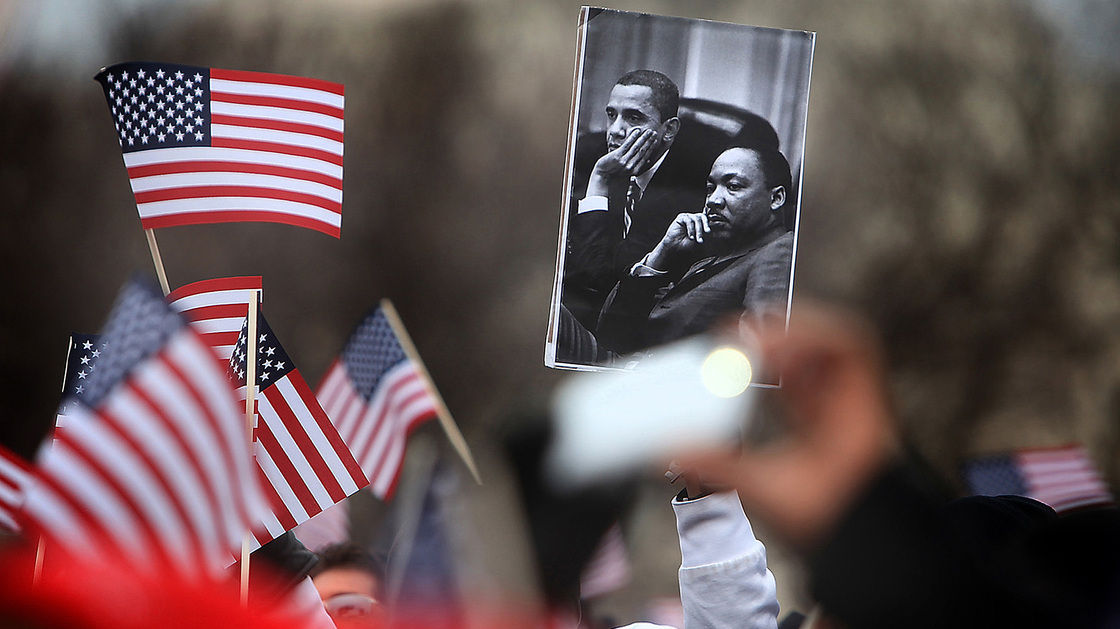
A spectator on the National Mall holds an image of President Obama and Martin Luther King during the 2013 presidential inauguration in January.


Gabriel B. Tait/MCT/Landov

A spectator on the National Mall holds an image of President Obama and Martin Luther King during the 2013 presidential inauguration in January.


A spectator on the National Mall holds an image of President Obama and Martin Luther King during the 2013 presidential inauguration in January.


Gabriel B. Tait/MCT/Landov


President Obama will stand in the symbolic shadows of Martin Luther King and Abraham Lincoln Wednesday, as he marks the 50th anniversary of the March on Washington.


Aides say Obama will use the opportunity to celebrate the progress that’s been made, thanks to the civil rights movement. He’ll also discuss the work that he says still has to be done to realize King’s dream of racial justice in America.


That includes fighting to protect voting rights and building what the president calls “ladders of opportunity” for poor people of all races.


Obama doesn’t often talk publicly about race. But it’s clearly a subject he’s thought and written a lot about. So when an African-American professor asked the president last week during a college visit in New York, where does he think the country is in terms of civil rights, Obama’s answer was complicated.


“Obviously, we’ve made enormous strides,” said Obama. “I’m a testament to it. You’re a testament to it.”


At the same time, Obama said, discrimination has not disappeared. And while it’s nothing like it was 50 years ago, the legacy of Jim Crow has left lasting barriers to success.


“There are a lot of folks who are poor and whose families have become dysfunctional because of a long legacy of poverty, and live in neighborhoods that are run down and schools that are underfunded,” he said.


After the Trayvon Martin verdict last month, Obama spoke in personal terms about the experience of being profiled as a black man in America. His remarks were praised in some quarters, but criticized in others.


“I don’t think that the racial climate in this country is helped when the president wades in to what are always turbulent racial waters and stirs things up, which is what he did,” says Abigail Thernstrom, a member of the U.S. Commission on Civil Rights, who was appointed by President George W. Bush.


Democratic pollster Cornell Belcher disagrees, saying resistance to frank talk about race is one reason the country hasn’t made more progress.


“It’s a conversation that makes a lot of white America uncomfortable and they would rather not have,” says Belcher. “And understand, they have not had to have the conversation.”


Obama has also not shied away from tough conversations about problems within the African-American community, where he says too many young men continue to make bad choices. He told graduates of Morehouse College in May there’s no longer any room for excuses: “Nobody cares how tough your upbringing was. Nobody cares if you suffered some discrimination. And moreover, you have to remember that whatever you’ve gone through, it pales in comparison to the hardships previous generations endured. And they overcame them. And if they overcame them, you can overcome them, too.”


On Wednesday, Obama is likely to talk about civil rights in broader terms, encompassing not just blacks and whites but Latinos, women and gays, much as he did in his second inaugural, when he spoke in one breath of Selma, Stonewall, and Seneca Falls — the touchstone battlegrounds for all these civil rights movements.


Obama likes to quote King’s comment that all of us are “tied in a single garment of destiny.” But he’s also warned in recent weeks that because of persistent economic anxiety, that unifying fabric is in danger of unraveling.


“Because times have been tough, because wages and incomes for everybody have not been going up, everybody is pretty anxious about what’s happening in their lives and what might happen for their kids, and so they get worried that, well, if we’re helping people in poverty, that must be hurting me somehow. It’s taking something away from me.”


Obama told that college professor in New York last week “it’s in all of our interests” to lift up poor communities and help young people succeed — delivering on that promissory note that King talked about 50 years ago.


On Wednesday, the president is expected to leave his audience with the challenge of renewing that promise.


News


Obama To Outline Unfinished Work, Decades After King"s Dream

Friday, July 12, 2013

Outline emerges of last moments before plane crash


Deborah Hersman of the National Transportation Safety Board speaks in front of a photograph of a landing gear on Asiana Flight 214, which crashed on Saturday, July 6, 2013, at San Francisco International Airport, at a news conference in South San Francisco, Calif., Thursday, July 11, 2013. (AP Photo/Jeff Chiu)


Deborah Hersman of the National Transportation Safety Board speaks in front of a photograph of a landing gear on Asiana Flight 214, which crashed on Saturday, July 6, 2013, at San Francisco International Airport, at a news conference in South San Francisco, Calif., Thursday, July 11, 2013. (AP Photo/Jeff Chiu)


This image released by the National Transportation Safety Board, on Thursday, July 11, 2013, shows the charred remains of Asiana Airlines Flight 214 in San Francisco. The Asiana flight crashed upon landing Saturday, July 6, at San Francisco International Airport, and two of the 307 passengers aboard were killed. (AP Photo/NTSB)


This image released by the National Transportation Safety Board, on Thursday, July 11, 2013, shows the debris field on the runway from Asiana Airlines Flight 214 in San Francisco. The Asiana flight crashed upon landing Saturday, July 6, at San Francisco International Airport, and two of the 307 passengers aboard were killed. (AP Photo/NTSB)


Deborah Hersman of the National Transportation Safety Board speaks in front of a photograph of some seats of Asiana Flight 214, which crashed on Saturday, July 6, 2013, at San Francisco International Airport, at a news conference in South San Francisco, Calif., Thursday, July 11, 2013. (AP Photo/Jeff Chiu)


Deborah Hersman of the National Transportation Safety Board speaks about Asiana Flight 214, which crashed on Saturday, July 6, 2013, at San Francisco International Airport, at a news conference in South San Francisco, Calif., Thursday, July 11, 2013. (AP Photo/Jeff Chiu)


Buy AP Photo Reprints


(AP) — Nearly a week after Asiana Flight 214 collided with a rocky seawall just short of its intended airport runway, investigators have pieced together an outline of the event — what should have been a smooth landing by seasoned pilots turning into a disaster.


With each new bit of information, the picture emerging is of pilots who were supposed to be closely monitoring the plane’s airspeed, but who didn’t realize until too late that the aircraft was dangerously low and slow. Nothing disclosed so far by the National Transportation Safety Board investigators indicates any problems with the Boeing 777′s engines or the functioning of its computers and automated systems.


“The first thing that’s taught to a pilot is to look at the airspeed indicator. It is the most important instrument in the cockpit,” said Lee Collins, a pilot with 29 years and 18,000 hours experience flying a variety of airliners. “Airspeed is everything. You have airspeed, you live. You don’t, you die.”


Investigators are still trying to nail down hundreds of details about the crash last Saturday that killed two people and injured dozens. NTSB Chairman Deborah Hersman has cautioned against reaching conclusions.


But investigators already know a great deal. They’ve listened to the Boeing 777′s voice recorder, which captured the last two hours of conversation in the cockpit. They’ve downloaded its flight data recorder, which captured 1,400 indicators of what was happening on the plane, from the temperatures inside and out to the positions of cockpit instruments.


The flight’s four pilots have been interviewed, as have passengers and dozens of witnesses. Air traffic control recordings and video of the flight’s last moments, including the crash itself, have been examined.


Here’s what investigators have revealed about a Seoul-to-San Francisco flight that was normal until its last minutes, when the wide-body jet carrying 307 people rapidly lost altitude:


The pilot flying the plane, Lee Gang-kuk, 46, had nearly 10,000 hours of flying experience, but just 35 hours flying a Boeing 777. He had recently completed training that qualified him to fly passengers in the 777, and was about halfway through his post-qualification training. He was seated in the left cockpit pilot seat. In the co-pilot position was Lee Jeong-Min, an experienced captain who was supervising Lee Gang-kuk’s training. It was Lee Gang-kuk’s first time landing a 777 in San Francisco.


At 11:19:23 PDT, after a nearly 11-hour flight, the plane was traveling over the San Francisco Peninsula. The weather was near perfect, sunny with light winds.


Lee Jeong-Min and a third pilot sitting in a jump seat just behind the main seats, a first officer, were supposed to be monitoring the plane’s controls. One of their most important jobs was to closely monitor the plane’s two airspeed indicators. In the U.S., if an amber bar is more than five knots above or below the target speed during landing, the pilot flying is supposed to abort and make another attempt, according to pilots interviewed by The Associated Press.


As the plane descended to 1,600 feet, the autopilot was turned off. At 1,400 feet, the plane’s airspeed was about 170 knots.


The flight data recorder shows the plane’s autothrottle — similar to a car’s cruise control — was set on idle during the approach, Hersman said, and that there were multiple commands at times given to the autothrottle and autopilot.


At 11:26:58 and 1,000 feet, the pilots made contact with the airport tower. When they were cleared to land 12 seconds later, the plane’s altitude had dropped to about 600 feet. The plane was configured for its approach and the landing gear was down. The airspeed was about 149 knots. A target speed of 137 knots was set.


At 500 feet there was an audible automated altitude alert. The airspeed was about 134 knots. At this point that pilots realized they weren’t properly lined up with the runway, Hersman said.


“Between 500 and 200 feet, they had a lateral deviation and they were low. They were trying to correct at that point,” she said.


At 200 feet and another automated altitude call out, the airspeed had slowed to 118 knots — well below the target level.


At this point, U.S. pilots would typically call for an aborted landing because the plane was more than 5 knots below its target speed, Collins said. But at no point in between 500 and 100 feet does the voice recorder show the pilots making any comment related to airspeed, Hersman said at a briefing Thursday.


Hersman said at earlier briefings that it was not until 200 feet — 16 seconds before impact — that Lee Jeong-Min, the instructor pilot “recognized the auto-throttles were not maintaining speed.”


At 125 feet and 112 knots, both throttles started moving forward, indicating more fuel was being sent to the engines to increase power and speed. That was eight seconds before impact. Even if the autothrottles weren’t fully turned on, either of the pilots in the two front seats could reach down and manually push the throttle levers forward to increase power.


It was about this time that the cockpit voice recorder indicated the first officer — the third pilot seating behind the front two pilots — realized the plane was traveling too slowly and called for an increase in speed.


A second later, Lee Gang-kuk’s yoke can be heard rattling violently on the voice recorder. This is the sound of a stick shaker going off, a piece of safety equipment that tells a pilot the plane is about to stall because it has slowed to a dangerous speed and lost lift.


When the pilots in the two front seats realized the plane was in trouble, they both reached for the throttle. Passengers heard a loud roar as the plane revved up in a last-minute attempt to abort the landing.


At three seconds before impact, the plane reached its slowest speed of 103 knots. Its engines were at 50 percent power and power was increasing. At this time, one of the pilots called for an aborted landing.


At one and a half seconds before impact, another of the pilots calls for an aborted landing.


At 11:28, with the airspeed up three knots, the landing gear, followed by the plane’s tail, collided with the seawall just short of Runway 28 Left. The plane careened wildly before slamming down onto the tarmac and sliding about 1,000 feet. The tail was sheared off and three flight attendants seated in the back of the plane fell out. Rocks from the seawall and pieces of the mangled landing gear were strewn along the runway.


The NTSB’s investigation is being followed closely by pilots in the U.S. and around the world. At one gathering of pilots in Dallas Wednesday night, the discussion centered on why the Asiana pilots didn’t realize their low speed sooner. No one had an answer.


“There are a lot of very experienced airline pilots who are scratching their heads right now,” Collins said.


Associated Press


Top Headlines


Outline emerges of last moments before plane crash

Outline emerges of last moments before plane crash


Deborah Hersman of the National Transportation Safety Board speaks in front of a photograph of a landing gear on Asiana Flight 214, which crashed on Saturday, July 6, 2013, at San Francisco International Airport, at a news conference in South San Francisco, Calif., Thursday, July 11, 2013. (AP Photo/Jeff Chiu)


Deborah Hersman of the National Transportation Safety Board speaks in front of a photograph of a landing gear on Asiana Flight 214, which crashed on Saturday, July 6, 2013, at San Francisco International Airport, at a news conference in South San Francisco, Calif., Thursday, July 11, 2013. (AP Photo/Jeff Chiu)


This image released by the National Transportation Safety Board, on Thursday, July 11, 2013, shows the charred remains of Asiana Airlines Flight 214 in San Francisco. The Asiana flight crashed upon landing Saturday, July 6, at San Francisco International Airport, and two of the 307 passengers aboard were killed. (AP Photo/NTSB)


This image released by the National Transportation Safety Board, on Thursday, July 11, 2013, shows the debris field on the runway from Asiana Airlines Flight 214 in San Francisco. The Asiana flight crashed upon landing Saturday, July 6, at San Francisco International Airport, and two of the 307 passengers aboard were killed. (AP Photo/NTSB)


Deborah Hersman of the National Transportation Safety Board speaks in front of a photograph of some seats of Asiana Flight 214, which crashed on Saturday, July 6, 2013, at San Francisco International Airport, at a news conference in South San Francisco, Calif., Thursday, July 11, 2013. (AP Photo/Jeff Chiu)


Deborah Hersman of the National Transportation Safety Board speaks about Asiana Flight 214, which crashed on Saturday, July 6, 2013, at San Francisco International Airport, at a news conference in South San Francisco, Calif., Thursday, July 11, 2013. (AP Photo/Jeff Chiu)


Buy AP Photo Reprints


(AP) — Nearly a week after Asiana Flight 214 collided with a rocky seawall just short of its intended airport runway, investigators have pieced together an outline of the event — what should have been a smooth landing by seasoned pilots turning into a disaster.


With each new bit of information, the picture emerging is of pilots who were supposed to be closely monitoring the plane’s airspeed, but who didn’t realize until too late that the aircraft was dangerously low and slow. Nothing disclosed so far by the National Transportation Safety Board investigators indicates any problems with the Boeing 777′s engines or the functioning of its computers and automated systems.


“The first thing that’s taught to a pilot is to look at the airspeed indicator. It is the most important instrument in the cockpit,” said Lee Collins, a pilot with 29 years and 18,000 hours experience flying a variety of airliners. “Airspeed is everything. You have airspeed, you live. You don’t, you die.”


Investigators are still trying to nail down hundreds of details about the crash last Saturday that killed two people and injured dozens. NTSB Chairman Deborah Hersman has cautioned against reaching conclusions.


But investigators already know a great deal. They’ve listened to the Boeing 777′s voice recorder, which captured the last two hours of conversation in the cockpit. They’ve downloaded its flight data recorder, which captured 1,400 indicators of what was happening on the plane, from the temperatures inside and out to the positions of cockpit instruments.


The flight’s four pilots have been interviewed, as have passengers and dozens of witnesses. Air traffic control recordings and video of the flight’s last moments, including the crash itself, have been examined.


Here’s what investigators have revealed about a Seoul-to-San Francisco flight that was normal until its last minutes, when the wide-body jet carrying 307 people rapidly lost altitude:


The pilot flying the plane, Lee Gang-kuk, 46, had nearly 10,000 hours of flying experience, but just 35 hours flying a Boeing 777. He had recently completed training that qualified him to fly passengers in the 777, and was about halfway through his post-qualification training. He was seated in the left cockpit pilot seat. In the co-pilot position was Lee Jeong-Min, an experienced captain who was supervising Lee Gang-kuk’s training. It was Lee Gang-kuk’s first time landing a 777 in San Francisco.


At 11:19:23 PDT, after a nearly 11-hour flight, the plane was traveling over the San Francisco Peninsula. The weather was near perfect, sunny with light winds.


Lee Jeong-Min and a third pilot sitting in a jump seat just behind the main seats, a first officer, were supposed to be monitoring the plane’s controls. One of their most important jobs was to closely monitor the plane’s two airspeed indicators. In the U.S., if an amber bar is more than five knots above or below the target speed during landing, the pilot flying is supposed to abort and make another attempt, according to pilots interviewed by The Associated Press.


As the plane descended to 1,600 feet, the autopilot was turned off. At 1,400 feet, the plane’s airspeed was about 170 knots.


The flight data recorder shows the plane’s autothrottle — similar to a car’s cruise control — was set on idle during the approach, Hersman said, and that there were multiple commands at times given to the autothrottle and autopilot.


At 11:26:58 and 1,000 feet, the pilots made contact with the airport tower. When they were cleared to land 12 seconds later, the plane’s altitude had dropped to about 600 feet. The plane was configured for its approach and the landing gear was down. The airspeed was about 149 knots. A target speed of 137 knots was set.


At 500 feet there was an audible automated altitude alert. The airspeed was about 134 knots. At this point that pilots realized they weren’t properly lined up with the runway, Hersman said.


“Between 500 and 200 feet, they had a lateral deviation and they were low. They were trying to correct at that point,” she said.


At 200 feet and another automated altitude call out, the airspeed had slowed to 118 knots — well below the target level.


At this point, U.S. pilots would typically call for an aborted landing because the plane was more than 5 knots below its target speed, Collins said. But at no point in between 500 and 100 feet does the voice recorder show the pilots making any comment related to airspeed, Hersman said at a briefing Thursday.


Hersman said at earlier briefings that it was not until 200 feet — 16 seconds before impact — that Lee Jeong-Min, the instructor pilot “recognized the auto-throttles were not maintaining speed.”


At 125 feet and 112 knots, both throttles started moving forward, indicating more fuel was being sent to the engines to increase power and speed. That was eight seconds before impact. Even if the autothrottles weren’t fully turned on, either of the pilots in the two front seats could reach down and manually push the throttle levers forward to increase power.


It was about this time that the cockpit voice recorder indicated the first officer — the third pilot seating behind the front two pilots — realized the plane was traveling too slowly and called for an increase in speed.


A second later, Lee Gang-kuk’s yoke can be heard rattling violently on the voice recorder. This is the sound of a stick shaker going off, a piece of safety equipment that tells a pilot the plane is about to stall because it has slowed to a dangerous speed and lost lift.


When the pilots in the two front seats realized the plane was in trouble, they both reached for the throttle. Passengers heard a loud roar as the plane revved up in a last-minute attempt to abort the landing.


At three seconds before impact, the plane reached its slowest speed of 103 knots. Its engines were at 50 percent power and power was increasing. At this time, one of the pilots called for an aborted landing.


At one and a half seconds before impact, another of the pilots calls for an aborted landing.


At 11:28, with the airspeed up three knots, the landing gear, followed by the plane’s tail, collided with the seawall just short of Runway 28 Left. The plane careened wildly before slamming down onto the tarmac and sliding about 1,000 feet. The tail was sheared off and three flight attendants seated in the back of the plane fell out. Rocks from the seawall and pieces of the mangled landing gear were strewn along the runway.


The NTSB’s investigation is being followed closely by pilots in the U.S. and around the world. At one gathering of pilots in Dallas Wednesday night, the discussion centered on why the Asiana pilots didn’t realize their low speed sooner. No one had an answer.


“There are a lot of very experienced airline pilots who are scratching their heads right now,” Collins said.


Associated Press


Top Headlines


Outline emerges of last moments before plane crash