Showing posts with label might. Show all posts

Thursday, March 27, 2014

The Surprising Reason Americans Might Feel Helpless and Depressed

At Alternate Viewpoint, the privacy of our visitors is of extreme importance to us (See this article to learn more about Privacy Policies.). This privacy policy document outlines the types of personal information is received and collected by Alternate Viewpoint and how it is used.


Log Files


Like many other Web sites, Alternate Viewpoint makes use of log files. The information inside the log files includes internet protocol (IP) addresses, type of browser, Internet Service Provider (ISP), date/time stamp, referring/exit pages, and number of clicks to analyze trends, administer the site, track user"s movement around the site, and gather demographic information. IP addresses, and other such information are not linked to any information that is personally identifiable.


Cookies and Web Beacons


Alternate Viewpoint does use cookies to store information about visitors preferences, record user-specific information on which pages the user access or visit, customize Web page content based on visitors browser type or other information that the visitor sends via their browser.


DoubleClick DART Cookie


  • Google, as a third party vendor, uses cookies to serve ads on Alternate Viewpoint.

  • Google"s use of the DART cookie enables it to serve ads to users based on their visit to Alternate Viewpoint and other sites on the Internet.

  • Users may opt out of the use of the DART cookie by visiting the Google ad and content network privacy policy at the following URL - http://www.google.com/privacy_ads.html.

These third-party ad servers or ad networks use technology to the advertisements and links that appear on Alternate Viewpoint send directly to your browsers. They automatically receive your IP address when this occurs. Other technologies ( such as cookies, JavaScript, or Web Beacons ) may also be used by the third-party ad networks to measure the effectiveness of their advertisements and / or to personalize the advertising content that you see.


Alternate Viewpoint has no access to or control over these cookies that are used by third-party advertisers.


You should consult the respective privacy policies of these third-party ad servers for more detailed information on their practices as well as for instructions about how to opt-out of certain practices. Alternate Viewpoint"s privacy policy does not apply to, and we cannot control the activities of, such other advertisers or web sites.


If you wish to disable cookies, you may do so through your individual browser options. More detailed information about cookie management with specific web browsers can be found at the browser"s respective websites.


The Surprising Reason Americans Might Feel Helpless and Depressed

Tuesday, March 18, 2014

Feds might allow researchers to study PTSD treatment with medical marijuana

At Alternate Viewpoint, the privacy of our visitors is of extreme importance to us (See this article to learn more about Privacy Policies.). This privacy policy document outlines the types of personal information is received and collected by Alternate Viewpoint and how it is used.


Log Files


Like many other Web sites, Alternate Viewpoint makes use of log files. The information inside the log files includes internet protocol (IP) addresses, type of browser, Internet Service Provider (ISP), date/time stamp, referring/exit pages, and number of clicks to analyze trends, administer the site, track user"s movement around the site, and gather demographic information. IP addresses, and other such information are not linked to any information that is personally identifiable.


Cookies and Web Beacons


Alternate Viewpoint does use cookies to store information about visitors preferences, record user-specific information on which pages the user access or visit, customize Web page content based on visitors browser type or other information that the visitor sends via their browser.


DoubleClick DART Cookie


  • Google, as a third party vendor, uses cookies to serve ads on Alternate Viewpoint.

  • Google"s use of the DART cookie enables it to serve ads to users based on their visit to Alternate Viewpoint and other sites on the Internet.

  • Users may opt out of the use of the DART cookie by visiting the Google ad and content network privacy policy at the following URL - http://www.google.com/privacy_ads.html.

These third-party ad servers or ad networks use technology to the advertisements and links that appear on Alternate Viewpoint send directly to your browsers. They automatically receive your IP address when this occurs. Other technologies ( such as cookies, JavaScript, or Web Beacons ) may also be used by the third-party ad networks to measure the effectiveness of their advertisements and / or to personalize the advertising content that you see.


Alternate Viewpoint has no access to or control over these cookies that are used by third-party advertisers.


You should consult the respective privacy policies of these third-party ad servers for more detailed information on their practices as well as for instructions about how to opt-out of certain practices. Alternate Viewpoint"s privacy policy does not apply to, and we cannot control the activities of, such other advertisers or web sites.


If you wish to disable cookies, you may do so through your individual browser options. More detailed information about cookie management with specific web browsers can be found at the browser"s respective websites.


Feds might allow researchers to study PTSD treatment with medical marijuana

Friday, March 7, 2014

There Might Be A Big Corruption Scandal Surrounding America"s Dangerous New Painkiller

FDA Commissioner Margaret Hamburg


Ever since a coalition of doctors came out against the controversial new painkiller Zohydro, health officials have been questioning how the drug got approved by the Food and Drug Administration in the first place.


Now, two senators are questioning the ethics of a series of meetings between drug companies and federal regulators, MedPage Today reports.


Senators Joe Manchin (D-W.Va.) and David Vitter (R-La.) want answers about what they call “pay-to-play” meetings in which pharmaceutical manufacturers allegedly shelled out thousands of dollars to meet with FDA officials who oversee safety regulations on painkillers. The senators suggest these meetings might have helped Zohydro get approved by the FDA despite an advisory committee voting against it.


The FDA approved Zohydro in the fall, and it’s expected to be available to patients with chronic pain starting in March. Dozens of doctors and addiction treatment groups are calling for the FDA to revoke its approval of the drug, which they say is deadly and could lead to another spike in opioid addiction.


Opponents of the drug argue that it will be prone to abuse because the pills contain a high dose of hydrocodone, a narcotic that has effects similar to heroin, and they’re reportedly easy to crush or chew for addicts who want to get a strong high quickly.


The senators want to see financial records — including any payment transfers — for groups connected to the University of Rochester that reportedly set up the meetings between drug company representatives and FDA officials, according to MedPage Today.


Zohydro’s initial manufacturer, Elan (now Alkermes), reportedly paid to send a representative to these private meetings. (The drug is marketed in the U.S. by a third company, Zogenix.)


In their letter, the senators allege these meetings gave the drug companies “undue influence over FDA’s approval process for prescription painkillers.”


University of Rochester Medical Center spokesman Christopher DiFrancesco denied to MedPage Today that these were “pay-to-play” meetings. He said participants were not allowed to discuss specific drugs and that the meetings had no bearing on the FDA’s decisions about whether or not to approve certain drugs.


Join the conversation about this story »


Politics


There Might Be A Big Corruption Scandal Surrounding America"s Dangerous New Painkiller

Monday, January 20, 2014

Archaeologists Uncover More Evidence Middle Earth Might Have Been Real

At Not Just The News, the privacy of our visitors is of extreme importance to us (See this article to learn more about Privacy Policies.). This privacy policy document outlines the types of personal information is received and collected by Not Just The News and how it is used.


Log Files


Like many other Web sites, Not Just The News makes use of log files. The information inside the log files includes internet protocol (IP) addresses, type of browser, Internet Service Provider (ISP), date/time stamp, referring/exit pages, and number of clicks to analyze trends, administer the site, track user"s movement around the site, and gather demographic information. IP addresses, and other such information are not linked to any information that is personally identifiable.


Cookies and Web Beacons


Not Just The News does use cookies to store information about visitors preferences, record user-specific information on which pages the user access or visit, customize Web page content based on visitors browser type or other information that the visitor sends via their browser.


DoubleClick DART Cookie


  • Google, as a third party vendor, uses cookies to serve ads on Not Just The News.

  • Google"s use of the DART cookie enables it to serve ads to users based on their visit to Not Just The News and other sites on the Internet.

  • Users may opt out of the use of the DART cookie by visiting the Google ad and content network privacy policy at the following URL - http://www.google.com/privacy_ads.html.

These third-party ad servers or ad networks use technology to the advertisements and links that appear on Not Just The News send directly to your browsers. They automatically receive your IP address when this occurs. Other technologies ( such as cookies, JavaScript, or Web Beacons ) may also be used by the third-party ad networks to measure the effectiveness of their advertisements and / or to personalize the advertising content that you see.


Not Just The News has no access to or control over these cookies that are used by third-party advertisers.


You should consult the respective privacy policies of these third-party ad servers for more detailed information on their practices as well as for instructions about how to opt-out of certain practices. Not Just The News"s privacy policy does not apply to, and we cannot control the activities of, such other advertisers or web sites.


If you wish to disable cookies, you may do so through your individual browser options. More detailed information about cookie management with specific web browsers can be found at the browser"s respective websites.


Archaeologists Uncover More Evidence Middle Earth Might Have Been Real

Monday, December 30, 2013

Off-contract Moto G might be coming to Verizon for $100


Motorola’s Moto G smartphone might soon be available to Verizon customers for as low as $ 100 — without a contract. Google+ user Josue Joseph, who claims to work at Best Buy Mobile, posted a picture of the Android phone in Verizon retail packaging. Joseph later commenting that it “looks like it’s going for $ 100.”


13_-_1


The Verizon-branded packaging suggests the phone will be sold without an annual contract, but Josue claims users will still need to choose one of Verizon’s data plans, as the phone “will not work with anything else.” Those plans, the packaging implies, will include unlimited talk and text options.


The Moto G currently retails for $ 179 in the US and, even at that price, had a lot to recommend it against its peers. There’s no word yet on a street date for the $ 100 Verizon version, but if the leaked information turns out to be accurate, it would further solidify the Moto G’s position as one of the very best budget smartphones available.


The Verge – All Posts


Off-contract Moto G might be coming to Verizon for $100

Sunday, November 10, 2013

Freedom tower might not be the nation’s tallest building


The Freedom Tower is at the mercy of a committee of architects who may decide the tower is NOT the nation’s tallest building.


At odds is a design change involving the towers 408 foot needle at the top of the building.


If the change is made the building won’t be listed at 1776 feet, but 1,368 feet.


That would ruin not only the tallest building label but the patriotic tie that comes with the 1776 number.


There is one other thing to note that has some in the process crying foul.


The building that would re-ascend to that tallest spot is the Willis Towers in Chicago (old Sears bldg) and the committee making the decision is based there as well.


One committee member of the Council on Tall Buildings and Urban Habitat said “most of the time, these decisions are not so controversial.”


The decision is scheduled to be made next week. For more on the discussion and how the experts are looking into things, click here.


Rare


Freedom tower might not be the nation’s tallest building

Friday, September 13, 2013

Why Peter King might run for president

From left: Barack Obama, Peter King and Rand Paul are pictured in this composite image. | AP Photos

Peter King is not your typical presidential hopeful. | AP Photos


WOLFEBORO, N.H. — Presidential hopefuls don’t typically open their sales pitch by promoting policies that voters overwhelmingly oppose or by knocking their own party almost as much as the other one.


Peter King is not your typical presidential hopeful.


The brash Republican congressman from Long Island has been making the rounds in New Hampshire, pressing for military action in Syria — which about one in three Americans support — and warning against growing isolationist sentiment at home, symbolized by the rise of libertarian-leaning Sen. Rand Paul (R-Ky.). At stops around the state last weekend, King charged that President Barack Obama’s approach “is weakening the office of the president of the United States” and that America’s foes “sense weakness; they sense appeasement; they sense accommodation.”


(PHOTOS: Republicans, 2016 contenders)


“Whether it’s me or anyone else in the Republican Party who runs, I hope we run on having strong national defense and also carrying the banner high,” he said on the stump. “Waving the banner of the United States of America and realizing that whatever other countries may do or whatever complaints they may have, no one has done more for freedom than the United States. But most of all, Americans need to have faith in their leader that he’s not going to back down when things get tough.”


But King was unsparing about his own party, too, saying he’s gravely concerned that Republicans are starting to project the same image of timidity in international affairs that has plagued Democrats over the years.


“He’s a knee-jerk isolationist,” King said of Paul in a separate interview. “Just the level of his arguments — ‘build bridges in the U.S. rather than Afghanistan’ — has superficial appeal. But what does that mean? Does he consider, analyze — what happens when we withdraw?”


(PHOTOS: 2016: Who’s next?)


No one is about to put King in the top tier of GOP 2016 hopefuls. As a single House member from liberal New York, he’d be handicapped in the race for money and exposure against the Chris Christies or Pauls of the GOP. His vocal support for stricter gun control laws would be tough to explain to conservative primary voters, as would his criticism of tea party lawmakers who “equate Obamacare with military action,” as he put it, because they both involve government spending.


And his keen focus on national security when poll after poll indicates the country has turned inward after a dozen years of war isn’t the kind of message likely to fire up the Republican faithful.


But for King, that message is the point. His main motivation is unmistakable: pushing back against what he sees as a “dangerous” strain of isolationism that’s gaining strength in the GOP. Trips to early states like New Hampshire make him not just a “Republican congressman” in the media but also a “potential 2016 candidate” — giving him a bigger megaphone to drive his message.


In nearly a one-hour conversation with POLITICO in New Hampshire ahead of two campaign stops, King went so far as to say that the rise of anti-war voices in the GOP threatens to make Democrats the better option for voters who want a strong national defense.


(Also on POLITICO: King: Obama acting like a community organizer)


“I want to make sure our alternative is better than theirs,” King, 69, said, adding that he’s “seriously” looking at a run but hasn’t decided yet. “If I’m going to be criticizing the Obama policies, and then we end up nominating someone whose policies I think are more dangerous than [Obama’s], we’ve failed as Republicans.”


That was a direct swipe at Paul, who is leading the GOP opposition to bombing Syria and drew enormous attention earlier this year with his filibuster against the use of drones on American soil. King added that he didn’t mean “dangerous in an evil way” but “dangerous if we let down our defenses.”


“I have more of an immediate responsibility because Rand Paul is in my party,” King said. “President Obama was elected; he’s entitled to run his foreign policy as commander in chief. What would be reassuring to me is knowing we have a real alternative for that coming up in 2016. But the thought that we have [something] worse than the Obama policy coming up.”


Paul has described himself as a “realist, not a neoconservative or an isolationist.” His office didn’t respond to requests for comment.


“It’s the tax-and-spend liberal wing of the Republican Party,” Paul said in late July, responding on CNN to King charging that he was on the “fringe.” “They’re all for blowing up stuff; they’re all for getting involved in wars; but they’re not too concerned with fiscal responsibility and balanced budgets.”


On the stump in this first-in-the-nation primary state, King kept the emphasis on the president, but the basic foreign policy focus was the same. In Wolfeboro, King addressed a lobster bake sponsored by the Carroll County Republican Committee. He unpacked his position on Syria in front of dozens of polo- and sweater-sporting Republicans — many with white hair — as they nibbled on seafood, corn and coleslaw.


POLITICO – TOP Stories


Why Peter King might run for president

Saturday, August 3, 2013

McCain: We Might Drop Those 20,000 New Border Patrol Agents We Promised


Katie Pavlich
Town Hall.com
August 2, 2013


As the House of Representatives prepares to take up the issue of illegal immigration, the Senate is already prepping for conference negotiations with John McCain taking the lead.


It turns out, some of the most crucial aspects of border enforcement already passed by the Senate, including the addition of 20,000 new Border Patrol agents, are likely to be negotiated away, proving once again that the Gang of 8 was a complete sham.


Sen. John McCain (R-Ariz.) signaled Tuesday that the dramatic boost in border-security in the Senate’s comprehensive immigration bill could be one of the provisions that may be changed in a potential House-Senate compromise.


Read More


This article was posted: Friday, August 2, 2013 at 5:01 pm


Tags: economics, foreign affairs, government corruption


Infowars


McCain: We Might Drop Those 20,000 New Border Patrol Agents We Promised

Friday, July 19, 2013

Senate"s Handshake Deal On Obama Nominees Not As Ironclad As You Might Think


When senators struck a bipartisan deal earlier this week to avert a filibuster rules change by Democrats, what exactly did they agree to, and how would it be enforced?


The agreement, negotiated by Senate Majority Leader Harry Reid (D-NV) and Sen. John McCain (R-AZ), was that Republicans would clear the way for seven of President Obama’s picks to lead federal agencies and departments. No more filibusters by Republicans on those seven. The catch, for Obama, was that he would have to withdraw his two recess-appointed nominees to the National Labor Relations Board and replace them with new nominees.


Although top Democratic aides say they expect Republicans to follow through, the agreement is less than ironclad and could potentially fall apart if any of the nominees don’t receive the 60 votes needed to break a filibuster. In that scenario, the only tool Reid would have is to resort to the same nuclear option to change the rules that the deal was meant to avoid in the first place.


A sign of the agreement’s fragility came Wednesday afternoon when the nomination of Tom Perez for labor secretary overcame the GOP filibuster on a 60-40 vote. One fewer vote and he’d have been blocked, essentially voiding the agreement.


The two NLRB nominations will be the true test of whether the agreement holds. President Obama has withdrawn Sharon Block and Richard Griffin to the board, and instead nominated Nancy Schiffer, the associate general counsel for AFL-CIO, and Kent Hirozawa, the chief counsel to NLRB’s chairman Mark Pearce.


The agreement was that those two nominees would be fast-tracked and reported out of committee in lieu of the usual potentially lengthy vetting process, according to a Senate aide. Reid’s office says the nominees would have to be confirmed by Aug. 27 and insists that the deal requires Republicans to permit cloture on any individuals selected by Obama. GOP leadership aides dispute the last part.


“We certainly haven’t agreed to that,” said one senior Senate Republican aide. “I don’t know about everyone. We’ll have hearings.”


Senate Minority Leader Mitch McConnell (R-KY), who is protecting his right flank as he faces reelection next year, is publicly downplaying the idea that he was circumvented in the negotiations. According to Roll Call, he privately expressed frustration to his members that he could have gotten a better deal, and presented a version of events that caused Sen. Bob Corker (R-TN) to cry “bullshit” during a closed-door meeting.


Democrats are instead counting on McCain and a cohort of more moderate Republicans to deliver the votes. If they don’t, Reid has made amply clear that he retains his right to go nuclear. At the end of the day, that’s the only real backstop Democrats have to ensure that existing and future executive nominations are gummed up by the minority.


As Reid posted on Twitter after the deal was struck:


The deal has held so far. The Senate voted 66-34 on Tuesday to confirm Richard Cordray to lead the Consumer Financial Protection Bureau (an agency Republicans wish never existed); 82-17 on Wednesday to end the filibuster of Fred Hochberg to lead the Export-Import Bank; and 54-46 on Thursday to confirm Perez. The Senate voted 69-31 on Thursday to advance Gina McCarthy’s nomination to the Environmental Protection Agency.


McConnell publicly characterized the deal as a positive step, even as he voted to filibuster Cordray, Hochberg, Perez and McCarthy.


Sahil Kapur

Sahil Kapur is a congressional reporter for TPM. He previously covered politics and public policy for numerous publications including The Guardian and The Huffington Post. He can be reached at sahil [at] talkingpointsmemo.com.


submit to reddit


TPM News


Senate"s Handshake Deal On Obama Nominees Not As Ironclad As You Might Think

Saturday, June 8, 2013

Our Surveillance Society: What Orwell And Kafka Might Say


News about data collection by the government sounds uncomfortably like prophetic novels of the past.


News about data collection by the government sounds uncomfortably like prophetic novels of the past.


Alex Williamson/Getty Images


President Obama says he’s not Big Brother. The author who created the concept might disagree.


Addressing the controversy over widespread government surveillance of telephone records and Internet traffic Friday, Obama said, “In the abstract, you can complain about Big Brother and how this is a potential program run amuck, but when you actually look at the details, then I think we’ve struck the right balance.”


But for many commentators, revelations this week that the federal government is sweeping up records of communications and transactions between millions of Americans sounds uncomfortably like the vision of the British novelist and journalist George Orwell.


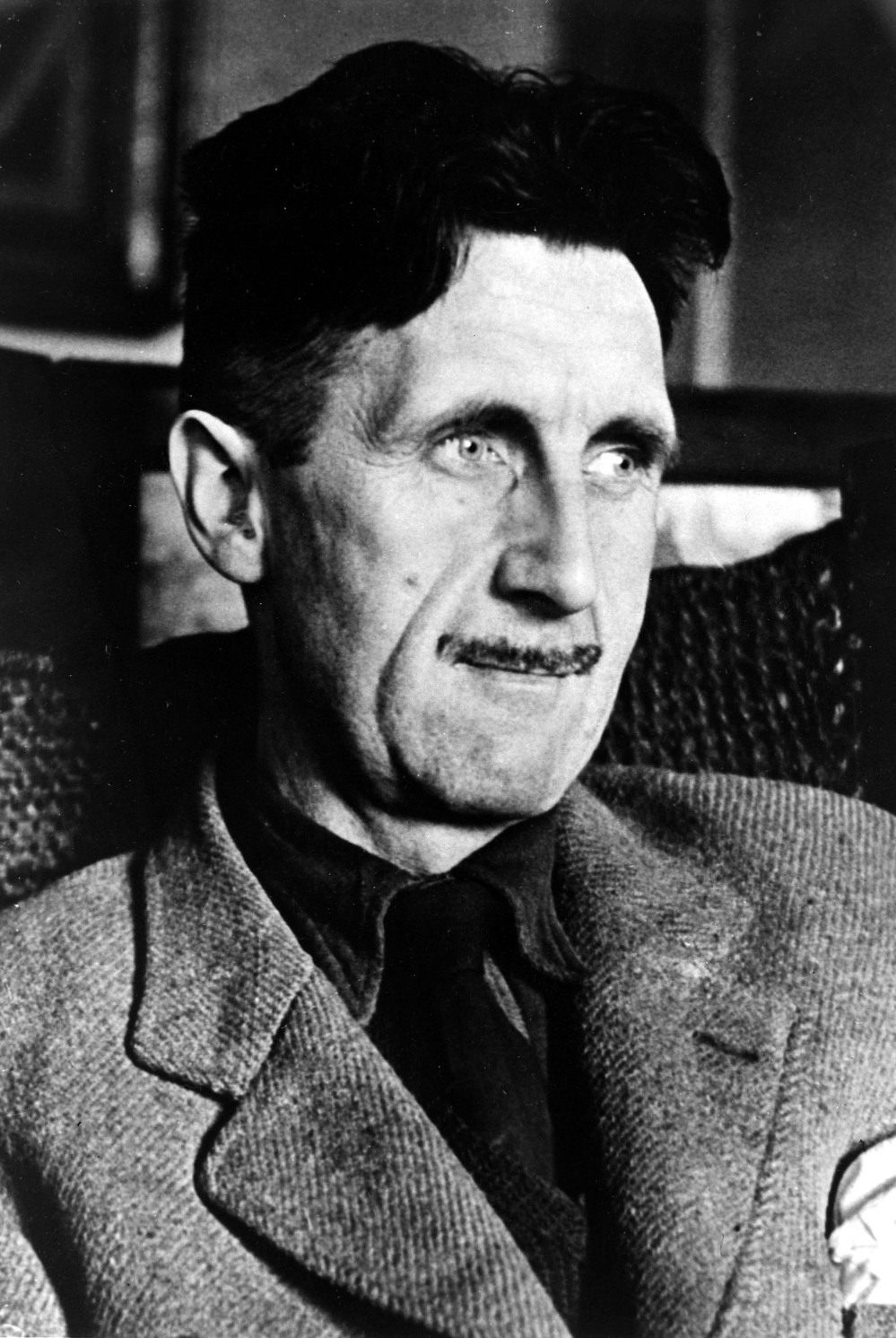
In his novel Nineteen Eighty-Four, British author George Orwell warned of the dangers of bureaucratic power run amok — but he also recognized that the protection of the state, while intrusive, is necessary.


Popperfoto/Getty Images

In his novel Nineteen Eighty-Four, British author George Orwell warned of the dangers of bureaucratic power run amok — but he also recognized that the protection of the state, while intrusive, is necessary.


In his novel Nineteen Eighty-Four, British author George Orwell warned of the dangers of bureaucratic power run amok — but he also recognized that the protection of the state, while intrusive, is necessary.


Popperfoto/Getty Images


His novel Nineteen Eighty-Four portrayed a society in which the state constantly tracks the movements and thoughts of individuals. Its slogan is “Big Brother Is Watching You.”


“Throwing out such a broad net of surveillance is exactly the kind of threat Orwell feared,” says Michael Shelden, author of Orwell: The Authorized Biography.


The phrases “Big Brother” and “Orwellian” have been commonplace in news coverage and social media this past week. Orwell’s novel, a bestseller upon publication in the 1940s, has remained a classic because it seems to crystallize what life under totalitarian regimes looks like.


Obama — and many others — insist that the U.S. is not living under such a regime. The government is not listening to everyone’s telephone calls, Obama said on Friday, nor is it using the information to spy on innocent Americans.


And, even in the tradition of prophetic literature that warns of the dangers of bureaucratic power run amok, there is an awareness that the protection of the state, while intrusive, is necessary.


Based On Experience


Although set in the future, Nineteen Eighty-Four was based on Orwell’s observations of Stalinist Russia and Nazi Germany, as well as his own experiences as a broadcaster and colonial officer in the British Empire.


“He was so good at picking up on trends that he picked up our whole future,” says Shelden, who teaches English at Indiana State University.


In particular, Shelden says, Orwell’s time as a cop serving in Burma showed him how governments seek to keep track of people and what they’re up to — the more complete the file, the better.


“What he saw was that over time, surveillance would become pervasive,” Shelden says. “He just took that idea and expanded it in Nineteen Eighty-Four to basically a police state.”


Although Orwell’s ideas struck some as paranoid, the British government in 2007 opened up its file on the author. It turned out the spy agency MI5 had been tracking him from 1929 until his death in 1950.


Big Data = Big Brother?


Orwell certainly would have understood that officials would point to the unending threat of something like terrorism as a justification for ongoing, widespread surveillance.


“He could see that war and defeating an enemy could be used as a reason for increasing political surveillance,” Shelden says. “You were fighting a never-ending war that gave you a never-ending excuse for looking into people’s lives.”


What would have surprised Orwell, he says, was not that governments are collecting huge amounts of data about individuals, but that private actors are as well.


Even if it didn’t turn out that the federal government has a direct pipeline into Verizon, Google, Yahoo and other such companies, those companies would control huge amounts of information about Americans on their own.


And it’s not just the corporations performing surveillance. What Orwell calls the “proles” in his novel — the average citizens who help the state keep an eye on everybody — are also tracking and documenting each other’s movements in real life these days.


With the advent of smartphones and widespread surveillance cameras, no conversation or movement in the public sphere can be considered private.


On Wednesday, a woman posted a picture of a man she said she’d sat near on a train, who’d been bragging with friends about affairs they’d had without their wives catching on. By Saturday morning, the image had been shared more than 170,000 times.


“We have the capacity now to be a huge nation of informers,” Shelden says.


Kafka’s Binocular Vision


Author Franz Kafka writings include The Metamorphosis, The Castle and The Trial.


Author Franz Kafka writings include The Metamorphosis, The Castle and The Trial.


Wikimedia Commons


Image collection by everybody can have its uses. The sharing of images of the Boston Marathon helped law enforcement quickly home in on the alleged perpetrators.


The mixed feelings people have about the balance between privacy and security would have been familiar to Franz Kafka, the famed 20th century author of novels and stories about bureaucracies that are out of touch and out of control.


There are many elements of the current situation that are Kafkaesque, says Stanley Corngold, an emeritus professor of German and comparative literature at Princeton University. Kafka raises questions not only about governments collecting massive amounts of information “like a giant vacuum cleaner,” Corngold says, but what they do with it.


In Kafka’s novel The Castle, the authorities can’t find the document that would determine whether the person who’s been brought in is wanted, or not.


“They have piles and piles and piles of documents, but they don’t do anything with them,” says Corngold, a Kafka translator and scholar.


But although Kafka is remembered for creating situations in which characters helplessly seek to appeal judgments when they’re not even sure what the charges are, he also recognized that the people are often, in fact, guilty. “Kafka has the uncanny ability to see the point of view of both parties,” Corngold says.


In stories such as “The Great Wall of China,” Kafka recognized that people look to the state to protect them from “barbarians,” recognizing that they’re not capable of fending off outside threats on their own.


“At times, he mocks the illusion of an effective, centralized authority,” Corngold says. “At other times, he suggests that without its aid, we cannot cope with the ‘barbarians.’”


News


Our Surveillance Society: What Orwell And Kafka Might Say