Showing posts with label supply. Show all posts

Thursday, February 13, 2014

Utah legislator proposes a bill to sever water supply to massive NSA data center

At Those Damn Liars, the privacy of our visitors is of extreme importance to us (See this article to learn more about Privacy Policies.). This privacy policy document outlines the types of personal information is received and collected by Those Damn Liars and how it is used.

Log Files

Like many other Web sites, Those Damn Liars makes use of log files. The information inside the log files includes internet protocol (IP) addresses, type of browser, Internet Service Provider (ISP), date/time stamp, referring/exit pages, and number of clicks to analyze trends, administer the site, track user"s movement around the site, and gather demographic information. IP addresses, and other such information are not linked to any information that is personally identifiable.

Cookies and Web Beacons

Those Damn Liars does use cookies to store information about visitors preferences, record user-specific information on which pages the user access or visit, customize Web page content based on visitors browser type or other information that the visitor sends via their browser.

DoubleClick DART Cookie

  • Google, as a third party vendor, uses cookies to serve ads on Those Damn Liars.
  • Google"s use of the DART cookie enables it to serve ads to users based on their visit to Those Damn Liars and other sites on the Internet.
  • Users may opt out of the use of the DART cookie by visiting the Google ad and content network privacy policy at the following URL - http://www.google.com/privacy_ads.html.

These third-party ad servers or ad networks use technology to the advertisements and links that appear on Those Damn Liars send directly to your browsers. They automatically receive your IP address when this occurs. Other technologies ( such as cookies, JavaScript, or Web Beacons ) may also be used by the third-party ad networks to measure the effectiveness of their advertisements and / or to personalize the advertising content that you see.

Those Damn Liars has no access to or control over these cookies that are used by third-party advertisers.

You should consult the respective privacy policies of these third-party ad servers for more detailed information on their practices as well as for instructions about how to opt-out of certain practices. Those Damn Liars"s privacy policy does not apply to, and we cannot control the activities of, such other advertisers or web sites.

If you wish to disable cookies, you may do so through your individual browser options. More detailed information about cookie management with specific web browsers can be found at the browser"s respective websites.


Utah legislator proposes a bill to sever water supply to massive NSA data center

Saturday, October 19, 2013

Alert: FBI Investigating Threats to Midwest Water Supply Systems: “On High Alert”


water-warningSHTF Plan – by Mac Slavo


Reuters reports that the FBI and other agencies are in the process of investigating multiple threats to Midwest Water Supply Systems. Specifically, the FBI has named Wichita, Kansas as a target, but utility facilities have also been put on alert in other Midwestern cities.  


(Reuters) The U.S. Federal Bureau of Investigation learned of the threats in the past two days and has contacted the water supply facilities and law enforcement offices for the municipalities, said Bridget Patton, a spokeswoman for the FBI office in Kansas City, Missouri.


Patton declined to discuss the nature of the threats or the number of cities affected. She said investigators had been sent out in response to the reports, but offered no details.


“We were made aware of the threat,” Patton said. “We have not been able to substantiate any of the threats.”


Wichita city officials warned employees in emails to be on guard for suspicious activities. City officials also told residents the water is safe to drink and the public will be notified immediately if this changes.


Wichita Police Lieutenant Doug Nolte said Friday that the city had taken steps to keep the city’s water supply safe, but would not describe what measures had been taken. 


…


(KSN News) “The FBI as of our law enforcement agencies take any threats to the public personal safety very seriously,” said Bridget Patton, Media Representative for the FBI.


For the last several days, the FBI has been looking into a regional water threat.


KSN News learned the potential hazard affects four major water systems in the mid-west including Wichita. 


The Wichita water utility plants serve about 500,000 people, but many millions may be affected should systems in multiple Midwest cities fail or come under attack simultaneously.


In 2011 cyber security McAfee issued a warning titled In the Dark: Crucial Industries Confront Cyberattacks, in which they noted that all critical infrastructure systems connected to the internet could be compromised by rogue attacks resulting in shutdowns or malfunctions.


The sectors on which this report focuses — power, oil, gas, and water — may well be the first targets for a serious cyberattack.


What we found is that they are not ready. The professionals charged with protecting these systems report that the threat has accelerated — but the response has not. Cyberexploits and attacks are already widespread. Whether it is cybercriminals engaged in theft or extortion, or foreign governments preparing sophisticated exploits like Stuxnet, cyberattackers have targeted critical infrastructure.


In the case of water utilities, if hackers were to take control of the computers that maintain safe water levels and chemical treatment they could potentially poison the water supplies of millions. In such a case people could go to sleep like any normal night, wake up in the morning and have a glass of water, and be poisoned by any number of chemical or biological agents that have been released into the water supplies.


Hackers have already broken into water utility computer systems recently, despite assurances that the systems are safe. In November of 2011 a Stuxnet-style virus infected the physical components of the Springfield, Illinois water utility plant and shut down water pumps, demonstrating that not only can systems be infiltrated from outside of protected networks, but that the physical equipment can be overtaken.


But it’s not just the computer systems. There is a woeful disregard for perimeter security in and around critial infrastructure assets around the United States, including water plants.


Security around national water reservoirs may not be as safe as we thought:


In a time where people talk all the time about droughts, 21 year old Josh Seater has cost the city of Portland Oregon 8 million gallons of drinking water.


After a night on the town, a heavily intoxicated Seater began urinating a water reservoir.  “I didn’t know it was a water supply, otherwise I wouldn’t have done it, I thought it was a sewage plant”.


The cost of Josh’s drunken behavior has cost the Portland Water Bureau $ 36,000, as the 8 million gallons have had to be completely drained away.


While TSA gaterapes grannies in diapers at our local airports and steams ahead on expanding enhanced pat-downs and searches to all public venues including train stations, sporting events and malls, the real security holes are completely ignored.


With so many billions of dollars being spent on homeland security, Americans have been left with a false sense of security. The government tells us they are protecting us, and most people simply take this at face value.


In reality, even if the government was  efficiently deploying its resources for effectively securing critical infrastructure, the fact is that nothing can ever be 100% secure. This is evidenced by recent comments from outgoing Homeland Security Secretary Janet Napolitano, who warned that a widespread cyber attack on our national power grid and other infrastructure is not only guaranteed, but imminent.


In previous comments, Napolitano, along with the Federal Emergency Management Agency, has advised Americans to stockpile at least two (2) weeks of essential supplies, including food and fresh drinking water, citing concerns that emergency responders could be overwhelmed in the event of a widespread emergency.


Failure to prepare for short and long-term disaster could be deadly. Most Americans have about three days worth of food supplies and almost no reserve water supplies ormethods for filtering water should the water supply be compromised.


As we saw with Hurricane Sandy, any disruptions to the normal flow of supplies or commerce would lead to a breakdown within 72 hours as those affected struggle to acquire limited resources.


http://www.shtfplan.com/headline-news/alert-fbi-investigating-threats-to-midwest-water-supply-systems_10192013


Alert: FBI Investigating Threats to Midwest Water Supply Systems: “On High Alert”

Friday, September 27, 2013

Zombie Endocrine Disruptors Dumped in Water Supply

By: NaturalBlaze Contributor Profile | More Stories

Friday, September 27, 2013 08:29


(ALTHeadlines)
Hormone-upsetting chemicals dumped into the environment are rising up to haunt Americans, spreading cancer and infertility around the world.

Aaron Dykes
Activist Post


With the endocrine disrupting Bisphenol-A (BPA) – found ubiquitously in food can linings, plastic bottles, ATM receipts, toilet paper and hundreds of other products – already a major problem tied to infertility, breast cancer, low sperm counts, deformities in humans and sex morphology in aquatic wildlife, yet still unregulated by the FDA, other hormonal disrupters dumped into water supplies are emerging as major issues, too.


Watch the video:


Now, environmentalists are concerned that hormones dumped into water – from sources like factory farm cattle operations – are at higher levels than previously thought, in part because they mysteriously regenerate at night, thwarting attempts to measure them and assumptions about them breaking down in sunlight.


From Nature.com:


Hormone-disrupting chemicals may be far more prevalent in lakes and rivers than previously thought. Environmental scientists have discovered that although these compounds are often broken down by sunlight, they can regenerate at night, returning to life like zombies. 


“Risk assessments have been built on the basis that light exposure is enough to break down these products,” adds Laura Vandenberg, an endocrinologist at the University of Massachusetts in Amherst who was not involved in the study. “This work undermines that idea completely.”


The Nature.com article focused on a study conducted by the University of Iowa on the use of the synthetic anabolic steroid trenbolone acetate, which frequently runs off into water supplies after its use in some 20 million cattle through the United States (its use, like BPA, is banned in the EU) converts it into the “potent endocrine disrupter” 17α-trenbolone.

The going assumption from both industrialists and environmental regulators was that it was breaking down during the day as it was exposed to sunlight, rendering its effects on aquatic life, and human and animal use of the water, negligible.


However, the scientists found that 17α-trenbolone “levels rebounded during the dark periods,” with variations in temperature and pH often accelerating that process. Since environmental monitors were primarily taking samples during the day, they were not recording data showing the “zombie” culturing of these – and potentially many other – endocrine disruptors.


Endocrine-Disrupting Herbicide Linked with Cancer & Birth Defects in 52 Million Americans Drinking Water


Meanwhile, more than 250 groups have banded together to demand that the EPA step up to the plate to ban Atrazine, a toxic pesticide used primarily as a leading herbicide, that leaches into the environment and runs off into water supplies across the United States. It, too, has been linked with endocrine and hormonal disruption, and likely has widespread environmental effects.


Like BPA and trenbolone acetate, Atrazine – sold by the biotech giant Syngenta – is already banned in European countries, but remains virtually unregulated in America.


According to EcoWatch:


Up to 80 million pounds of it are used in the U.S. each year, contaminating ground, surface and drinking water. Atrazine, or its primary degradate, was found in approximately 75 percent of stream water and about 40 percent of all groundwater samples from agricultural areas tested in an extensive U.S. Geological Survey study 


In people, atrazine exposure may be linked to increased risks of thyroid cancer, reproductive harm and birth defects. For example, a recent study showed that children of mothers exposed to atrazine had an increased risk of a birth defect called choanal atresia, a narrowing or blockage of the back of the nasal canal that can be life-threatening in newborn infants.


The hormone disrupting pesticide has been found in the drinking water of at least 52 million Americans. I reported on a little noticed item in the Wall Street Journal in 2012, quietly announcing that the biotech firm Syngenta had settled a class action lawsuit with more than 2,000 water districts in the American Mid-west over the contamination of its drinking water supplies.

The terms of the settlement were not fully disclosed, and Syngenta admitted no liability, maintaining that Atrazine is “safe,” and stating that, “No one ever has or ever could be exposed to enough atrazine in water to affect their health.”


Aaron Dykes is a co-founder of TruthstreamMedia.com where this first appeared. As a writer, researcher and video producer who has worked on numerous documentaries and investigative reports, he uses history as a guide to decode current events, uncover obscure agendas and contrast them with the dignity afforded individuals as recognized in documents like the Bill of Rights.


ALT Headlines


Zombie Endocrine Disruptors Dumped in Water Supply

Sunday, September 15, 2013

Deadly Amoeba Found For First Time In Municipal Water Supply

Deadly Amoeba Found For First Time In Municipal Water Supply


Kali Hardig, 12, was released from a hospital in Little Rock, Ark., on Sept. 11 after surviving a brain infection caused by amoebas.


Kali Hardig, 12, was released from a hospital in Little Rock, Ark., on Sept. 11 after surviving a brain infection caused by amoebas.


Danny Johnston/Associated Press


A 4-year-old child who died of a rare brain infection in early August has led Louisiana health officials to discover that the cause is lurking in the water pipes of St. Bernard Parish, southeast of New Orleans.


It’s a type of single-celled amoeba called Naegleria fowleri, about a tenth the width of a human hair. Some call it a “brain-eating” amoeba, although it does its damage by causing a devastating immune reaction rather than by actually devouring brain tissue.


Officials are pumping more chlorine into the municipal water supply to kill the bugs and advising the parish’s 40,000 residents how to avoid infection. They say the risk is tiny.


As we’ll discuss shortly, it’s not easy to get infected, and drinking the water poses no risk. But still, finding such a dangerous microbe in the drinking water is troubling and noteworthy.


“This is the first time that it has been found in the drinking water in the United States,” Louisiana state epidemiologist Raoult Ratard tells Shots.


But it won’t be the last, he says — because health officials are now trying to pin down the cause of previously unexplained encephalitis cases. About 40 percent of cases of this dangerous brain inflammation have no known cause. “Five years ago, we would never have known that this recent case was caused by the amoeba,” Ratard says.


Another new element: The Centers for Disease Control and Prevention now tests water supplies when a case of amoebic encephalitis is discovered, to see where the bug came from.


For instance, in 2011 two Louisiana residents – one a 20-year-old man from St. Bernard Parish — died of amoebic encephalitis after using tap water to rinse their nasal passages, using a popular device called a neti pot. Health officials assumed that contaminated tap water was the source of the infection, but it was never proved.


This summer the amoeba infected the brains of two other US children – a 12-year-old Florida boy, who died, and a 12-year-old Arkansas girl, who survived. She may be one of only three known to survive the infection in the United States.


These alarming deaths are likely to remain rare – but not quite as rare as health officials used to think.


“We’re going to see more cases,” Ratard says. Instead of three to five cases of amoebic encephalitis per year across the nation, “maybe we’ll go to 10 a year,” he says. “I don’t expect we’ll have a hundred.”


The episode vividly illustrates how humans live in a sea of potentially lethal microbes that, amazingly, seldom kill.


In this case, it’s because Naegleria fowleri is only dangerous when it gains entry into the brain. It does that when water containing the amoeba gets inhaled very deeply, into the area where the roof of the nasal passages meets the floor of the brain.


“To get infected, the amoeba has to get to the ceiling of your nose – way, way up there,” Ratard says. “At the top of the nose you have a little paper-thin plate made of bone with a bunch of holes, a little bit like a mosquito net. The holes are for the olfactory nerve. So the amoeba is crawling up the nerve and gets into the brain.”


Drinking amoeba-contaminated water poses no risk, presumably because the single-celled organisms can’t survive in stomach acid. Normal bathing or showering isn’t a risk because even if tap water is contaminated, it doesn’t penetrate into the deepest nasal passages.


Brain infections from the amoeba usually pop up in late summer, when warm water favors its reproduction and many people are diving into ponds to escape the heat.


Since uncounted numbers of people swim in waters that undoubtedly contain amoebae, Ratard says, it’s a wonder there aren’t more infections. Public swimming pools pose no risk because chlorine kills the microbes.


The child who died last month in St. Bernard Parish while visiting from Mississippi, had been playing a long time on a Slip’n"Slide connected to a household water faucet.


It took about two weeks for the CDC to determine that the child had a Naegleria fowleri infection. Then state officials started investigating how.


“We collected the hose and got some samples from the outside faucet, water heater, and toilet tank water,” Ratard says. After testing verified amoeba contamination, Louisiana officials put out a press release about the case.


Further testing of tap water in four nearby areas revealed the presence of Naegleria fowleri, as officials announced on Thursday.


Understandably, the announcement has sparked considerable local anxiety, even though health officials have stressed that the risk is low – and can be avoided entirely by common-sense precautions.


“In the old days, you would look at your faucet and it wouldn’t scare you,” Ratard says. “But these days, for some people, it looks menacing.”


To avoid risk, officials are advising people not to put their heads under water while bathing in tap water – and to supervise young children who might. Flushing the water from household pipes before filling a child’s wading pool decreases the risk, although some people might want to add some bleach to the water as an added precaution.


Local officials have shut off the water at school drinking fountains, although it’s hard to imagine how schoolchildren could inject that water deep into their noses.


In a couple of weeks, officials will retest the St. Bernard Parish drinking water to ensure that added chlorine has eliminated the threat – for this season at least.


News


Deadly Amoeba Found For First Time In Municipal Water Supply

Wednesday, August 28, 2013

Fire"s Threat To Bay Area"s Water Supply May Come Later


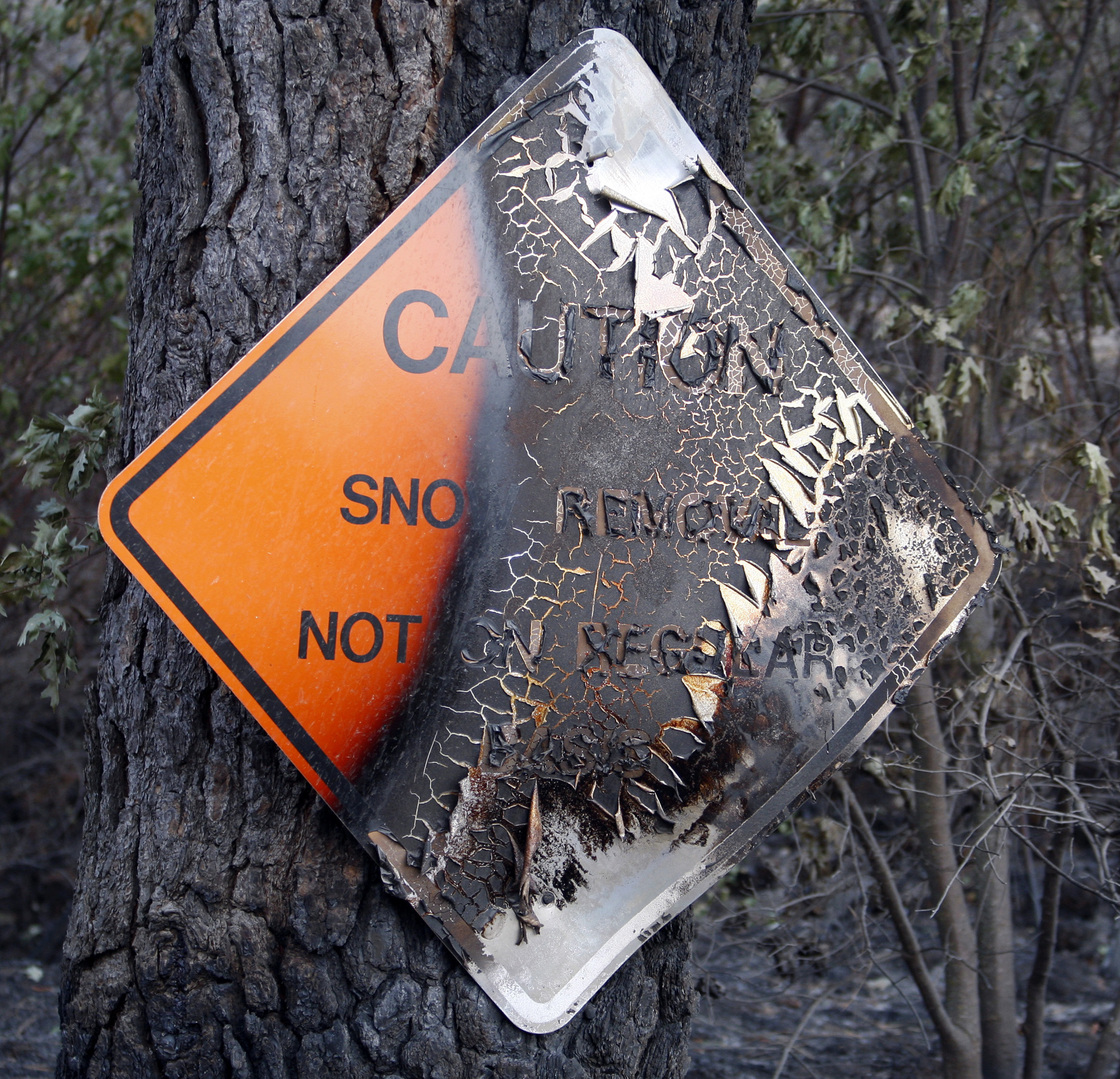
A charred caution sign just outside of California’s Yosemite National Park.


David McNew /Reuters/Landov


A charred caution sign just outside of California’s Yosemite National Park.


David McNew /Reuters/Landov


The huge “Rim Fire” in and around California’s Yosemite National Park hasn’t yet caused problems at the Hetch Hetchy Reservoir that provides water to 2.6 million people in the Bay Area. There have been fears that falling ash will pollute the water there.


But now, the San Francisco Chronicle reports, “wildfire experts say problems for San Francisco’s water agency may come later. Hetch Hetchy’s pristine waters will be vulnerable to eroding hillsides as the fire leaves behind torched soil that can’t absorb autumn rains and leveled forests that no longer anchor steep mountain slopes.”


There’s also word from KQED Wednesday morning that the flames are “perilously close to a longstanding experimental forest near Sonora. Losing it would be a setback for forestry and as fate would have it, fire management. For 80 years, the Stanislaus-Tuolumne Experimental Forest has been a trove of data for foresters.”


Southern California Public Radio, which has been updating an online “Fire Tracker” with data about blazes in the state, continues to add information about the Rim Fire here. As of 7:45 a.m. ET Wednesday, it was reporting that the fire was 20 percent contained and had burned 184,481 acres.


KQED, meanwhile, has posted a graphic produced by the federal government’s InciWeb that offers a colorful look at the Rim Fire’s growth since the blaze broke out on Aug. 17.


In case you missed it, this post we published on Tuesday is still worth checking out: “STUNNING VIDEO: Pilots’ View Of California’s Rim Fire.”


News


Fire"s Threat To Bay Area"s Water Supply May Come Later

Sunday, August 4, 2013

“Monsanto Stocks a Market Risk” – Can’t Legally Label GMO Foods, but You CAN Say, “GMO FREE”


Before it’s News – by Tom Dennen


Human beings, along with all other life on Earth, have been evolving together for some fifty million years in what is known as the Biosphere aka Planet Earth.


That means food is not only necessary for our life, but part of our genetic make up and raw, ‘organic’ food fits us like a glove or part of an infinitely small jigsaw puzzle, each piece fitting seamlessly at the mitochondrial cellular level.   


But sh*t happens and it gets into the food chain, which is where the liver comes in – a giant de-tox factory that throws out the garbage (pity there isn’t one in Washington).


When the liver can’t handle all the crap, you get the Wal-Mart Generation… and people like the ones who run Monsanto want to make this worse… but things are happening to Monsantowhere it hurts, in the wallet – Tom Dennen:


“I was shocked to read a story in Canada’s highly conservative national newspaper, The Globe and Mail, a couple of days ago in which well-known investor and columnist Chris Umiastowski, P.Eng., MBA, warned of the risk in holding Monsanto stock.  It was refreshing to read the views of an investor who is not just concerned about the bottom line but also the potential health and environmental risks in such a conservative paper. I knew that this was a victory-of-sorts for all of us who share a concern over the increasingly genetically-modified nature of our food supply.


In his column, “Monsanto:  A food stock with a bad aftertaste,” he shares: “it’s just as important to know what stocks to avoid as it is to know which ones to invest in. Most growth trends don’t last forever and you don’t want to be stuck holding the bag when growth disappears or reverses.” Here is an investor who is recognizing the “battle raging between consumers and Monsanto” that could leave fallout for investors left holding the bag when consumers take back their right to know what is contained in the food they eat.


While labelling of GM-foods is not legally required in Canada or in the United States, consumer groups are gradually certifying an increasing number of foods as “GM-Free” as a way to take back a right that regulators are not recognizing that we deserve. Consumers are waging a peaceful revolution against Monsanto and other GM-food suppliers as well as the government agencies that turn a blind eye to the environmental and health ramifications of GM-foods and crops. As an aside:  European governments have been more progressive in recognizing the human right to know when our food supply has been tampered with and many countries there consider labeling of GM foods standard practice.


MORE HERE AT GREEN LIVING


http://beforeitsnews.com/new-world-order/2013/08/monsanto-stocks-a-market-risk-cant-legally-label-gmo-foods-but-you-can-say-gmo-free-12.html


“Monsanto Stocks a Market Risk” – Can’t Legally Label GMO Foods, but You CAN Say, “GMO FREE”

Tuesday, June 18, 2013

Platinum "Supply Squeeze" Likely To Lead to Record Prices

Today’s AM fix was USD 1,378.50, EUR 1,030.35 and GBP 880.32 per ounce. 
Yesterday’s AM fix was USD 1,386.00, EUR 1,038.59 and GBP 881.79 per ounce.


Gold was little changed on Tuesday as investors awaited guidance from a Federal Reserve meeting on the outlook for the bank’s still incredibly ultra loose stimulus programme, amid mixed U.S. economic data.


Click Here To Dowload Comprehensive Guide to Investing in Gold


Uncertainty about the tenure of Federal Reserve Chairman Bernanke and the possibility of his early retirement may lead to increased risk aversion which will support gold.


Platinum’s fundamentals look increasingly strong and platinum is an attractive diversification for bullion owners looking to further diversify the precious metals component of their investment and savings portfolio.


A record deficit in platinum supplies is set to push prices higher, as unrest sweeps the South African mining industry and demand is boosted by the auto sector and a new exchange traded fund (ETF), according to HSBC, as covered on CNBC (see Commentary).


Platinum in USD – 10 Year


Platinum, which has been influenced by swings in the price of gold since April this year, hit a six-week high of $ 1,531 earlier this month following the “highly successful” launch of a new physically backed ETF. According to respected James Steel, chief precious metals analyst at HSBC, prices will rise further over the next two years, as the risk of South African mining strikes weigh on output.


But Steel also cut his price target on the metal in the short term because platinum had been influenced more than he had anticipated by the sharp swings in the price of gold.


Platinum Holdings All Known ETFs 


Platinum prices have fallen around 17% from the highs in February, as investors sold their gold positions. While both commodities are considered precious metals, platinum has far greater industrial uses.


“A rotational shift out of commodities and into equities also took its toll on the platinum market,” Steel said.


He predicts the metal will peak at $ 1,875 by 2015 or a 30% return in 3 years, before falling back to a more steady level of $ 1,825 thereafter.


“The launch of the South African ETF in mid-May has already attracted a whopping 371,000oz of platinum demand to date. This is more double the growth in the rest of the platinum ETFs combined this year,” he added.


Jewelry demand remains strong, and if industrial or auto demand pushes above forecasts, Steel said platinum prices would rise. At the same time, limited output is likely as further strike action in South Africa, the hub for global platinum production, could hit supplies.


Platinum Supply Mine Production South Africa 


“Widespread strike action and other stoppages in South Africa greatly reduced domestic platinum production in 2012. According to Johnson Matthey, production fell almost 16 percent in 2012,” said Steel.


“The possibility exists for further disruptions to production in South Africa. Additionally, the long-term challenges of low platinum prices make a sizable amount of current production uneconomical. This leads us to believe that higher prices are necessary to sustain production longer term.”


GoldCore believe that the supply demand fundamentals are very strong and should lead to new record nominal prices above $ 2,000/oz in the coming years.


Steel’s new average price forecasts for 2013 is $ 1,580 down from $ 1,710 forecast previously and for 2014 it’s $ 1,725 down from $ 1,800 previously.


Based on platinum’s price of $ 1431/oz today, that’s a forecasted 9% gain this year with zero default risk and a guarantee of return of capital as platinum bullion cannot be ‘bailed-in’ or become worthless like stocks and bonds.


NEWS


Gold holds steady ahead of Fed meeting - Reuters


Gold Holds Losses Before Fed Meeting as Investors Weigh Stimulus - Bloomberg


Obama Says Bernanke Has Stayed ‘Longer Than He Wanted’ - Bloomberg


HuaAn expects Chinese gold ETF to raise up to $ 489 Million - Reuters


UK’s Co-op Bank agrees to £1.5 billion ‘bail-in’ rescue plan - Reuters


COMMENTARY


Video: Outlook for Gold – $ 1,800/oz In Next 12 Months - Bloomerg


Gold’s Neglected Cousin Platinum to Face Supply Squeeze - CNBC


Video: Platinum Outshines Gold Amid Supply Concerns - Bloomberg


Gold Is Poised to Rally Mid-Summer - Huffington Post


Zero Hedge


Platinum "Supply Squeeze" Likely To Lead to Record Prices

Thursday, February 28, 2013